Perched on a steep bluff above the Gauja River, Sigulda Castle feels like a place where history hasn’t just been recorded—it’s still lingering in the air. The ruins stand among dense forests and jagged cliffs that seem to echo the fortress’s original purpose: a stronghold carved into the landscape itself. Built in the 13th century by the Livonian Order, the castle has witnessed centuries of conflict, shifting borders, and the slow erosion of power. What remains today are fragments—crumbling walls, the stubs of towers, and the hollows of old chambers—but these ruins carry a weight that polished museums often lack. It’s easy to imagine the clatter of armor on stone, the glow of torches in the watchtowers, or the tense silence before a siege.
Construction began in 1207, when the Livonian Order sought to solidify its control over the region. Sigulda’s location was no accident. The castle commanded a sweeping view of the Gauja Valley, while the river below acted as a natural moat. Over the years, the fortress was expanded and reinforced, though its core function never changed: it was a military outpost, a symbol of authority on the edge of contested lands. The Livonian War in the 16th century left it badly damaged, and by the 17th century, Swedish forces had reduced it to ruins. After that, no one bothered to rebuild. The stones were left to the elements, and the forest slowly reclaimed the edges of the site.
The architecture of Sigulda Castle follows the standard design of medieval Livonian fortresses. Thick walls enclosed a central courtyard, with towers positioned for defense. The main keep, or donjon, would have been the last line of resistance during an attack. Local legends speak of underground tunnels leading to the river, a hidden lifeline for smuggling supplies during sieges. Today, only the foundations of the towers remain, but even these fragments hint at the scale of the original structure. The walls, built from local stone and brick, still stand in places, their uneven edges tracing the outline of what once was. Walking along them, you can almost picture the layout of the fortress as it was centuries ago.
Sigulda grew up around the castle, and while the town has since become a popular destination for tourists, the ruins remain its most striking feature. Visitors come for more than just history—the view from the castle hill is reason enough. The Gauja River winds through the valley below, carving deep gorges and exposing rocky cliffs. On clear days, the surrounding forests stretch into the distance, their colors shifting with the seasons. In winter, the landscape takes on a quiet, almost fairy-tale quality, with snow softening the edges of the ruins and frost clinging to the bare branches.
The castle isn’t just a relic; it’s woven into Latvia’s cultural fabric. Chronicles mention it, folktales embellish it, and even modern literature has drawn inspiration from its past. Some stories claim that the ghosts of knights still wander the ruins, while others insist that treasure lies hidden in the underground passages. Whether or not these tales hold any truth, they add a layer of mystery to the site. During the summer, medieval festivals bring the castle to life again, with reenactors in period costumes staging tournaments, demonstrating old crafts, and sharing stories of life in the Middle Ages. For a few days, the ruins feel less like a monument and more like a living piece of history.
For those curious about the past, Sigulda Castle offers something rare: the chance to touch history directly. There are no glass cases or roped-off exhibits here. You can walk across the same stones that soldiers once defended, peer into the niches where archers might have stood, or imagine the bustle of daily life in the courtyard. The ruins aren’t neglected, either. The area is well-maintained, with informational signs helping visitors piece together the castle’s story. Autumn is an especially beautiful time to visit, when the surrounding trees blaze with gold and red, and the low sunlight casts long shadows across the stones.
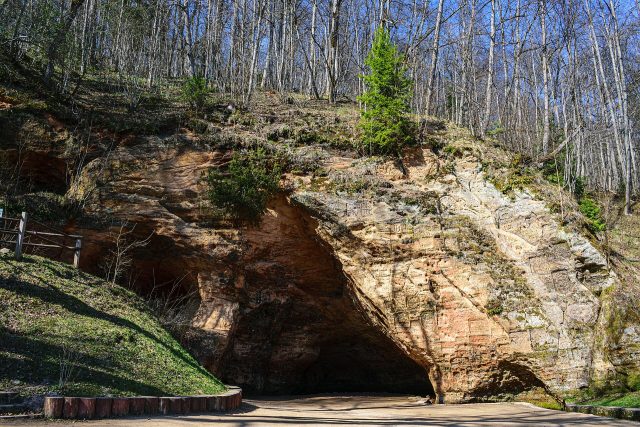
The castle is also part of Gauja National Park, one of Latvia’s oldest and most beloved protected areas. The landscape here is wild yet accessible, with hiking trails leading from the ruins to caves, waterfalls, and scenic overlooks. You can descend to the riverbank, cross a suspension bridge, or simply sit by the water and listen to the current. The castle acts as a bridge between eras—on one side, it’s a silent witness to centuries of history; on the other, it’s a place where modern visitors can pause, breathe in the crisp air, and enjoy the quiet.
Today, Sigulda Castle stands as a symbol of endurance. It has survived wars, fires, and neglect, and though it’s now just a shadow of its former self, it hasn’t disappeared. Each stone holds the memory of those who built, defended, and eventually abandoned it. For Latvia, the castle is a reminder of the country’s turbulent past, a time when these lands were fought over by different powers. For travelers, it’s an invitation to reflect on how fleeting history can be—and how important it is to preserve what remains of it. The ruins don’t offer grand narratives or easy answers, but that’s part of their appeal. They’re a quiet, unpolished piece of the past, waiting to be explored.