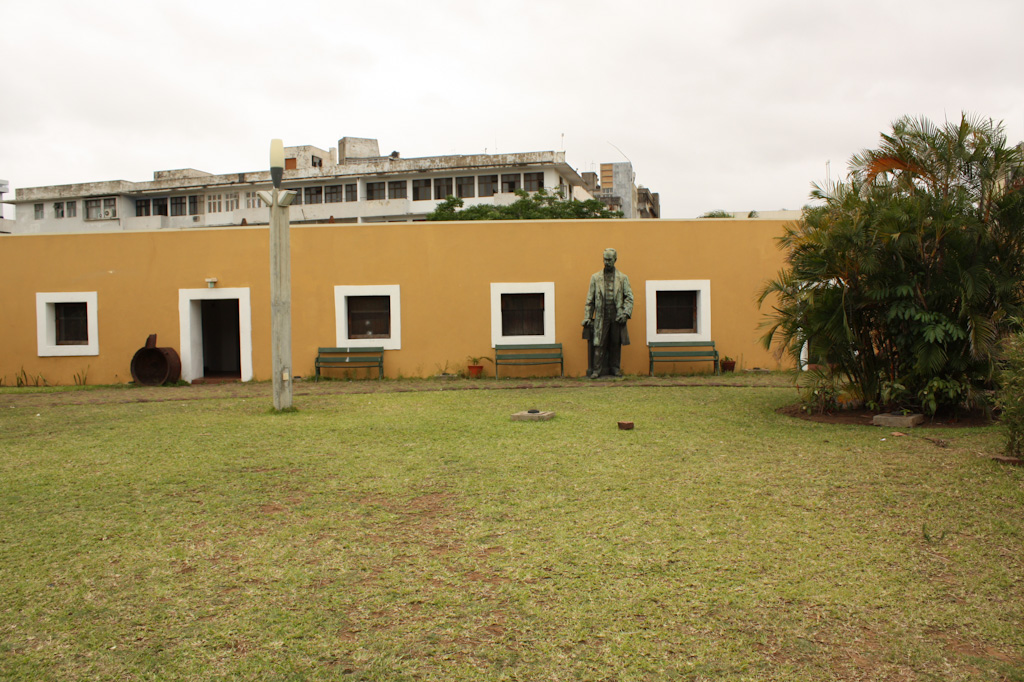
Fort Nossa Senhora da Conceição stands at the edge of Maputo’s old port, where the city’s colonial past lingers in the salt air. Built in the late 18th century by the Portuguese, it guarded the entrance to Delagoa Bay, a strategic point for ships navigating the Indian Ocean. The fort’s thick stone walls, weathered by time and the humid coastal climate, once housed cannons aimed at the water. Today, those cannons remain, though their purpose is gone, replaced by fishing boats and cargo ships moving in and out of the harbor.
The architecture is sturdy, a mix of European military design adapted to the tropics. The walls are low and squat, built to withstand cannon fire and heat, with small windows overlooking the bay. Inside, the courtyard is open to the sky, once filled with soldiers and supplies, now with the footsteps of visitors.
The fort was never grand, but it endured wars, neglect, and time.
For much of its history, the fort was more than a military outpost. It symbolized Portuguese control in a region where power shifted often. The Dutch, the British, and local African kingdoms all sought Delagoa Bay, and the fort changed hands multiple times. By the 19th century, it became part of the slave trade, a dark chapter in its past. Later, as Mozambique moved toward independence, the fort’s role faded, and it decayed until restoration efforts in the 2000s revived it.
Now, the fort is one of the few remaining links to Maputo’s colonial era. The city has grown around it, but the fort remains a quiet space. There’s no museum inside, no exhibits—just stone and rusted iron. On a clear day, you can climb the walls and look over the bay, where the water shimmers under the sun.
The best time to visit is late afternoon, when the heat softens. The fort is often empty, save for a few locals sitting by the water or the occasional tourist. There’s no entrance fee, no guided tours—just the freedom to explore. The silence inside is striking, broken only by seagulls or the distant hum of the city. It’s a place for reflection, not just on the history it holds, but on what has been forgotten.
What makes Fort Nossa Senhora da Conceição interesting is how it exists today. It’s not a relic behind glass but part of the city, still bearing the marks of time. Graffiti covers some inner walls, stray cats nap in the shade, and fishermen tie their boats nearby. These details remind you that history isn’t distant—it’s still unfolding.
If you’re in Maputo, the fort is worth visiting. It’s not grand, but it offers something rare: stillness in a moving city. It lets you step into the past, where history feels tangible. When you leave, you carry a piece of it—the echo of cannons, the voices in the courtyard, the quiet endurance of a place that has seen empires rise and fall.