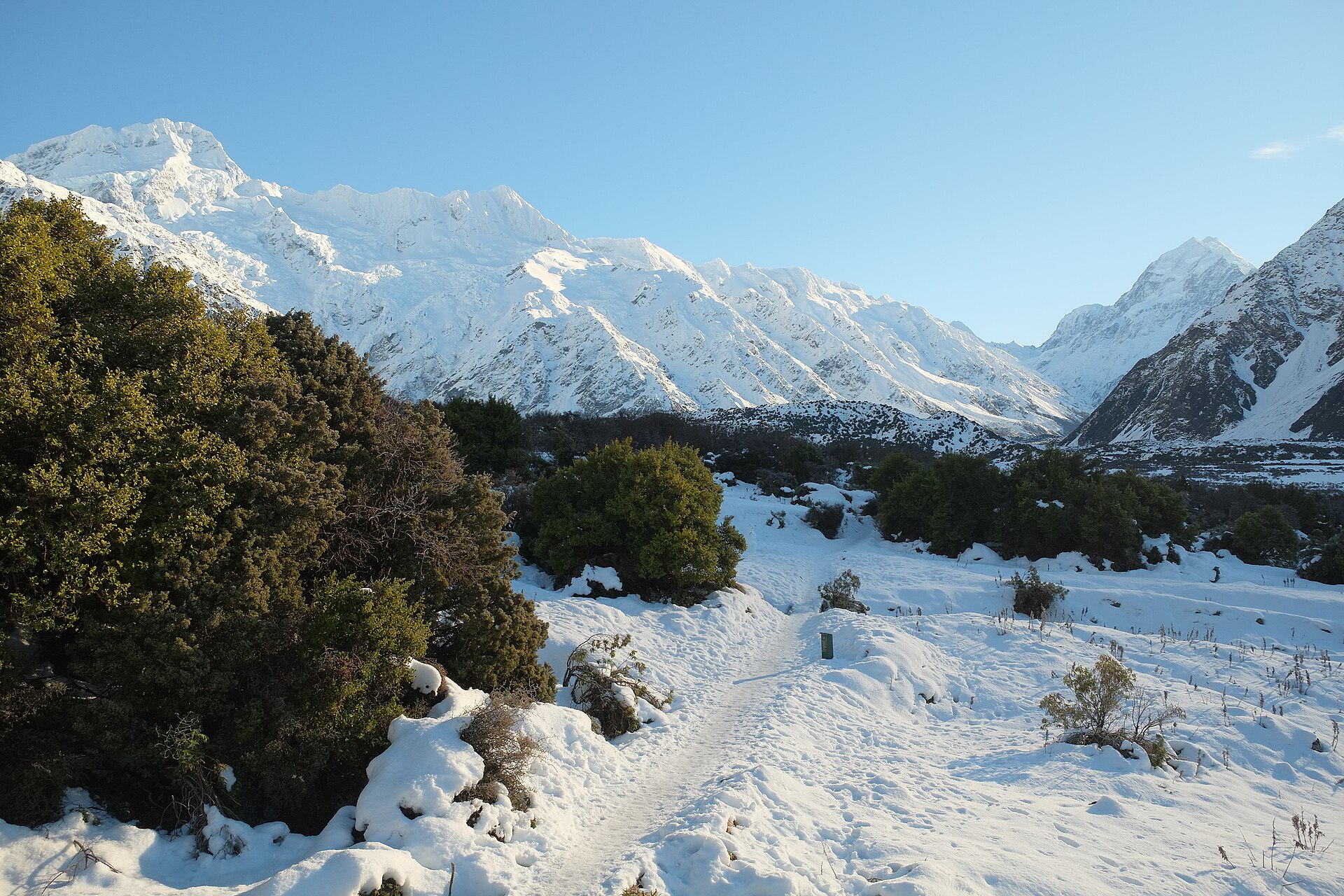
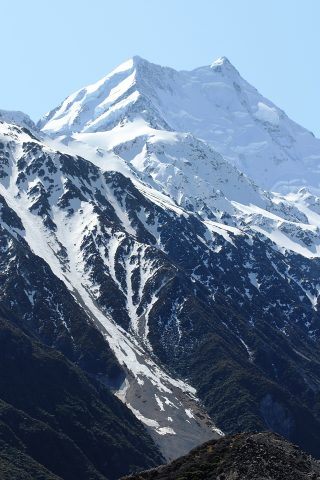
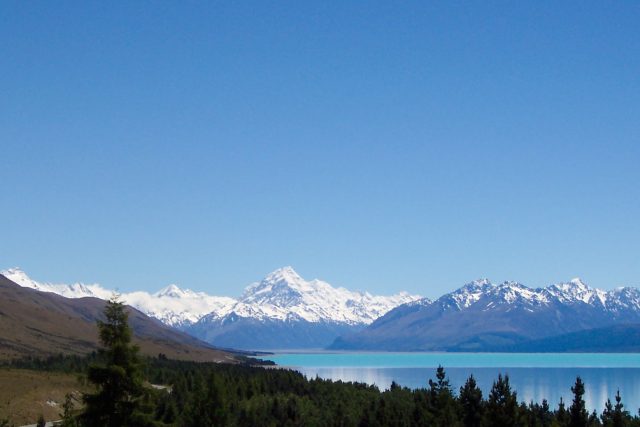
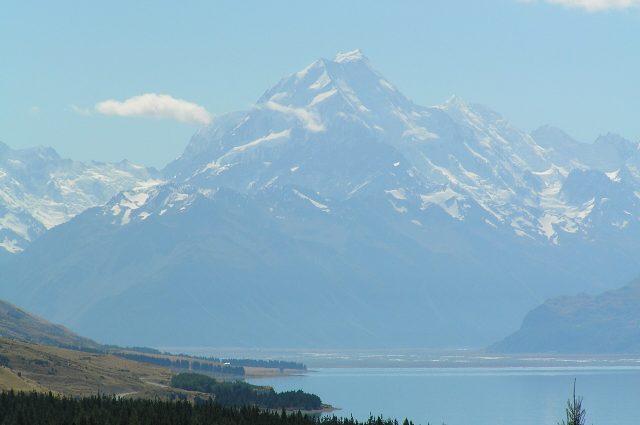
The Hooker Valley Track is one of those rare walks where every step feels like a discovery. It’s not the kind of trail that tests your endurance with steep climbs or technical challenges—instead, it quietly unfolds the grandeur of Aoraki/Mount Cook and the Southern Alps in a way that lingers long after you’ve left. The valley itself seems designed to put the landscape on full display: glaciers carve their slow paths down the mountainsides, jagged peaks pierce the sky, and the air carries the sharp, clean scent of alpine streams. There’s a sense of scale here that’s hard to grasp until you’re standing in the middle of it, looking up at walls of rock and ice that have shaped this land for millennia.
The walk begins at the White Horse Hill campsite, where the first stretch of the trail cuts through open meadows. In summer, the ground is dotted with native tussock grasses and wildflowers, their muted greens and yellows contrasting with the stark white of the surrounding peaks. The path soon meets the Hooker River, its milky-blue waters rushing over smooth stones. That color isn’t a trick of the light—it’s the result of glacial flour, fine sediment ground from the mountains by ancient ice and carried downstream. The river’s constant murmur becomes the soundtrack of the walk, a steady presence even when the wind picks up or clouds roll in.
About halfway along, the trail crosses the first of three suspension bridges. They’re simple constructions, little more than wooden planks and wire, but they feel sturdy underfoot, swaying just enough to remind you of the river’s force below. From here, the valley narrows, and the views sharpen. The river tumbles over small cascades, and the cliffs on either side are draped in moss and lichen, their surfaces damp and dark. On clear days, Aoraki/Mount Cook dominates the horizon, its summit often wreathed in cloud even when the rest of the sky is blue. But the mountain’s presence is felt even when it’s hidden—its weight, its silence, the way it seems to hold the entire landscape in place.
The final approach to Hooker Lake is where the valley opens up unexpectedly. One moment you’re walking between steep moraine walls, the next the path spills out onto a wide, flat expanse where the lake sits like a jewel. It’s small, no more than a few hundred meters across, but its clarity is startling. In still weather, the water acts as a perfect mirror, reflecting the peaks above so precisely it’s hard to tell where reality ends and reflection begins. In winter, the surface can freeze into a sheet of ice, turning the lake into a vast, glassy plain. The moraines around it—piles of rock and debris left behind by retreating glaciers—tell a story of slow, relentless change, a reminder that this landscape is anything but static.
The valley carries traces of the people who have passed through it over centuries. It’s named after William Hooker, a 19th-century botanist who documented New Zealand’s flora, but long before that, Māori travelers knew these paths well. To them, Aoraki was not just a mountain but an ancestor, a sacred presence that shaped their understanding of the land. The valley was part of their seasonal routes, a place where they hunted and gathered, where the stories of their people were tied to the rocks and rivers. Today, the only signs of that history are subtle—the occasional glimpse of a traditional trail marker, the way the wind seems to carry voices when it funnels through the valley.
The walk itself is short, taking most people three to four hours round trip, but it’s the kind of place where time feels elastic. The seasons shift the mood entirely. In summer, the valley is lush and green, the river full and loud. Autumn turns the tussock golden, and the light takes on a softer, more angled quality. Winter blankets everything in snow, muffling sound and sharpening the contrast between the white ground and the dark rock. Spring brings the thaw, and the river swells with meltwater, its currents faster, its color more intense. No matter when you visit, the landscape feels alive, as if the mountains are breathing.
That said, the weather here is famously unpredictable. A sunny morning can turn to rain or even snow within hours, and the wind in the valley can be fierce, whipping across the open ground with surprising force. There are no shelters along the trail, no places to duck out of the elements, so preparation matters. Even in summer, it’s wise to pack a warm layer, waterproof gear, and enough water to last the walk. The trail is well-maintained and easy to follow, but the conditions can change quickly, and what starts as a pleasant stroll can become a battle against the elements if you’re not ready.
For those who want to spend more time in the area, there are other walks nearby—the Tasman Glacier track, which leads to a viewpoint over the country’s longest glacier, or the climb to Kea Point, where the views of Aoraki are even more dramatic. But the Hooker Valley Track doesn’t need to be part of a bigger itinerary to feel complete. It’s a walk that rewards patience, where the point isn’t just to reach the end but to let the landscape work its way under your skin. There’s a quietness here, a sense of being in a place that exists on its own terms, indifferent to the people passing through. It’s that indifference, that raw, unfiltered presence, that makes the valley feel like something rare—a corner of the world that hasn’t been tamed, only witnessed.