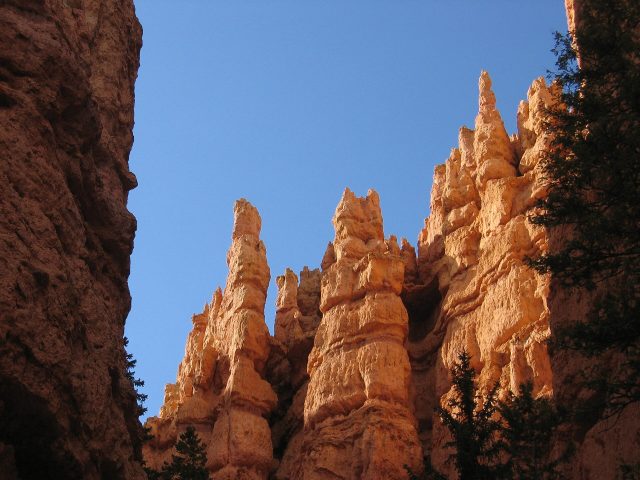
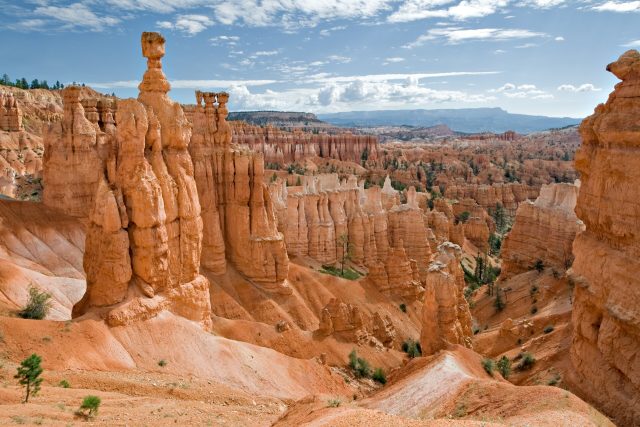
Navajo Loop is one of those rare trails where the landscape feels almost alive, as if the earth itself has been carved into something deliberate and strange. Bryce Canyon’s famous hoodoos—those tall, spindly rock formations—rise like ancient sentinels along the path, their layers of red, orange, and cream stone catching the light in ways that make them seem to glow from within. The best time to walk here is at dawn or dusk, when the low sun stretches shadows across the rock, deepening the colors and turning the canyon into a place that feels both real and dreamlike.
The trail begins at Sunset Point, dropping quickly into the heart of the amphitheater where the most dramatic hoodoos stand. It’s a steep descent at first, the path winding between narrow walls of stone before opening up into wider spaces where the formations loom overhead. Navajo Loop isn’t the longest hike in the park, but it packs more visual impact into its short distance than many longer routes. Every turn reveals something new—a cluster of hoodoos shaped like totems, a sudden view of the canyon stretching into the distance, or a quiet alcove where the wind hums through the rocks.
The hoodoos themselves are the result of millions of years of erosion. Long ago, this area was the bottom of a vast lake, then part of a river system that slowly wore away the softer rock, leaving behind the harder stone that now stands in these strange, almost sculptural shapes. The Paiute people, who lived in this region for centuries before European settlers arrived, saw the hoodoos as sacred, believing they were the petrified remains of ancient beings. The Navajo, who also passed through these lands, left their own mark on the place, though their connection to the canyon was briefer. The trail’s name is a nod to their presence, a quiet acknowledgment of the layers of history embedded in the landscape.
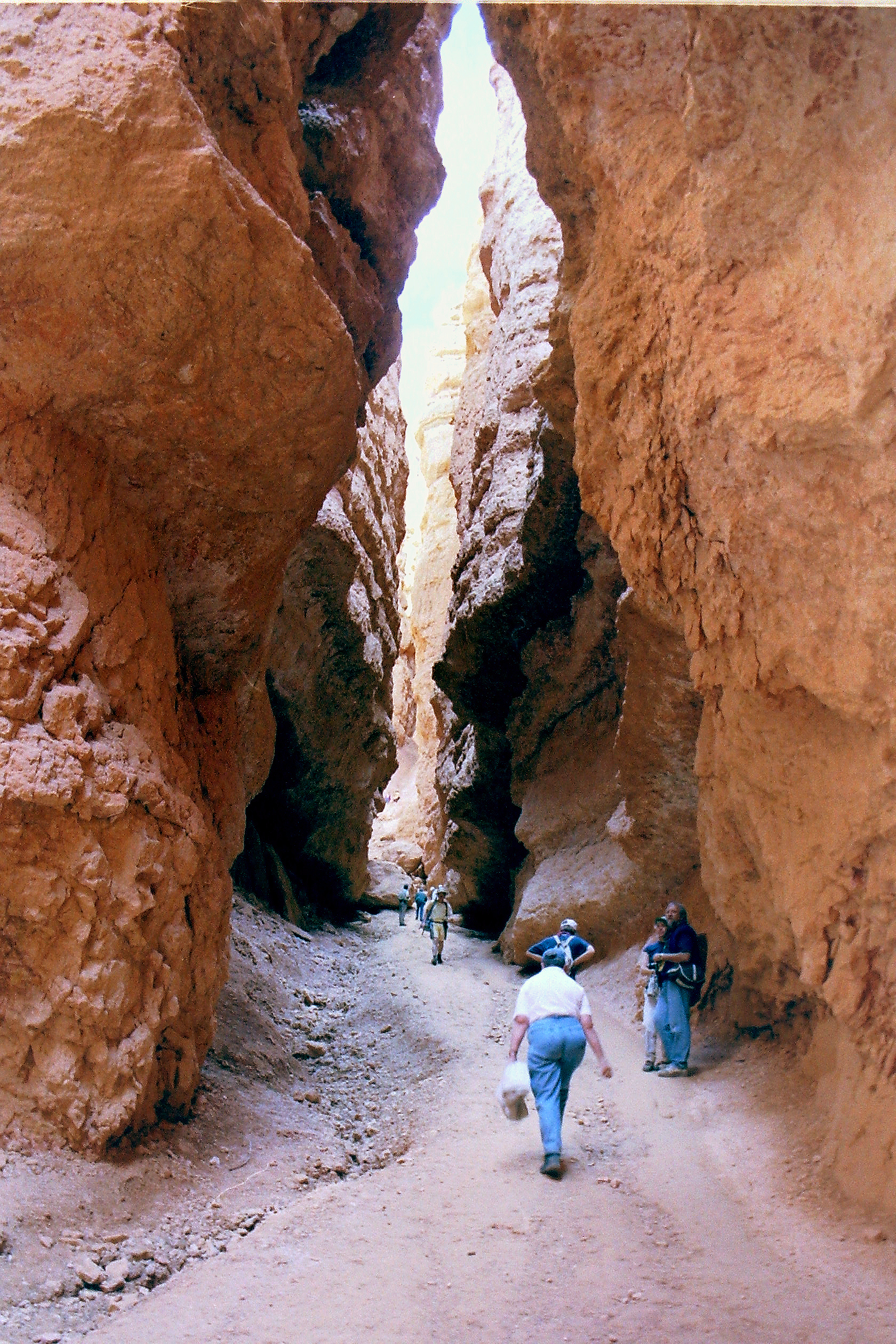
One of the most striking sections of the trail is Wall Street, a narrow slot where the path squeezes between two towering rock walls. The space is so tight that sunlight barely reaches the ground, and the air feels cooler, almost secretive. It’s easy to imagine how this place might have felt to those who walked here long before hiking boots and trail markers—like a hidden world, removed from time. The rest of the loop is less enclosed but no less dramatic, with steep switchbacks and sudden drops that keep the hike engaging. The return climb can be tough, especially in the heat, but the effort is part of what makes the experience feel earned.
The mood of the canyon shifts with the seasons. In summer, the heat can be intense by midday, so most hikers start early or wait until late afternoon. Winter transforms the landscape into something quieter, with snow dusting the hoodoos and muffling the usual sounds of the canyon. Spring brings wildflowers along the trail, while autumn turns the rocks into a blaze of color as the sun sets. No matter when you visit, the light plays tricks here, making the same formations look different from one hour to the next.
What makes Navajo Loop special isn’t just the scenery—it’s the way the trail forces you to engage with the landscape. Unlike the overlooks where visitors stand at a distance, this path takes you right into the heart of the canyon. You’re not just looking at the hoodoos; you’re walking among them, close enough to touch their rough surfaces or notice the way the stone changes color where the sun hits it. The scale of the formations becomes more apparent when you’re standing at their base, looking up at walls of rock that have stood for millennia.
There’s a stillness to this place that’s hard to find elsewhere. The crowds that gather at the viewpoints thin out once you’re on the trail, leaving long stretches where it’s just you, the wind, and the sound of your own footsteps. It’s the kind of quiet that makes you feel both small and strangely connected to something larger. Maybe that’s why people keep coming back—not just for the views, but for the way the canyon seems to slow time down, even if only for a little while.
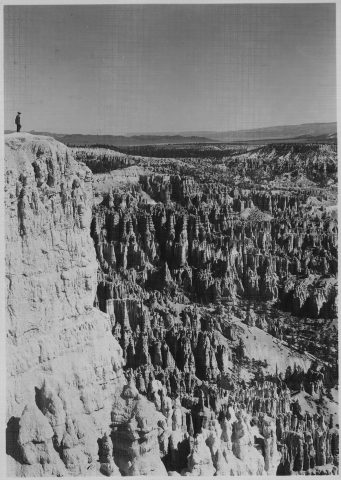
The hike isn’t an easy one. The elevation changes are steep in places, and the trail can be rocky underfoot. But the difficulty is part of what makes it rewarding. There’s a satisfaction in reaching the top after the climb, in knowing that the views weren’t just handed to you but earned with every step. And when you finally emerge back at the rim, the canyon spread out below, it’s hard not to feel like you’ve seen something most people only glimpse from a distance. That’s the thing about Navajo Loop—it doesn’t just show you the landscape. It lets you walk inside it.