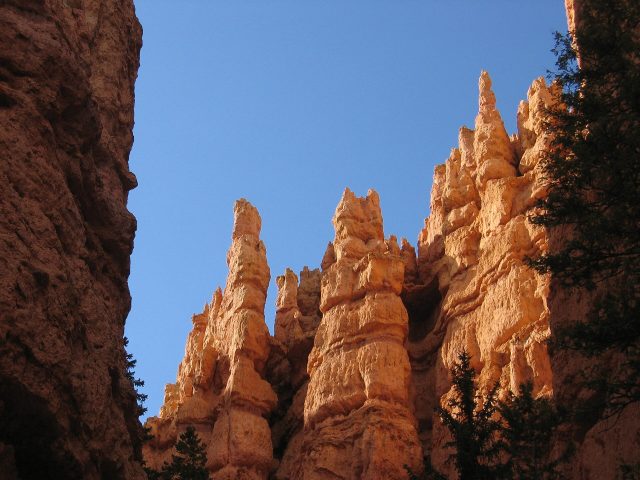
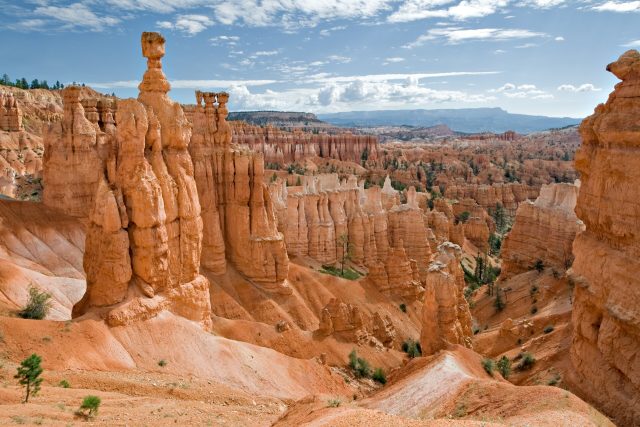
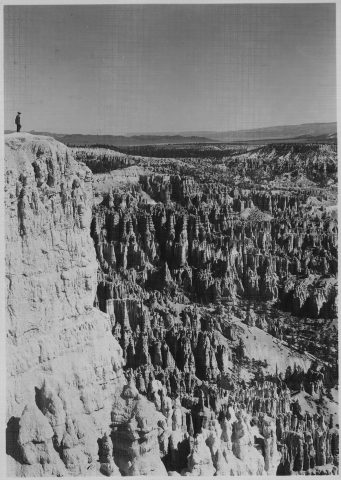
Bryce Point isn’t the first overlook most visitors rush to in Bryce Canyon National Park, and that’s part of its quiet magic. Perched at nearly 8,200 feet above sea level, it offers one of the most expansive views of the park’s famous amphitheater—a vast, undulating landscape of orange and white rock spires known as hoodoos. From here, the scale of the canyon becomes impossible to ignore. The hoodoos stretch out in every direction, their jagged silhouettes resembling the ruins of an ancient city or a petrified forest, frozen in time. The effect is both humbling and surreal, as if nature decided to sculpt something deliberately fantastical.
The story of how this place came to be begins millions of years ago, when a vast inland sea covered the region. Over time, layers of sediment settled at the bottom, compacting into limestone, siltstone, and mudstone. Then, the real work began. Water, wind, and ice carved away at the softer rock, leaving behind the harder sections that now stand as hoodoos. The Paiute people, who lived in this area long before European settlers arrived, had their own explanation. They believed the hoodoos were once people, turned to stone as punishment for their misdeeds. Whether you see them as geological wonders or the remnants of a cautionary tale, the formations carry a sense of mystery that lingers long after you’ve left.
What sets Bryce Point apart from other overlooks in the park is its ability to make the canyon feel alive. While some viewpoints offer more intimate, framed glimpses of the hoodoos, this one presents the amphitheater in its full, overwhelming grandeur. The hoodoos here aren’t just scenery—they feel like characters in a vast, silent drama. The best times to visit are at sunrise or sunset, when the light shifts rapidly, painting the rocks in shades of rose, gold, and deep crimson. At dawn, the first rays of sunlight catch the tops of the spires, making them glow as if lit from within. At dusk, the lengthening shadows create a play of light and dark that gives the landscape an almost three-dimensional quality.
Getting to Bryce Point is straightforward. A paved road leads from the park’s main entrance to a small parking area, and from there, it’s just a short walk to the overlook. There are no railings at the edge—just a sheer drop into the canyon—so it’s wise to keep an eye on children or anyone prone to dizziness. That said, the overlook is broad and stable, and the view is so mesmerizing that most people find themselves too absorbed to worry about the height. The air up here is thin and crisp, carrying the scent of pine and sagebrush, a reminder of just how high you really are.
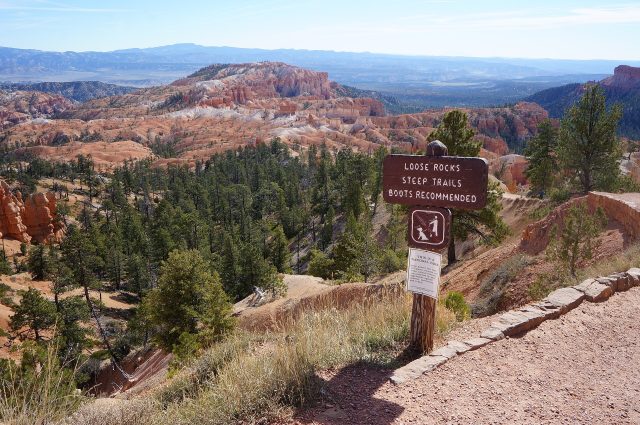
For those who want to explore further, Bryce Point is the starting point for several hiking trails that descend into the canyon. The most popular is the Navajo Loop, which winds down among the hoodoos, allowing you to walk between them and see their intricate details up close. Even if you don’t venture far, simply standing at the edge of the overlook can be enough. The silence here is profound, broken only by the occasional call of a raven or the rustle of wind through the pines. It’s a place where the vastness of the landscape makes you feel both insignificant and deeply connected to something larger.
The weather at Bryce Point can change quickly, even in summer. Mornings are often cool, and evenings can be downright chilly, so it’s worth bringing layers. Winter transforms the canyon into a different kind of wonderland, with snow dusting the hoodoos and turning the landscape into a monochrome dreamscape. However, the road to the overlook is sometimes closed during heavy snowfall, so it’s best to check conditions ahead of time. Spring and fall are ideal for visiting—fewer crowds, milder temperatures, and the hoodoos take on richer hues as the light shifts with the seasons.
Bryce Canyon isn’t a place you can rush through. It demands time—to adjust to the altitude, to absorb the scale of the landscape, to simply sit and listen. Bryce Point is often where that realization hits. From here, you can see the full sweep of the amphitheater, the way the hoodoos rise and fall like waves, the way the light plays across their surfaces. It’s easy to understand why this place became a national park, why it’s protected, and why it continues to captivate those who make the journey.
There are moments at Bryce Point that feel almost surreal. On rare mornings, fog fills the canyon below, making the hoodoos appear as if they’re floating above the clouds. After a rainstorm, the wet rock glows in deep, saturated reds, and the air smells of damp earth and pine. These fleeting instances don’t happen every day, but when they do, they turn the overlook into something more than just a viewpoint. It becomes a place where the landscape feels alive, where the rocks seem to breathe, and where nature reminds you of its quiet, enduring power.