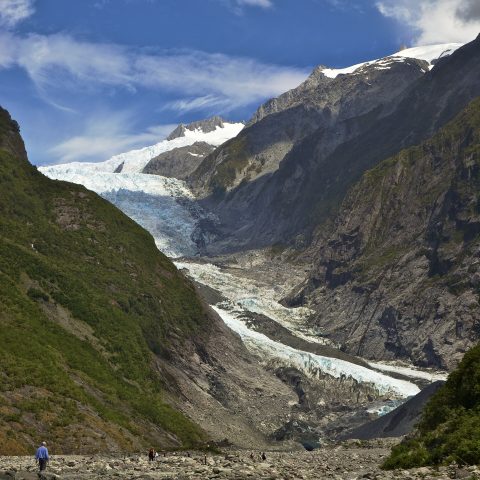
Alex Knob Track isn’t the kind of place you visit for sweeping postcard views. It’s where you go to feel the raw pulse of New Zealand’s wilderness, where the air carries the weight of untamed land and the silence hums with something older than memory. The trail begins just outside Franz Josef township, where the glacier grinds its way down from the Southern Alps, carving valleys that shift between dense rainforest and rivers of stone. This is a landscape that doesn’t care if you’re here or not—it existed long before you arrived and will remain long after you’ve left.
The climb is steep, the path twisting between boulders and gnarled roots that seem to shift underfoot. Weather here has a mind of its own, swinging from sun to rain to mist in the space of an hour. That unpredictability is part of the appeal. There’s a sense, as you ascend, that you’re walking somewhere most travelers never bother to go—a place where the only reward is the climb itself.
The track takes its name from Alexander Graham, one of the first European settlers in the region. In the late 1800s, he hacked his way through the bush, cutting rough paths to connect isolated settlements with the coast. The knob—a rounded summit at just over a thousand meters—offers a view back toward Franz Josef Glacier and the jagged peaks beyond. The Māori knew this place as Ka Roimata o Hine-hukatere, the Tears of Hine-hukatere, a name that speaks of loss and legend. Today, few remember it.
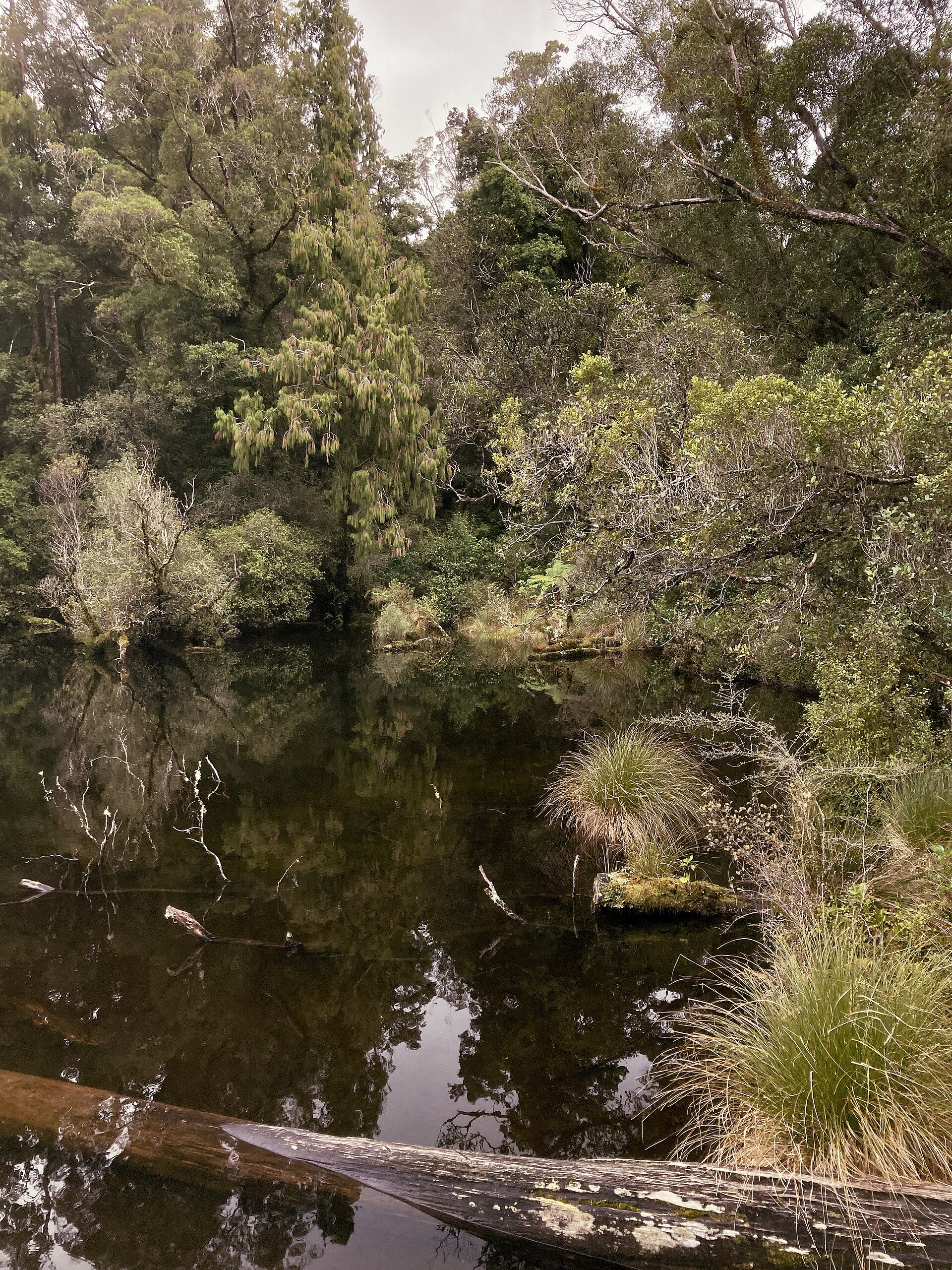
The ascent usually takes three to four hours one way, starting from a small car park where hikers check their gear and steel themselves for the climb. The first stretch winds through thick forest, the ground soft underfoot with fern and moss. The air is thick with the scent of damp earth and pine, and if you’re lucky, you might spot a kea—a mischievous alpine parrot with olive-green feathers—watching you with far too much interest. These birds have a habit of stealing anything left unattended, from snacks to shoelaces.
As you climb higher, the trees thin out, giving way to open slopes where the wind picks up and the valley unfolds below. The trail here is rougher, the footing less certain. There are no handrails, no signs warning you of danger. This is a place that trusts you to know your limits. By the time you reach the top, the forest has given way to alpine tussock and wildflowers, their colors sharp against the muted greens and grays of the mountains. Even on a clear day, the air is cool, the kind of chill that seeps into your bones if you stand still too long.
On a good day, the view from Alex Knob is worth every step. Franz Josef Glacier snakes between the peaks like a frozen river, its surface a maze of crevasses and ice. Beyond it, the Southern Alps stretch into the distance, their ridges sharp enough to cut the sky. But the weather doesn’t always cooperate. More often than not, clouds roll in, swallowing the valley below until it feels like you’re standing at the edge of the world, with nothing but mist and wind for company.
This isn’t a hike for those who expect comfort. There are no viewing platforms, no cafes, no gift shops—just the trail, the mountains, and the sky. The summit is exposed, with no shelter from the elements. If the weather turns, you’ll need to descend quickly. In winter, the track becomes treacherous, with ice and snow making the climb dangerous. Even in summer, conditions can change in minutes. Proper gear is essential: waterproof layers, sturdy boots, and enough water to last the trip.
Most who make it to the top don’t regret the effort. Unlike the crowded viewpoints at the glacier’s base, Alex Knob offers solitude. You can sit on a rock, listening to the wind and watching the light shift across the mountains. On clear days, the Tasman Sea glints in the distance, a reminder of how vast this land really is. This is a place that doesn’t just show you New Zealand—it lets you feel it.
The track is a quiet witness to history. Long before tourists arrived, Māori hunters and later European prospectors passed this way. The gold rush of the 1860s brought more people into these mountains, and by the early 20th century, the first visitors were making the climb for the view. Little has changed since then. The path is still rough, the weather still unpredictable, the sense of isolation just as strong.
If you find yourself in Franz Josef and want to understand why people fall in love with this country, this is where you should go. Don’t rush. Let the climb set the pace. The mountains have been here for millennia—they can wait a little longer.