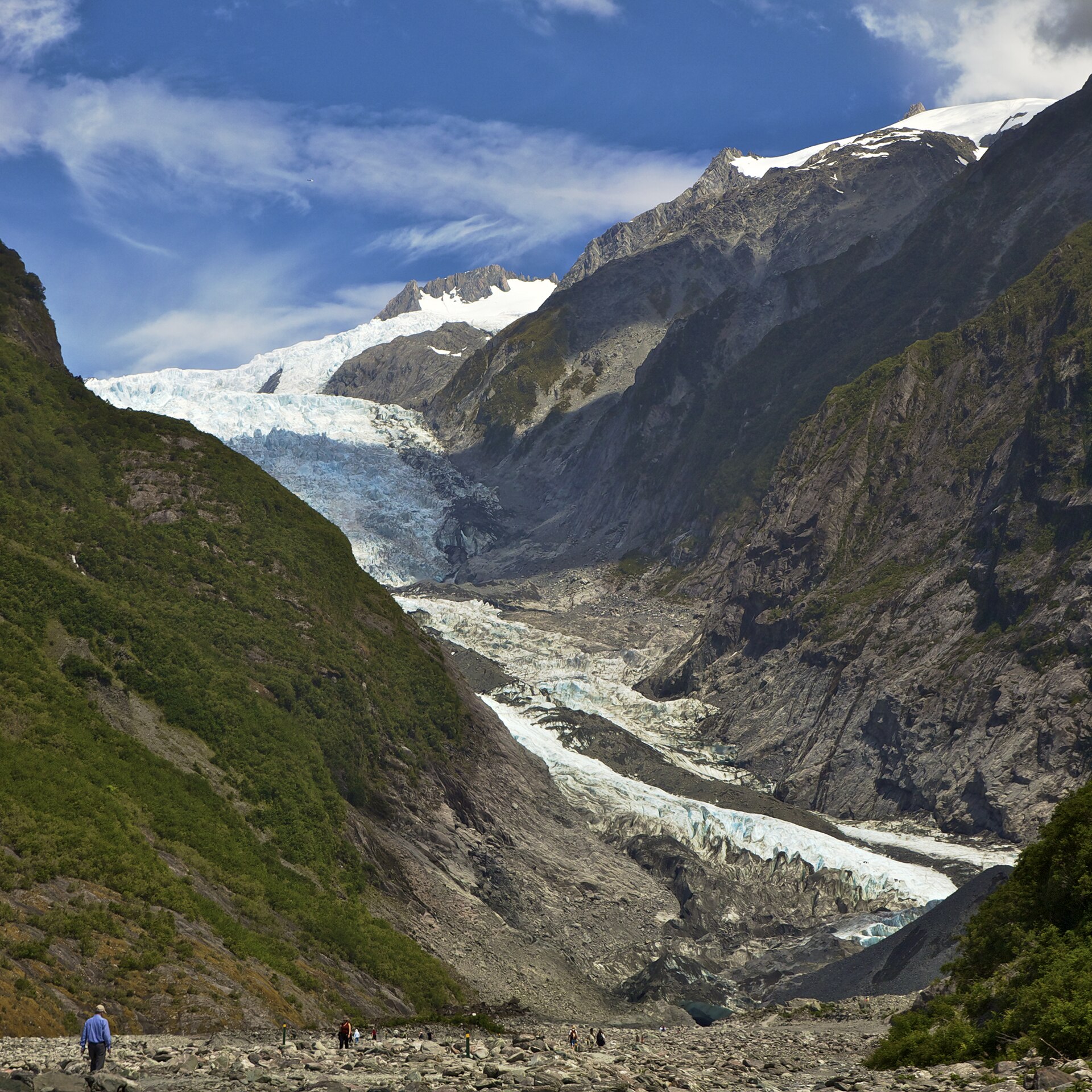
Franz Josef Glacier is one of those rare places where nature reveals both its raw power and its delicate fragility. Tucked along the wild west coast of New Zealand’s South Island, it spills down from the snow-capped peaks of the Southern Alps, its icy tongue stretching almost to the edge of a lush rainforest. The contrast is striking—ancient glaciers and dense greenery existing side by side, as if the landscape defies the usual rules of time and geography.
The glacier carries a history as layered as its ice. For the Māori, it was known as Ka Roimata o Hinehukatere, or "the tears of Hinehukatere." According to legend, a young woman climbed into the mountains in search of her lost lover and perished there, her grief crystallizing into the glacier. European explorers first documented it in 1865, when geologist Julius von Haast named it after Austria’s Emperor Franz Josef I. Since then, it has drawn travelers, scientists, and anyone curious enough to witness a river of ice flowing through the centuries.
What makes Franz Josef unusual is how far it descends—just 300 meters above sea level, one of the lowest glaciers in the world. Stretching about 12 kilometers long, with ice hundreds of meters thick in places, it moves at a surprisingly fast pace, sometimes shifting several meters in a single day. This constant motion means the glacier is always changing, advancing and retreating, leaving behind moraines and carved valleys. The shifts are visible over just a few years, making it a fascinating natural phenomenon to observe.
Walking on the glacier isn’t just a sightseeing trip; it’s an experience that stays with you. Guided hikes take visitors along carefully chosen routes, where the ice reveals its secrets—deep crevasses, hidden caves, and shades of blue that range from pale translucence to deep sapphire. In winter, the surrounding slopes are blanketed in snow, but summer brings its own magic, with meltwater streaming down in waterfalls that feed the rainforest below. Some tours offer multi-day treks, while others keep it short, but every step feels like stepping into another world.
The glacier is part of Westland Tai Poutini National Park, a place where nature thrives untouched. Ancient ferns and towering rātā trees grow in the damp earth, while kea—the clever, mischievous alpine parrots—wheel overhead, often swooping down to investigate visitors. The forest is alive with birdsong, and if you’re lucky, you might spot seals lounging on the nearby coast. The air smells of wet earth and salt, a reminder of how close the ocean is.
For those who want a different perspective, helicopter tours offer a breathtaking view from above. The flight takes you over vast ice fields and jagged peaks, where the glacier’s winding path is laid bare. Some tours even include a landing on the ice, where you can walk across its surface in crampons and peer into icy caves. The silence up there is profound, broken only by the occasional crack of shifting ice.
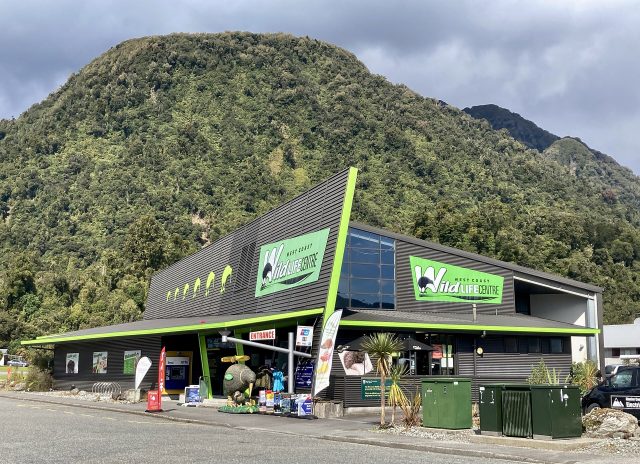
Franz Josef, the small town that serves as the gateway to the glacier, is quiet and unassuming. After a day of exploring, visitors can warm up in cozy cafés or stay in lodges with mountain views. The locals are used to travelers passing through, but life here moves at its own pace—unhurried, with the sound of the river and the distant calls of kea filling the evenings.
This is a place that makes you pause. There’s no rush, no noise, just the slow, steady presence of ice and rock, a reminder of how small we are against the vastness of time. Franz Josef Glacier isn’t just a landmark; it’s a living thing, shifting and breathing, leaving anyone who sees it with a sense of wonder that lingers long after they’ve left.