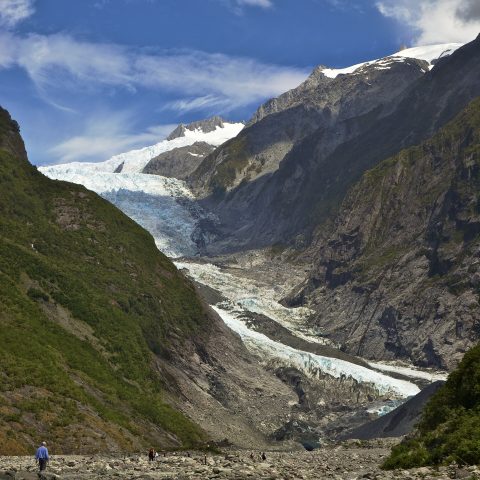
Nestled at the foot of the Franz Josef Glacier on New Zealand’s rugged West Coast, the Franz Josef Hot Springs feel like a secret the earth has chosen to share. Here, geothermal waters bubble up from deep underground, creating a series of warm pools that cascade down terraces toward the Waiho River. The contrast is striking—steam rises from the water while ice clings to the glacier’s edges just beyond, a reminder of how closely fire and ice coexist in this part of the world. The setting is wild and untamed, with dense native bush clinging to the hillsides and the Southern Alps looming in the distance. It’s a place where the land still dictates the rhythm, and visitors are merely temporary guests.
The history of these springs is as layered as the landscape itself. Long before European explorers arrived, the Māori people knew of their restorative powers. According to oral traditions, the springs were a place of healing, where warriors and travelers would soak to ease aching muscles after journeys through the mountains. The name the Māori gave this area—*Kā Roimata o Hine Hukatere*, or "The Tears of Hine Hukatere"—hints at a deeper connection to the land, one rooted in legend and reverence. The glacier and springs later took their current name from Austrian geologist Julius von Haast, who named them in honor of Emperor Franz Josef I in the 1860s. The dual names reflect the two narratives that have shaped this place: one of indigenous knowledge and another of colonial discovery.
The design of the hot springs is deliberately understated, allowing the natural surroundings to take center stage. The pools, lined with local stone, are arranged in tiers that follow the slope of the land, each fed by water heated deep within the earth. Temperatures vary from pool to pool, but all hover around a soothing 36 to 40 degrees Celsius, rich with minerals that leave skin feeling soft and joints less stiff. Native plants grow along the edges, their leaves brushing against the water’s surface, while the absence of artificial lighting means that after dark, the only illumination comes from the stars overhead. The steam curling into the night air adds to the sense of being somewhere untouched by time.
What makes these springs different from other thermal spots in New Zealand is their isolation. There are no crowds here, no grand resorts or commercialized experiences—just the quiet hum of the river and the occasional call of a kea, the cheeky alpine parrot that sometimes ventures down from the mountains. The springs sit within the boundaries of Westland Tai Poutini National Park, a place where the land feels raw and alive. Glaciers have carved their way through these valleys for millennia, leaving behind moraines and waterfalls that tell a story of constant change. To soak in the warm water while the glacier looms nearby is to feel the weight of that history, to understand how fleeting even the most massive forces of nature can be.
The Franz Josef Glacier itself is a marvel, one of the few in the world that descends so close to sea level. For much of the 20th century, it advanced dramatically, but like many glaciers, it has been retreating in recent decades due to climate change. Still, its presence is undeniable—a river of ice snaking down from the mountains, its surface cracked and crevassed, fed by snowfall high above. Guided walks onto the glacier are available year-round, offering a chance to step onto its surface and witness the power of moving ice up close. The experience is humbling, a reminder that this landscape is far older and more enduring than any of us.
The West Coast is known for its moody, unpredictable weather, and the hot springs are no exception. Rain is common, often arriving suddenly and leaving just as quickly, while mist can roll in and obscure the mountains in minutes. Yet there’s a beauty in that impermanence. After a downpour, the air smells of wet earth and pine, and the steam from the pools seems to rise thicker, as if the land itself is exhaling. Soaking in the warm water while rain patters on the surface creates a strange kind of comfort, a sense of being sheltered from the elements even as you’re surrounded by them.
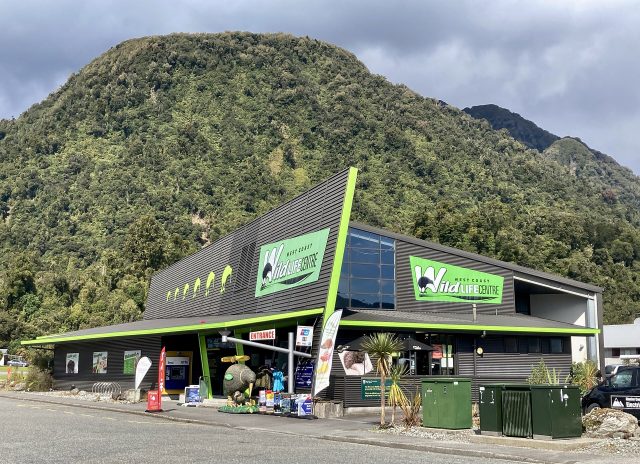
The nearest settlement is the small village of Franz Josef, a cluster of lodges, cafes, and shops that cater to travelers passing through. It’s a quiet place, where the pace of life slows to match the rhythm of the surrounding wilderness. The journey here from larger towns like Christchurch or Queenstown is long but rewarding, winding through mountain passes and past lakes so clear they seem to glow. In the village, you can pick up supplies or swap stories with locals, who know the land’s moods better than anyone. Many will point you toward lesser-known trails or share tales of the glacier’s past advances and retreats, adding another layer to the experience.
There’s something about the Franz Josef Hot Springs that lingers long after you’ve left. Perhaps it’s the way the warmth seeps into your bones, or the way the steam blurs the line between water and sky. Maybe it’s the quiet, the kind that makes you listen more closely to the sound of the river or the wind moving through the trees. Or it could be the realization that this place has existed for centuries, long before anyone thought to build a pool or pave a road, and will continue long after we’re gone. It’s not just a destination; it’s a pause, a moment to step outside of time and remember what it means to be small in the face of something vast. And for many, that’s reason enough to return.