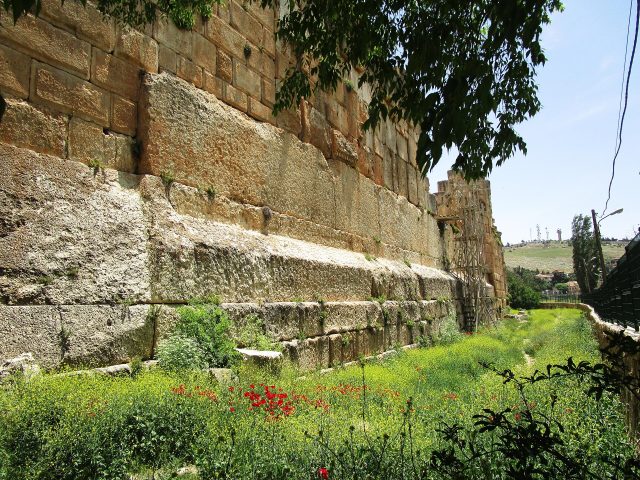
Baalbek is a place where time seems to stand still, its ancient stones whispering stories of empires long gone. Among its ruins, the Temple of Bacchus stands out—not just for its grandeur, but for the way it has endured, nearly untouched by the centuries. Built during the height of Roman rule in the second century AD, this temple was once part of Heliopolis, a city that served as a major religious hub in the region. The Romans didn’t just construct a new sanctuary here; they wove it into an already sacred landscape, layering their own beliefs over those of the Phoenicians and Greeks who came before them. For a long time, scholars debated whether the temple was dedicated to Jupiter, but the intricate carvings and surviving reliefs—depicting vines, revelry, and scenes from mythology—point clearly to Bacchus, the god of wine and ecstasy.
The temple’s architecture is nothing short of breathtaking. It rises from a towering podium, its broad staircase leading visitors upward as if inviting them into another world. Forty-two Corinthian columns, each carved from a single block of limestone, encircle the structure, their fluted shafts and ornate capitals casting long shadows in the sunlight. Inside, fragments of the original splendor remain: niches where statues once stood, intricately carved panels, and traces of mosaic floors that hint at the temple’s former opulence. The main hall, now open to the sky, was once the heart of the sanctuary, where a colossal statue of Bacchus would have presided over rituals and offerings. Even in ruin, the precision of the stonework is astonishing—blocks fit together so seamlessly that it’s easy to imagine the masons stepping away only moments ago.
What makes the Temple of Bacchus truly remarkable is its state of preservation. While other ancient sites have crumbled under the weight of time, earthquakes, and conflict, this temple has survived with much of its structure intact. Some of the roof and upper sections are gone, but the walls and columns remain, their weathered surfaces bearing the marks of history. In the Middle Ages, the temple was repurposed as a fortress, its massive stones offering protection to those who sought refuge within. Later, it became a site for religious ceremonies, its meaning shifting with each new era. Today, it stands as one of the best-preserved Roman temples in the world, a silent witness to the rise and fall of civilizations.
Walking through the temple is like stepping into the past. The air is still, broken only by the rustle of wind through the columns, and the scale of the place makes it easy to imagine the processions that once climbed these steps—priests carrying offerings, worshippers chanting hymns, the scent of incense lingering in the air. Beyond the temple, the ruins of Baalbek stretch out, including the colossal Temple of Jupiter, its massive stone blocks a testament to Roman engineering, and the smaller, more delicate Temple of Venus, a reminder of the city’s role as a center of worship. Together, these structures paint a picture of a place where religion, power, and art once converged.
The Temple of Bacchus is more than just an architectural marvel; it’s a symbol of cultural fusion. The Romans who built it were heirs to a complex legacy, blending their own traditions with those of the Phoenicians, Greeks, and local peoples. The very name Baalbek reflects this layered history, derived from the Phoenician god Baal and later linked to the Greek sun god Helios. The temple’s carvings tell stories of gods and mortals, their myths intertwining in ways that feel both familiar and foreign. This blending of influences makes the site feel alive, not just a relic of the past but a place where different worlds once met and shaped one another.
Today, Baalbek is a destination for both travelers and scholars. Archaeologists continue to uncover new details about the temple’s construction, its rituals, and the lives of those who once gathered here. Each discovery adds another piece to the puzzle, helping us understand how the Romans built on such a grand scale and what daily life might have been like in this corner of the empire. For visitors, the temple offers something rare: a chance to stand in the presence of history, to feel the weight of the past in the stones beneath their feet. It’s a place that invites reflection, not just on the achievements of ancient civilizations, but on the fragility of their legacy.
The light in Baalbek changes with the hours. In the early morning, the temple’s columns glow golden in the soft light, while at midday, the sun beats down, casting sharp shadows that accentuate the depth of the carvings. As evening falls, the ruins take on a quieter, more contemplative mood. There’s no rush here—no need to hurry from one exhibit to the next. You can wander among the columns, tracing the patterns of vines and figures etched into the stone, or simply sit on the steps and gaze out at the Bekaa Valley below. The landscape hasn’t changed much since the temple was built; the same hills roll into the distance, the same sky arches overhead.
Baalbek isn’t just an open-air museum. It’s a place where history feels immediate, where the past isn’t something confined to books but something you can touch, hear, and even smell—the scent of wild thyme carried on the breeze, the rough texture of ancient stone under your fingers. The temple doesn’t just tell a story; it lets you step into it. And in a world where so much of antiquity has been lost or reduced to fragments, that’s a rare and precious thing.