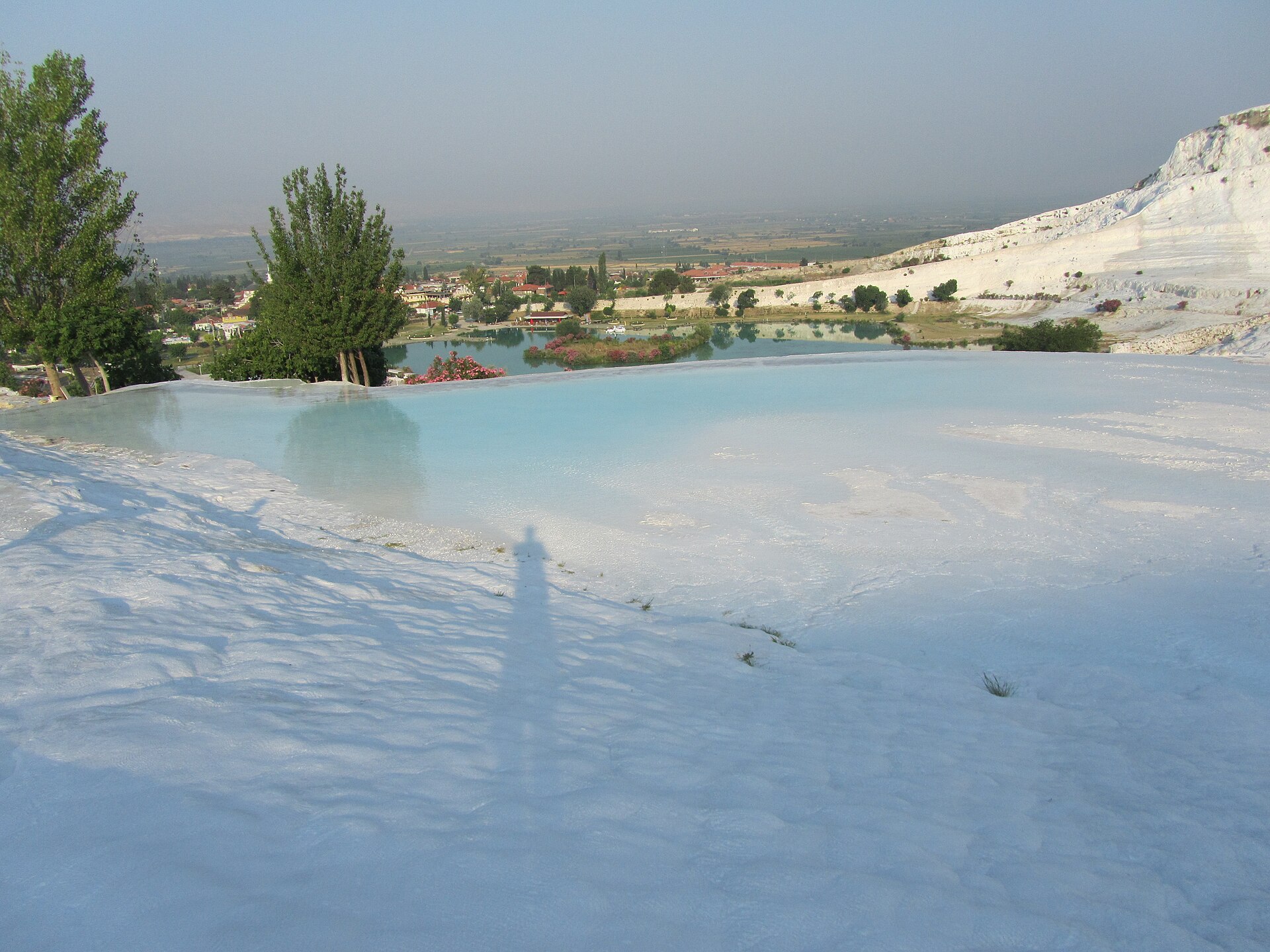
Pamukkale’s travertine terraces cascade down the hillside like a frozen river of milk, their chalk-white surfaces glowing under the Anatolian sun. The name means "cotton castle," and it’s easy to see why—the mineral-rich hot springs have sculpted these stepped pools over thousands of years, each one filled with warm, turquoise water that spills gently from one level to the next. The effect is surreal, as if the landscape itself has been dipped in liquid stone.
The water here emerges from the earth at around thirty-five degrees Celsius, carrying dissolved calcium carbonate that hardens on contact with the air. Over centuries, this process has built the terraces into their current form, layer by layer. Walking barefoot along the designated paths is the only way to explore them—shoes are banned to protect the delicate surface, and straying from the route risks damaging the fragile pools. The stone is smooth in places, but sharp in others, so each step requires a little care.
Decades ago, the terraces faced a different kind of threat. Hotels once stood at the top, diverting the mineral-rich water into private pools, which caused the travertines to lose their brilliant whiteness. In the 1980s, the buildings were demolished, and the water flow was carefully regulated to restore the natural balance. Today, the terraces are protected, though the scars of that era remain in the form of faded patches where the damage was worst.
Above the travertines lies Cleopatra’s Pool, a thermal spring where visitors can swim among submerged Roman columns. The water here is the same as that which feeds the terraces—warm, mineral-laden, and said to have healing properties. The pool is named after the Egyptian queen, though whether she actually bathed here is a matter of legend rather than fact. What’s certain is that the experience of floating in water that has flowed through ancient ruins is unforgettable.
Just beyond the pool, the ruins of Hierapolis stretch across the plateau. Founded in the second century BC, this once-thriving city was a center of Roman and Byzantine culture, and its remains are remarkably well-preserved. The vast necropolis, with its hundreds of tombs, speaks to the city’s importance as a place of pilgrimage and healing. The theater, carved into the hillside, still hosts performances today, while the ruins of the Roman baths offer a glimpse into daily life two thousand years ago. Hierapolis and Pamukkale have been a UNESCO World Heritage Site since 1988, recognized not just for their natural beauty but for the way they intertwine with human history.
The best way to explore the terraces is to start from the bottom and walk upward. The slope is gentle, and the warm water makes the climb feel effortless. Going down can be trickier—the stone is slippery, and the descent is steeper. There’s no shade along the way, so in summer, the heat can be intense. Most visitors arrive in the late afternoon, when the light softens and the travertines take on a pinkish hue. The crowds thin out by sunset, leaving the terraces bathed in a quiet, golden glow.
Pamukkale is a place where nature and history feel inseparable. The same forces that shaped the terraces also drew people here for millennia—first as a sacred site, then as a spa destination, and now as one of Turkey’s most famous landmarks. The nearby town of Denizli serves as the main gateway, with buses running regularly to the site. From Istanbul, overnight buses and flights to Denizli make the journey straightforward. At the foot of the terraces, small hotels offer pools filled with the same mineral-rich water, allowing visitors to soak long after they’ve left the main site.
There’s something almost meditative about walking these ancient steps. The sound of water trickling over stone, the warmth of the sun on bare skin, the way the terraces seem to shift color with the light—it’s a landscape that invites slow, thoughtful exploration. Whether you come for the history, the natural wonder, or simply the chance to float in a pool where emperors and kings once bathed, Pamukkale leaves an impression that lingers long after you’ve left.