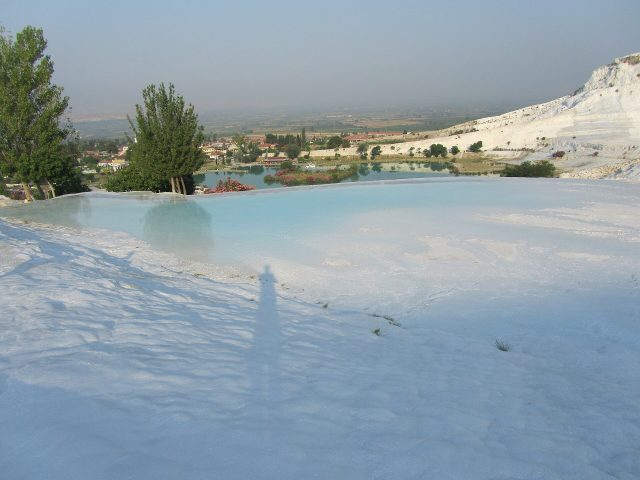
Perched above the surreal white terraces of Pamukkale, the ancient city of Hierapolis feels like a place where time has settled into quiet layers. Founded in the second century BCE by the kings of Pergamon, it was always more than just a city—it was a destination for those seeking healing in its thermal waters, a reputation that earned it the name "Sacred City." The ruins today carry the weight of that legacy, though much of what remains was shaped by Roman hands after a devastating earthquake in 60 CE leveled the earlier settlement. The Romans rebuilt Hierapolis with a grandeur that still impresses, turning it into a thriving spa town where the wealthy and the ailing came to soak in the mineral-rich springs.
The most striking structure here is the theater, a massive semicircle carved into the hillside that once held up to twelve thousand spectators. What makes it remarkable isn’t just its size but the intricate details that have survived: the stage is adorned with sculpted reliefs depicting scenes from mythology, and the seating still bears the names of prominent citizens etched into the stone. It’s easy to imagine the crowd filling the tiers, the murmur of voices rising as performers took the stage. Today, the theater is often the busiest spot in Hierapolis, especially around midday when tour groups cluster in the sun, but if you arrive early or linger after the crowds thin, the silence lets you hear the echoes of the past more clearly.
Beyond the theater, the city sprawls across a vast area, and walking its paths means navigating a landscape of half-buried streets and crumbling temples. The necropolis is one of the largest in Asia Minor, a city of the dead stretching along the road leading into Hierapolis. Over twelve hundred tombs line the way, ranging from simple sarcophagi to elaborate family mausoleums, their inscriptions worn by time. Many of those buried here were pilgrims who came seeking a cure but found only death, their final resting places a stark reminder of the limits of ancient medicine. The tombs vary in style—some are plain, others ornate, with carvings of garlands or scenes from the afterlife—but all share the same quiet dignity.
One of the most intriguing spots in Hierapolis is the Plutonium, a cave once believed to be the gateway to the underworld. Ancient writers like Strabo described how priests would lead animals inside, only for them to collapse from the poisonous gases seeping from the earth. The ritual was a demonstration of divine power, a way to prove the cave’s sacred status. Today, the entrance is sealed off, the gases still a hazard, but the site retains an eerie presence. Nearby, the warm waters of Cleopatra’s Pool offer a more inviting experience. The pool is fed by a natural spring, its surface dotted with submerged Roman columns that tumbled during an earthquake. Swimming here feels like stepping into history, the water’s gentle warmth contrasting with the cool marble beneath your fingers.
The archaeological museum, housed in what were once the city’s grand baths, provides a deeper look at Hierapolis’s past. The collection includes finely carved sarcophagi, statues of gods and emperors, and everyday objects that hint at the lives of its inhabitants. The baths themselves are worth exploring, their vaulted chambers still echoing with the sounds of ancient conversations and splashing water. The museum closes earlier than the rest of the site, so it’s best to visit first if you want to see everything.
Exploring Hierapolis is a full-day endeavor, and the sheer size of the ruins means you’ll cover a lot of ground. The terrain is uneven, with few shaded spots to escape the sun, so it’s wise to bring water and wear sturdy shoes. The walk from the lower entrance to the theater takes about twenty minutes uphill, and the paths wind through fields of wildflowers in spring or dry grass in summer. The ticket grants same-day access to both Hierapolis and the travertines below, but once you leave, you can’t re-enter, so plan your visit accordingly.
The best time to experience Hierapolis is in the early morning or late afternoon, when the light softens the stone and the crowds disperse. In the heat of midday, the site can feel overwhelming, with tour groups filling the theater and the narrow streets. But when the sun dips lower, the ruins take on a golden hue, and the silence returns. It’s then that you can appreciate Hierapolis not just as a collection of ancient stones, but as a place where people once lived, loved, and sought solace in the waters that gave the city its purpose. The past here isn’t just preserved—it lingers, waiting to be noticed by those who take the time to look.