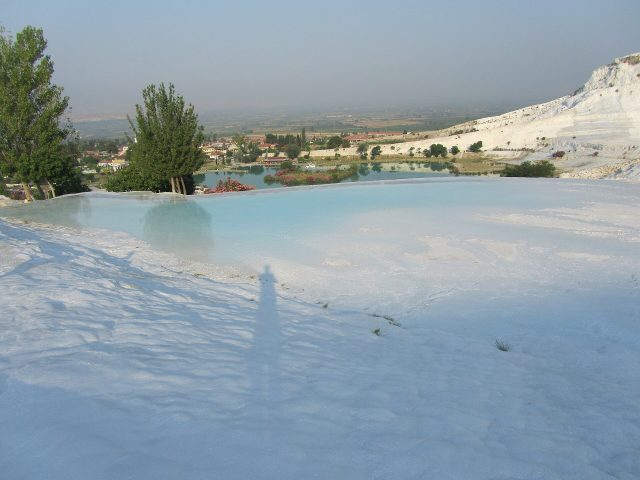
The necropolis of Hierapolis is one of those rare places where the past doesn’t just feel distant—it feels present. Stretching across the hillsides on the outskirts of modern Pamukkale, this vast city of the dead was where the inhabitants of ancient Hierapolis laid their loved ones to rest. The white travertine terraces that make Pamukkale famous form a stark, almost surreal backdrop to the thousands of tombs scattered here, each one a silent witness to lives lived two millennia ago.
Hierapolis was founded in the 2nd century BCE, but its golden age came under Roman rule, when it flourished as a center of trade, pilgrimage, and healing. The city’s thermal springs drew visitors from across the empire—some seeking cures, others simply looking for a place to spend their final years in comfort. The necropolis reflects this prosperity, with tombs ranging from simple stone sarcophagi to elaborate mausoleums adorned with intricate carvings and inscriptions. The wealthier citizens commissioned grand structures that mimicked temples, complete with columns and pediments, while others settled for more modest resting places. What unites them all is the care with which they were built, a testament to how deeply the people of Hierapolis valued their dead.
Walking through the necropolis, it’s impossible not to wonder about the lives behind these stones. Many tombs still bear the names and titles of those buried within, and some even depict scenes from their lives—banquets, processions, or moments of everyday existence. The family tombs are particularly striking, designed to house generations under one roof, their architecture echoing the homes of the living. Some resemble miniature temples, others are little more than stone boxes sunk into the earth, but each one tells a story. The Greeks and Romans believed in honoring their ancestors, and this place is a physical manifestation of that belief.
The variety of tomb designs is astonishing. Some are shaped like small houses with pitched roofs, mirroring the domestic architecture of the time. Others are more complex, with staircases leading down to burial chambers where sarcophagi once stood. Then there are the tumuli—mound-like structures covering underground vaults, a nod to older burial traditions. The mix of styles speaks to the city’s diverse influences, from Hellenistic to Roman, and even earlier Anatolian customs. Over time, earthquakes and looters took their toll, but enough remains to give a sense of how the necropolis must have looked in its prime.
What makes Hierapolis’ necropolis unusual is that it doesn’t feel like a graveyard. There’s no sense of morbidity here, just a quiet reverence for the past. The tombs are scattered across the landscape in a way that feels organic, almost as if the dead were simply part of the city’s fabric. In the early morning or late afternoon, when the light is soft and the crowds thin, the place takes on a timeless quality. The wind rustles through the grass, the shadows stretch long across the stones, and for a moment, it’s easy to imagine the voices of those who once walked these paths.
Hierapolis was a city that embraced both life and death, and nowhere is that duality more evident than in its necropolis. Unlike the bustling streets of the ancient city center, this place is peaceful, almost meditative. There are no tour groups rushing through, no vendors hawking souvenirs—just the occasional visitor moving quietly among the tombs. It’s a rare opportunity to connect with history in a way that feels personal, as if the past isn’t just something to be observed, but something to be felt.
The necropolis is also an active archaeological site, which helps preserve its authenticity. Excavations continue to uncover new finds, from fragments of pottery to inscriptions that shed light on the lives of Hierapolis’ inhabitants. This ongoing work ensures that the site doesn’t become a static exhibit, but remains a living part of the city’s history. It’s a reminder that these tombs weren’t just built to impress the living—they were meant to endure, to carry the memory of the dead into the future.
Visiting the necropolis is more than just a history lesson. It’s a chance to reflect on how little some things have changed. The people of Hierapolis, like us, grappled with questions of mortality and legacy. They built monuments to ensure they wouldn’t be forgotten, just as we do today. Standing among these ancient stones, it’s hard not to wonder what future generations will make of the traces we leave behind. The necropolis doesn’t offer answers, but it does something just as valuable—it makes you pause and consider the weight of time, and the quiet power of memory.