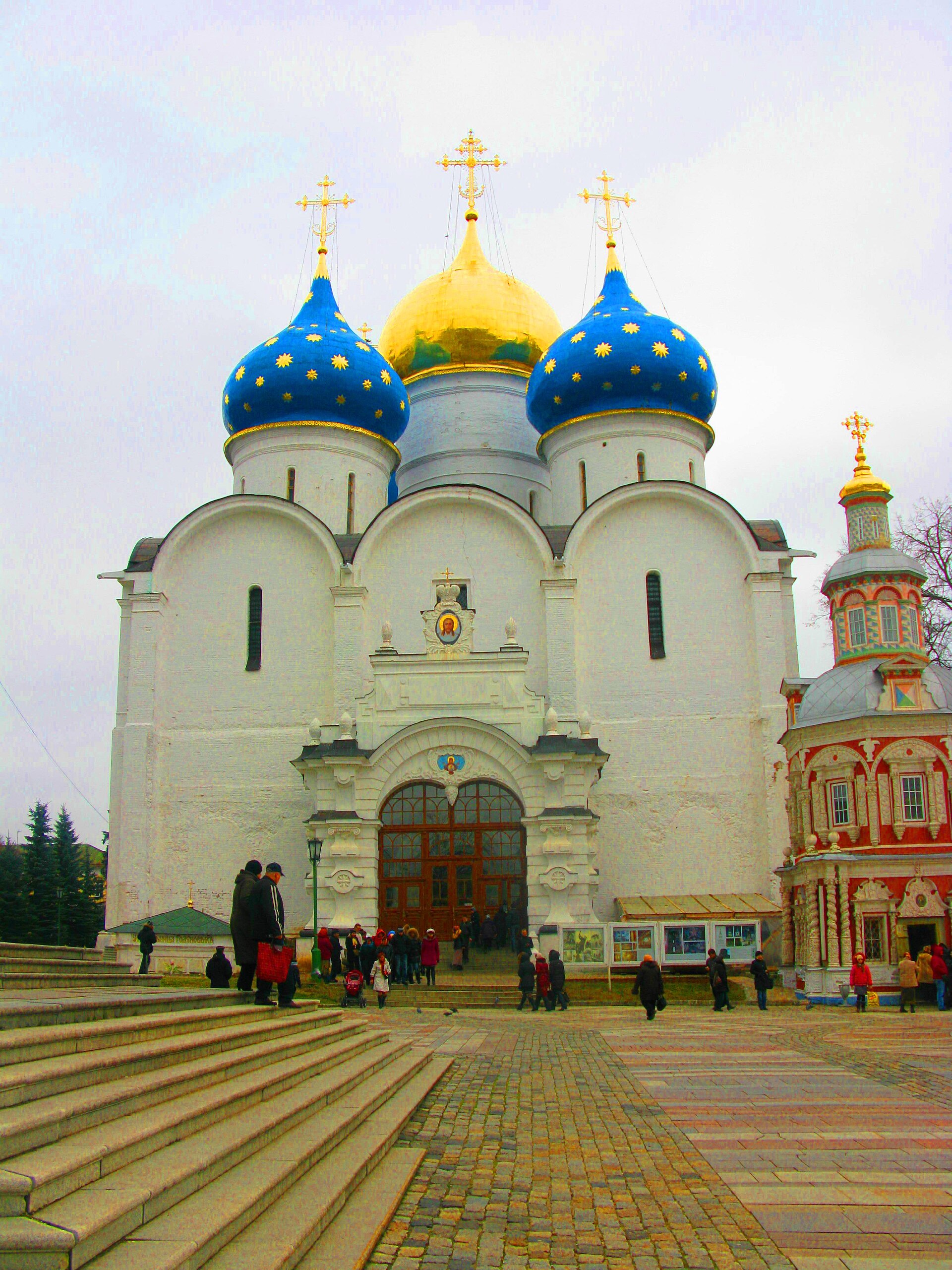
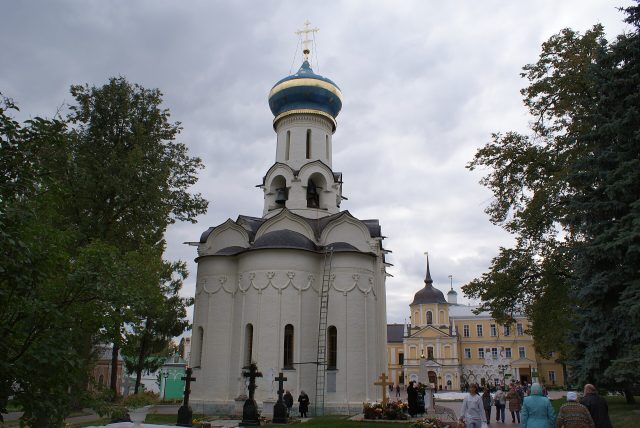
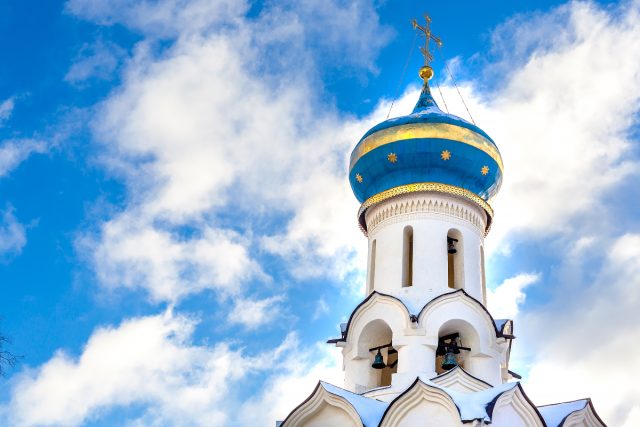
The trading rows of the Trinity Lavra of St. Sergius are one of those rare places where history doesn’t just linger in the past—it breathes alongside the present. Built in the late 18th century, they were conceived not merely as a marketplace but as an extension of the monastery’s spiritual and practical life. Pilgrims and townspeople once came here for everything from candles and icons to everyday goods and handcrafted wares, and in many ways, that purpose remains unchanged. The rows were designed to blend seamlessly with the grandeur of the lavra, their modest architecture serving as a quiet counterpoint to the towering walls and golden domes above.
The buildings themselves are unassuming yet elegant, their long, low structures punctuated by arched doorways and white stone details. The facades bear the subtle hallmarks of neoclassical design, a style that was fashionable at the time but never overpowering. Inside, the courtyards—once bustling with the chatter of merchants and customers—now offer a hushed retreat, where the only sounds are the occasional footsteps of visitors or the distant tolling of a monastery bell. The simplicity of the design belies its durability; these walls have witnessed centuries of trade, prayer, and daily life.
By the 19th century, the trading rows had become the economic heart of Sergiyev Posad. Beyond the essentials, they offered a showcase for local craftsmanship: wooden toys, painted spoons, and intricate embroidery, much of it made by peasants from nearby villages. Trade was brisk, especially during religious festivals, when the lavra drew thousands of pilgrims. The rows would transform into a lively bazaar, filled with the voices of merchants from distant provinces, haggling over prices or swapping stories. For many, this was more than commerce—it was a meeting place, a crossroads of cultures and traditions.
The Soviet era brought profound changes. Some of the shops were nationalized, and the nature of trade shifted, but the rows never lost their significance entirely. State-run stores took over some of the spaces, selling bread, dairy products, and other staples. During World War II, parts of the complex were repurposed for workshops producing military uniforms. After the war, life slowly returned to normal, though the bustling crowds of the past were gone. The rows adapted, as they always had, to the rhythms of a new era.
Today, the trading rows offer a glimpse into a slower, more deliberate way of life. The shops that remain are small and unhurried, selling icons, religious books, souvenirs, and handmade goods. There’s no pressure to buy, no rush to move on—just the quiet exchange between seller and customer, much as it might have been a century ago. Some of the original counters and wooden shelves still stand, their worn surfaces telling silent stories of countless transactions. The scent of beeswax, old wood, and freshly baked bread lingers in the air, a reminder of the rows’ enduring connection to both the sacred and the everyday.
Walking through the courtyards, it’s easy to imagine the past. The creaking floorboards, the sun-bleached stone, the way the light filters through the arches—all of it feels timeless. In summer, potted flowers line the walkways; in winter, snow dusts the rooftops, softening the edges of the buildings. The rows exist in a kind of suspended animation, neither fully a museum nor entirely a modern marketplace. They are a living archive, where the boundaries between the spiritual and the mundane blur. Here, an icon might sit beside a hand-thrown clay pot, and a church candle could share a shelf with jars of homemade preserves.
What makes the trading rows special isn’t just their age or their architecture, but the atmosphere they preserve. They are a bridge between the lavra and the town, between the sacred and the secular, between history and the present day. For pilgrims, they offer a place to find spiritual comfort; for tourists, a chance to take home a piece of Russian craftsmanship; for locals, a familiar corner of their town where time moves at its own pace. The rows don’t demand attention—they simply exist, offering a quiet invitation to step inside and linger.
In recent years, there’s been growing interest in the rows as a cultural landmark. Restoration efforts have begun, and historians study their architecture and past. Yet the true value of the place lies not in its preservation as a relic, but in its ability to remain relevant. The rows are still a place of commerce, though on a smaller scale, and they still serve the community in ways both practical and intangible. To visit them is to experience history not as something distant, but as something alive—something that continues to shape the present.
If you come here, don’t expect fanfare or crowds. The magic of the trading rows lies in their understated charm. You might spend an hour browsing through stacks of old books, listening to a shopkeeper share stories of local traditions. Or you might simply sit on a bench in one of the courtyards, watching the light shift across the white stone walls of the lavra. There’s no script to follow, no must-see attractions—just the quiet pleasure of a place that has endured, unchanged in spirit, for generations. That, in the end, is what makes it worth visiting.