Stone Town has a way of making history feel alive, not like something confined to textbooks or museum displays, but as if the past is still lingering in the air, just out of sight. Tippu Tip’s House is one of those places where that sensation is impossible to ignore. It isn’t a museum in the traditional sense—there are no glass cases or neatly labeled artifacts. Instead, the building stands much as it did when its most infamous resident, Hamed bin Mohammed al-Murjebi, known as Tippu Tip, walked its halls. A man of contradictions, he was a trader, explorer, and one of the most powerful figures in 19th-century East Africa, yet his legacy is deeply entwined with the darker chapters of the region’s history. Whether viewed as a pioneer or a symbol of exploitation, his house remains a tangible link to an era when Zanzibar was the crossroads of trade, ambition, and cultural collision.
The architecture of the house is classic Stone Town—thick coral-stone walls, soaring ceilings, and intricately carved wooden doors that served as both status symbols and practical defenses against the island’s heat. Inside, the rooms are spacious, with high, carved beams that once supported the canopy over the owner’s bed. The windows are fitted with *mashrabiya*, wooden lattice screens that filter light and air while shielding the interior from prying eyes. At the heart of the house lies the *ziyada*, an inner courtyard where guests would have gathered, their conversations drifting between Swahili, Arabic, and even English. These details aren’t just decorative; they’re a glimpse into how life was lived here, where every element of the home was designed for both comfort and secrecy.
Tippu Tip was born in 1837 to a Zanzibari Arab father and an Omani mother, his name a nod to the sound of gunfire that marked his birth during a battle. From an early age, he was drawn into the trade networks that crisscrossed East Africa, dealing in ivory, spices, and, infamously, enslaved people. His caravans ventured deep into the continent, reaching as far as the Great Lakes, long before European explorers dared to follow. At the height of his influence, his connections stretched from Oman to the Congo, and even European adventurers like Henry Morton Stanley relied on his knowledge and resources. Stanley’s writings acknowledge Tippu Tip’s role in his expeditions, though their relationship was far from straightforward—each used the other when convenient, with little regard for the moral implications of their dealings.
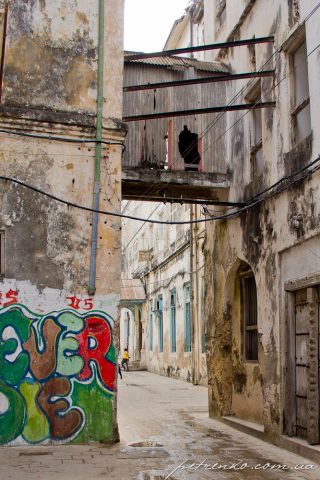
The house on Suicide Alley wasn’t just a home; it was the nerve center of Tippu Tip’s empire. Here, merchants, diplomats, and explorers would have gathered to negotiate deals, plan expeditions, and shape the fates of countless lives. After the abolition of the slave trade in the late 19th century, his power waned, but he adapted, shifting his focus to other ventures. He died in 1905, leaving behind wealth, multiple wives, and a legacy that still sparks debate. The house passed to his descendants, and today, some of them still live within its walls. Access is limited, but even from the outside, the building commands attention, its weathered stone and ornate doors hinting at the stories they’ve witnessed.
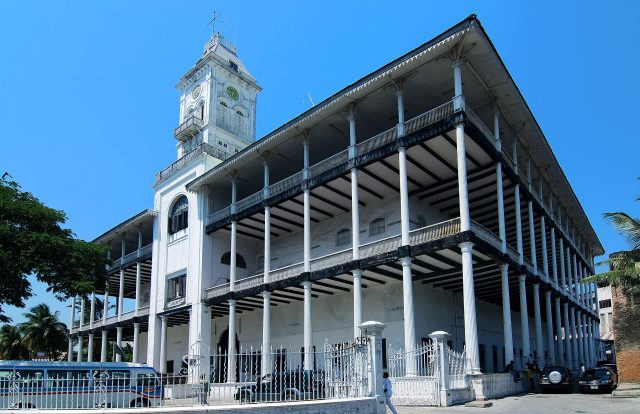
Stone Town itself is a maze of narrow alleys where history unfolds at every turn. Tippu Tip’s House sits near the waterfront, in what was once the heart of Zanzibar’s commercial life. The surrounding streets are lined with other historic buildings—the sultan’s palace, old Arab houses with their signature carved doors, mosques, and bustling markets. The pace here is unhurried, as if time has slowed to match the rhythm of the island. Wandering these lanes, you might catch glimpses of inner courtyards or hear the distant call to prayer, the murmur of vendors, or the crash of waves against the shore. In this setting, the house isn’t just a landmark; it’s part of a living, breathing place that has absorbed centuries of change without losing its essence.
Zanzibar today is a blend of cultures—Arab, African, Indian, and European influences are woven into its fabric. Tippu Tip’s House is a reminder of that complexity, a symbol of an era when the island was more than just a tropical paradise. It was a place where fortunes were made and lives were irrevocably altered. While most visitors come for the beaches and turquoise waters, those who take the time to explore Stone Town’s history will find that the past here isn’t just remembered—it’s still present, waiting to be discovered in the quiet corners of the city.
If you’re lucky enough to step inside the house, you’ll find traces of the 19th century scattered throughout—furniture, utensils, even weapons. But the real draw isn’t the objects themselves; it’s the atmosphere. The high ceilings, cool stone floors, and filtered light create a space where it’s easy to imagine the conversations that once filled these rooms, the deals struck, and the lives shaped within these walls. Even if you can’t go inside, standing at the entrance, running your fingers over the carved door, you can almost feel the weight of history pressing against it.
Stone Town has a way of making the past feel immediate, as if it’s just around the next corner. Tippu Tip’s House is one of those places where that illusion becomes real. Whether its owner was a visionary or a villain, his story is inseparable from Zanzibar’s. The house stands as a silent witness to that history, its walls holding more than just memories—they hold the echoes of a time when this island was at the center of the world.