Christ Church Cathedral in Stone Town is one of those rare places where history isn’t just remembered—it lingers in the air, in the texture of the walls, in the way light filters through stained glass. Built in the late 19th century on the site of Zanzibar’s last slave market, the cathedral stands as a quiet but unmistakable testament to the island’s painful past and the forces that reshaped it. Construction began in 1873, shortly after the sultan signed a treaty abolishing the slave trade, and was completed in 1887. The timing wasn’t coincidental. The British, who had gained influence over the island, saw the cathedral as both a moral statement and a symbol of their civilizing mission. Yet today, it feels less like a relic of colonial ambition and more like a place where the weight of history is acknowledged, not erased.
The architecture is a striking blend of Gothic revival and local craftsmanship, a combination that gives the cathedral its distinct character. The pointed arches and ribbed vaults are unmistakably European, but the coral stone—soft, porous, and warm under the tropical sun—is pure Zanzibar. The builders used what was available, carving the limestone into blocks that seem to breathe with the island’s humidity. Inside, the space is airy and bright, with high ceilings that amplify even the slightest sound. The acoustics are so precise that a whisper carries across the nave, as if the past itself is murmuring in response. The altar is simple, adorned with understated stained glass that casts shifting patterns of light onto the floor, where tiles imported from England still bear the marks of generations of footsteps.
Beneath the cathedral lies its most haunting feature: the underground chamber that serves as a memorial to the victims of the slave trade. Descending the narrow staircase feels like stepping into another era. The air is cooler here, thick with the weight of memory. Chains and shackles, once used to restrain enslaved people, are displayed in glass cases, their rusted surfaces a stark contrast to the smooth stone walls. Names and dates are etched into the rock, fragments of lives that might otherwise have been forgotten. Visitors often linger in this space longer than anywhere else in the cathedral, as if the silence itself demands respect. It’s impossible to stand here and not feel the presence of those who suffered on this very ground.
Yet the cathedral is far more than a monument to sorrow. It remains a living part of Stone Town’s cultural and spiritual life. On Sundays, the pews fill with worshippers, their voices rising in hymns sung in Swahili and English. During festivals like Christmas and Easter, the building comes alive with music, incense, and the hum of community. But even outside of religious services, the cathedral plays a role in the island’s rhythms. Concerts of classical and sacred music echo through its halls, while local artists occasionally display their work in the nave. The building has a way of adapting to the present without losing its connection to the past.
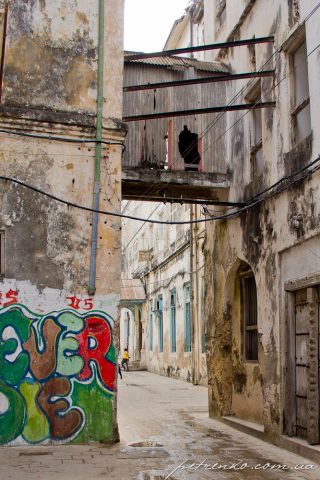
Stone Town itself is a maze of narrow alleys, crumbling facades, and hidden courtyards, but the cathedral stands out even in this labyrinth of history. It occupies a central spot in the old quarter, within easy walking distance of the bustling markets, the old Arab fort, and the waterfront where dhows still dock as they have for centuries. Nearby, the Slave Market Museum offers another layer of context, its exhibits reinforcing the stories the cathedral tells. Together, these places form a kind of pilgrimage route for those who want to understand Zanzibar’s layered past. The cathedral, though, is where the emotional weight of that history feels most tangible.
What makes Christ Church particularly compelling is that it’s still an active place of worship. For many Zanzibaris, it’s not just a tourist attraction but a part of their personal histories—where they were baptized, married, or mourned. The congregation spans generations, from elderly parishioners who remember the island under British rule to young families attending Sunday services. This continuity gives the cathedral a sense of vitality that most historical sites lack. It’s not frozen in time; it’s a place where the past and present coexist, where the echoes of prayers spoken a century ago mingle with the voices of today.
The area around the cathedral has its own distinct character. In the mornings, vendors set up stalls along the perimeter, selling hand-carved wooden figures and jewelry made from cowrie shells. Under the shade of the trees, older men gather to play mancala, the ancient African board game, their laughter blending with the calls of street hawkers. As the sun sets and the heat of the day fades, the steps of the cathedral become a gathering spot for young people, who sit in small groups, talking or simply watching the world go by. The building is woven into the fabric of daily life in Stone Town, its presence as natural as the tides that lap against the nearby shore.
Visiting Christ Church is less about ticking off a landmark and more about engaging with the stories embedded in its walls. There’s no grand narrative here, no attempt to sanitize the past. Instead, the cathedral offers something rarer: a space where history is neither glorified nor ignored but simply allowed to exist as it is. The chains in the underground chamber, the worn tiles underfoot, the way the light slants through the windows—all of it invites reflection. It’s a place that doesn’t just tell you about the past but makes you feel its lingering presence.
Perhaps that’s why the cathedral endures. It doesn’t demand reverence so much as it earns it, not through grandeur or spectacle but through its quiet insistence on remembering. In a world where history is often simplified or forgotten, Christ Church stands as a reminder that some stories refuse to be buried. And in Stone Town, where the past is never far from the surface, that might be the most important role of all.