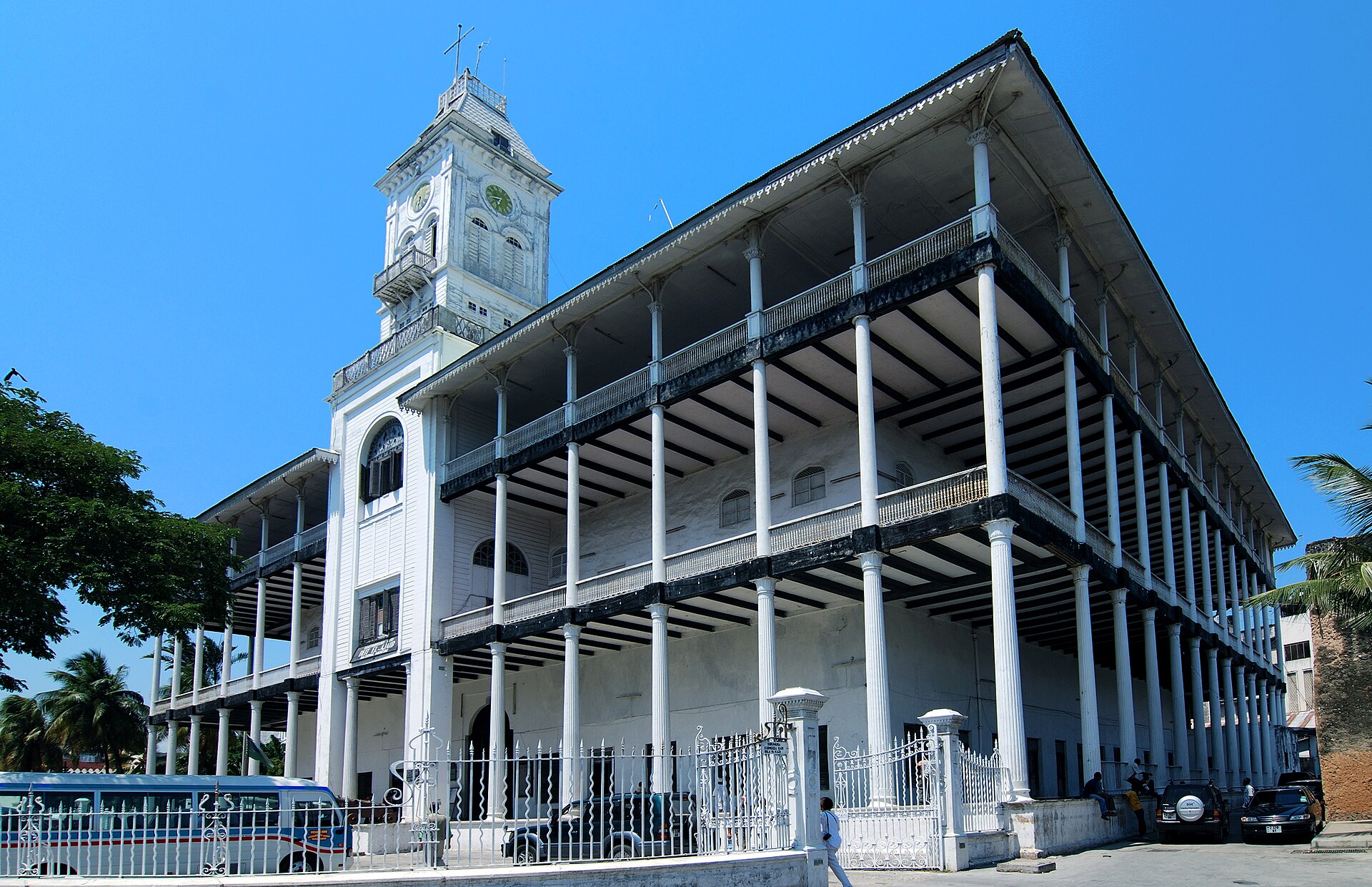
Stone Town’s House of Wonders feels like a place where time has paused, holding within its walls the layered history of Zanzibar. Built in the late 19th century as a palace for Sultan Barghash bin Said, it was the first building on the island to have electricity and the first in East Africa to install an elevator. For the people of Zanzibar at the time, it must have seemed like magic—a vast, airy structure where ocean breezes swept through high-ceilinged halls. Today, it stands slightly weathered but no less imposing, a reminder of an era when Zanzibar was a hub of trade, political intrigue, and cultural exchange.
The architecture of the House of Wonders reflects the melting pot of influences that shaped Stone Town. The façade is lined with tall columns and wide verandas wrapping around the building, while massive carved wooden doors open into spacious rooms with mosaic floors. Inside, traces of the past remain: intricate ceilings, antique chandeliers, and faded murals on the walls. The central hall, with its towering windows framing views of the sea, once hosted grand receptions. Now, it feels like a quiet witness to history, where the echoes of the past linger in the stillness.
For decades, the House of Wonders was more than just a sultan’s residence—it symbolized Zanzibar’s power and prosperity. After the 1964 revolution, when the island became part of Tanzania, the building took on different roles: government offices, a museum, even a warehouse. Partial restoration in the 2000s turned it into a museum of Zanzibar’s history and culture, though the work was never fully completed. Some rooms remain closed, while others carry a sense of abandonment, adding to the building’s unique atmosphere.
Visiting the House of Wonders is less about seeing exhibits and more about stepping into the past. The museum displays artifacts from the sultan’s court, old maps, photographs, and documents that tell stories of the spice trade, the darker legacy of slavery, and colonial rule. There are ceramics, textiles, and weapons brought from Oman and Persia, but the real draw is the sense of walking through the same halls where decisions were once made that shaped lives and nations.
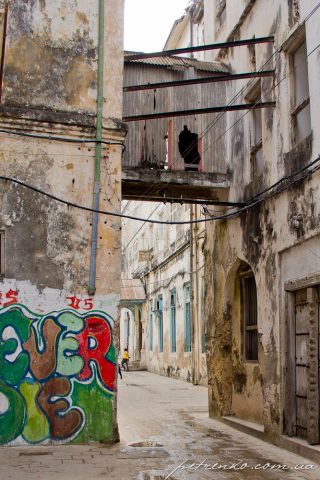
Stone Town itself is like an open-air museum, and the House of Wonders sits at its heart. From here, it’s easy to wander into the labyrinth of narrow streets, where coral-stone houses press close together and balconies nearly touch overhead. Small shops sell spices, handcrafted goods, and antique jewelry, while the air hums with a mix of Swahili, Arabic, and English. In the evenings, when the heat subsides, locals gather by the waterfront, and the pace of life slows to a rhythm all its own.
The House of Wonders overlooks the Indian Ocean, and from its verandas, you can see the harbor where dhows from Oman, India, and Europe once docked. On clear days, the outline of Chumbe Island is visible in the distance. At sunset, the sky turns shades of orange and pink, and if you’re lucky, you might hear locals sharing tales of pirates, merchants, and sultans who once ruled these shores. These stories have been passed down through generations, and the House of Wonders is one of the few places where they still feel alive.
A visit here isn’t just a tour—it’s a chance to connect with history in a way that feels personal. There are no flashy displays or interactive exhibits, just the quiet authenticity of a place that has seen centuries of change. Walking through its halls, you can’t help but wonder about the people who have passed through over the years: sultans and diplomats, traders and enslaved individuals, revolutionaries and travelers. Each left their mark, and the building holds these stories like treasures.
The House of Wonders isn’t the same as it was in Sultan Barghash’s time. The tropical climate and the passage of years have taken their toll—paint peels, wood cracks, and some rooms are closed for restoration. But perhaps that’s part of its charm. There’s no polish here, just the raw, enduring spirit of a place that has survived centuries of upheaval. If you find yourself in Stone Town, don’t miss the chance to step inside and feel the weight of history that still lingers in its walls.