The Old Fort of Zanzibar is one of those rare places where time seems to slow down, allowing the past and present to coexist in quiet harmony. Nestled in the heart of Stone Town, it stands as a silent witness to centuries of history, its coral-stone walls absorbing the sounds of daily life—the hum of conversations in Swahili, the clatter of bicycles on narrow streets, the scent of cloves and cardamom drifting from nearby spice markets. Unlike many historical sites that feel frozen in time, this fort remains a living part of the city, its purpose shifting with the tides of history while retaining the echoes of its origins.
Built in the late 17th century by Omani Arabs, the fort was initially a military stronghold, designed to fend off Portuguese attempts to reclaim the island. Its thick walls and sturdy bastions were engineered for endurance, capable of withstanding prolonged sieges. Yet within decades, its strategic importance waned, and the fort adapted to the changing needs of Zanzibar. Over the years, it served as a barracks, a prison, and even a railway station—an unusual repurposing that reflected the island’s evolving identity. This ability to reinvent itself without losing its essence is what makes the fort so compelling.
There is a stark beauty in the fort’s architecture, unadorned yet purposeful. The high walls, punctuated by narrow arrow slits, encircle a spacious courtyard where the past lingers in the weathered stone. Inside, remnants of old structures hint at its layered history, including an open-air amphitheater that now hosts cultural events. On evenings when the air cools, the space comes alive with music—traditional taarab melodies or the rhythmic beats of ngoma drums—drawing locals and visitors alike. The fort’s simplicity is its strength; there are no grand facades or ornate details, just the raw, enduring presence of history.
Beyond its military past, the fort has become a cultural hub, a place where Zanzibar’s artistic traditions are kept alive. During festivals, the courtyard transforms into a stage for dance performances, where women in vibrant kangas move to the sound of drums, their movements telling stories of the island’s Swahili heritage. Local artisans sometimes set up stalls, carving intricate patterns into wood or bone, their hands shaping materials that have been part of Zanzibari craftsmanship for generations. Nearby, vendors sell fabrics dyed in bold, geometric prints, a reminder of the island’s role as a crossroads of trade. The fort doesn’t just preserve history—it actively participates in it.
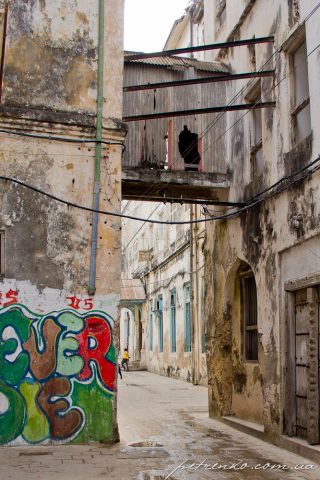
A visit to the Old Fort offers more than just a glimpse into the past; it provides a deeper understanding of Stone Town itself. From its ramparts, the view stretches across the harbor, where dhows once docked, laden with goods from across the Indian Ocean. The fort’s location at the edge of the old quarter makes it a natural starting point for exploring the labyrinthine streets beyond. Each doorway, with its carved wooden panels, tells a story of the families who lived behind them, while the balconies with latticed screens hint at the private lives unfolding within. The fort stands as a guardian of this heritage, a reminder that Zanzibar has always been a meeting point of cultures—African, Arab, Indian, and European.
What makes the Old Fort unusual is its refusal to become a static museum. There are no rigid guided tours or exhaustive plaques explaining every detail. Instead, it exists as a shared space, where the boundaries between past and present blur. Children chase each other across the courtyard, their laughter mingling with the calls of vendors selling fresh coconut water. Elders sit on benches, watching the world go by with the quiet patience of those who have seen generations come and go. Informational signs are sparse, and the lack of formal interpretation only enhances the sense of authenticity. Here, history isn’t something to be studied—it’s something to be experienced.
Climbing one of the fort’s towers rewards you with a sweeping view of Stone Town. The red-tiled roofs, the slender minarets of mosques, the fronds of palm trees swaying against the backdrop of the ocean—it’s a scene that feels almost too vivid to be real. The best time to take it in is at sunset, when the light softens, casting a golden glow over the coral stone. The sounds of the city rise with the evening breeze: the call to prayer, the clinking of tea glasses in a nearby café, the distant beat of drums. In these moments, it’s easy to see why Zanzibar has captivated travelers for centuries. The island’s history isn’t confined to books or exhibits; it’s alive in the air, in the rhythm of daily life, in the way the past and present coexist without contradiction.
The Old Fort isn’t a place to rush through. It demands time—to wander its walls, to sit in the shade of its arches, to watch how the light changes across the courtyard as the day progresses. There’s no grand spectacle here, no opulent displays of wealth or power. Instead, there’s something far more valuable: a sense of continuity, of a place that has endured through war and peace, through prosperity and decline, without losing its soul. Whether you come in the quiet of the morning, when the city is just waking up, or linger into the evening, when the air hums with music and conversation, the fort leaves an impression. It’s not just a monument; it’s an invitation to step into the story of Zanzibar, a story that is still being written.