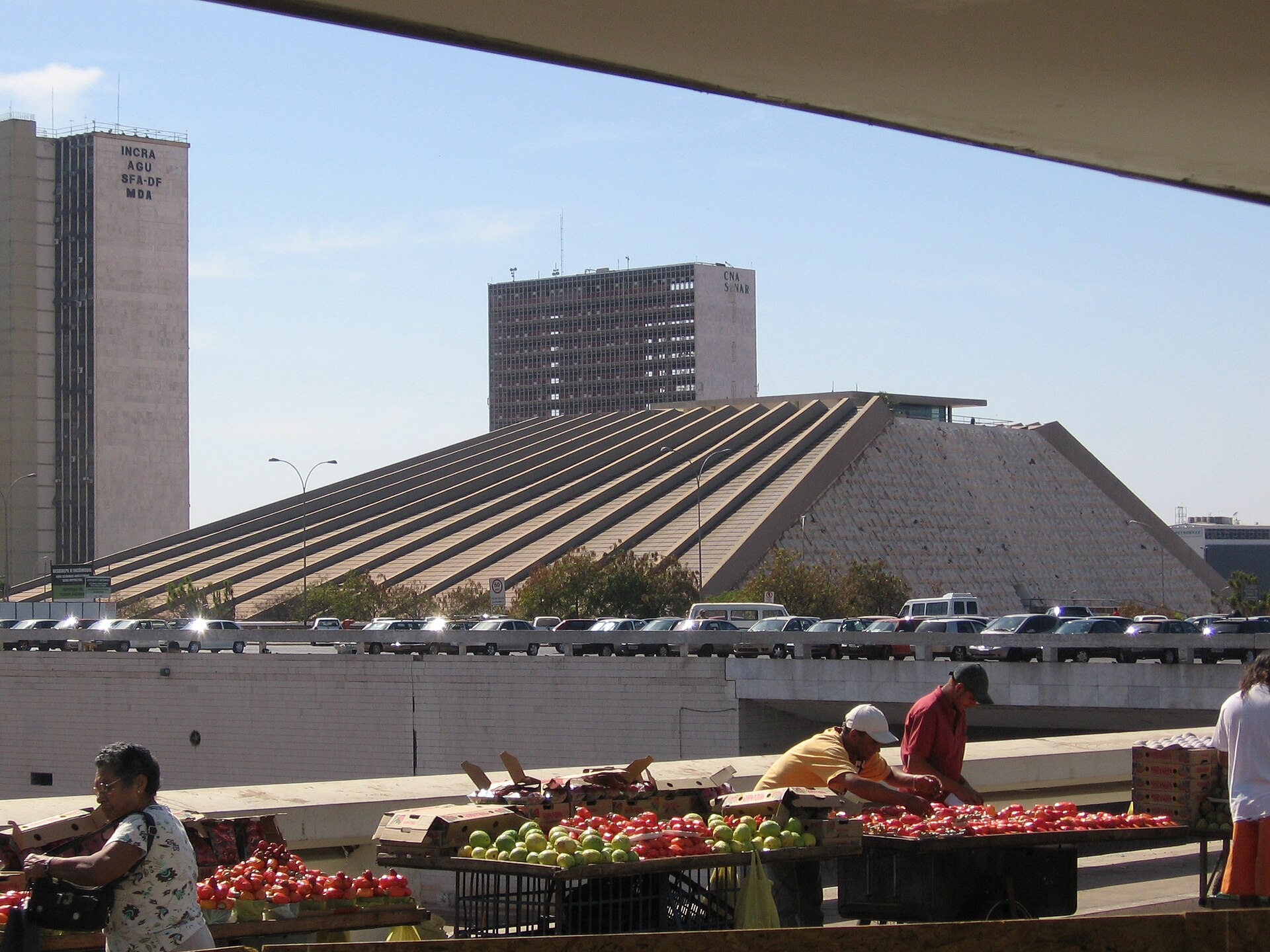
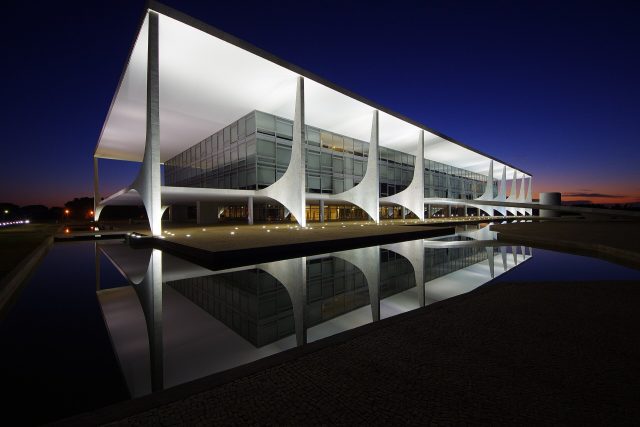
The Teatro Nacional Claudio Santoro is one of those rare places in Brasília where architecture doesn’t just serve a purpose—it becomes part of the city’s myth. Rising against the capital’s rigid geometric lines, the building stands out with its unusual shape, often compared to a pyramid or, as locals say, a giant crystal. Built in the late 1960s, when Brasília had already established itself as a symbol of modernism but was still searching for its cultural voice, the theater was designed by Oscar Niemeyer, the architect whose name is synonymous with the city’s identity. Here, he stepped away from his signature flowing curves, creating something more geometric, almost sculptural—a structure meant not just to house performances but to be a work of art in itself.
Inside, the theater is just as striking as it is on the outside. The main auditorium, seating around fifteen hundred, is designed with restraint yet leaves a lasting impression. Light walls, minimalist lines, and an absence of unnecessary details all serve the acoustics and visual harmony. The ceiling is particularly captivating, adorned with a mural by Antônio Bandeira, one of Brazil’s leading abstract artists. His work—a play of shapes and colors—seems to extend Niemeyer’s architectural vision into the language of painting. The foyer and other public spaces also reflect the touch of master artists, turning the theater into a kind of gallery of contemporary Brazilian art.
More than just a cultural center, the Teatro Nacional is where Brasília’s history intertwines with its present. When the capital was still under construction, the theater was conceived as a symbol of a new cultural era—a city meant to be not only the political but also the intellectual heart of Brazil. Today, it hosts not only plays and concerts but also festivals, lectures, and exhibitions. The program is diverse, ranging from classical opera to experimental performances, from jazz concerts to contemporary Brazilian music. Yet the theater retains a sense of accessibility; tickets for many events remain affordable, and the atmosphere inside always makes you feel like part of something larger than just an audience.
The theater is named after Claudio Santoro, one of Brazil’s most celebrated composers and conductors. His work was deeply tied to the idea of a national musical identity, and the choice of his name for the building was no accident. Santoro worked across genres, from opera to folk music, and his legacy still resonates within these walls. Occasionally, his compositions are performed here by symphony orchestras or chamber ensembles, filling the hall with the spirit of the era when Brasília was just beginning its journey.
The architecture of the theater also reflects the time in which it was created. The 1960s in Brazil were a period of bold experimentation, as the country sought a balance between tradition and modernism. Niemeyer, inspired by constructivist ideas, didn’t lose sight of the local context. The building seems to float above the ground on its supports, creating a sense of lightness despite its massive forms. A small park surrounds it, offering a place to relax after a performance or simply sit and watch the play of light on the facade.
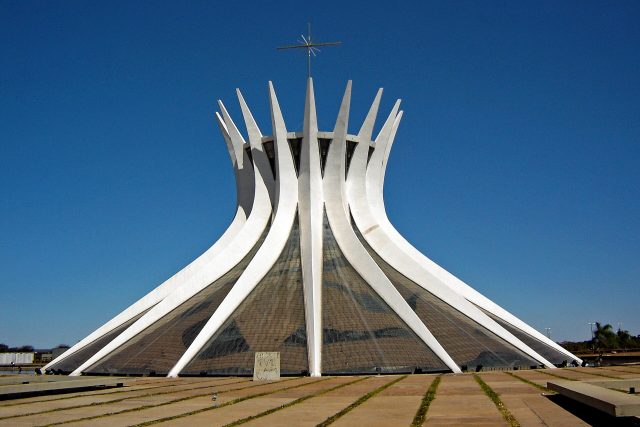
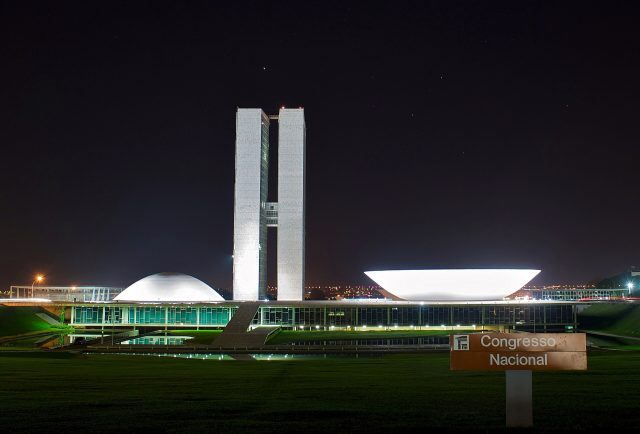
Located in Brasília’s cultural core, the theater is near other landmarks—the National Museum, the Cathedral, and the Square of the Three Powers. It’s part of the usual tourist route, yet it rarely becomes the main attraction. Perhaps because it doesn’t immediately stand out like Niemeyer’s other buildings, or because its significance isn’t obvious at first glance. But those who step inside are often surprised by how thoughtfully everything is designed, from the layout to small details like lighting and materials.
In recent years, the theater has undergone several restorations to preserve its original appearance. The work wasn’t just about the facade; the auditorium’s technical equipment was updated, ventilation improved, and engineering systems modernized. Yet care was taken not to disrupt Niemeyer’s original vision, ensuring the building remains as the architect intended. Today, the Teatro Nacional Claudio Santoro is more than just an architectural monument—it’s a living space where art and history continue to evolve.
Visiting the theater can be an unexpected discovery for those who come to Brasília for other reasons. There are no crowds like at the Cathedral, no official solemnity like at the Square of the Three Powers. Instead, there’s the quiet of the foyer, the soft light in the hall, the anticipation before a performance begins. Sometimes it feels like time moves differently here, slower, and that sense lingers even after you step back into the bustle of the capital. The theater serves as a reminder that Brasília isn’t just a city of power and business—it’s also a place where culture has its rightful home.