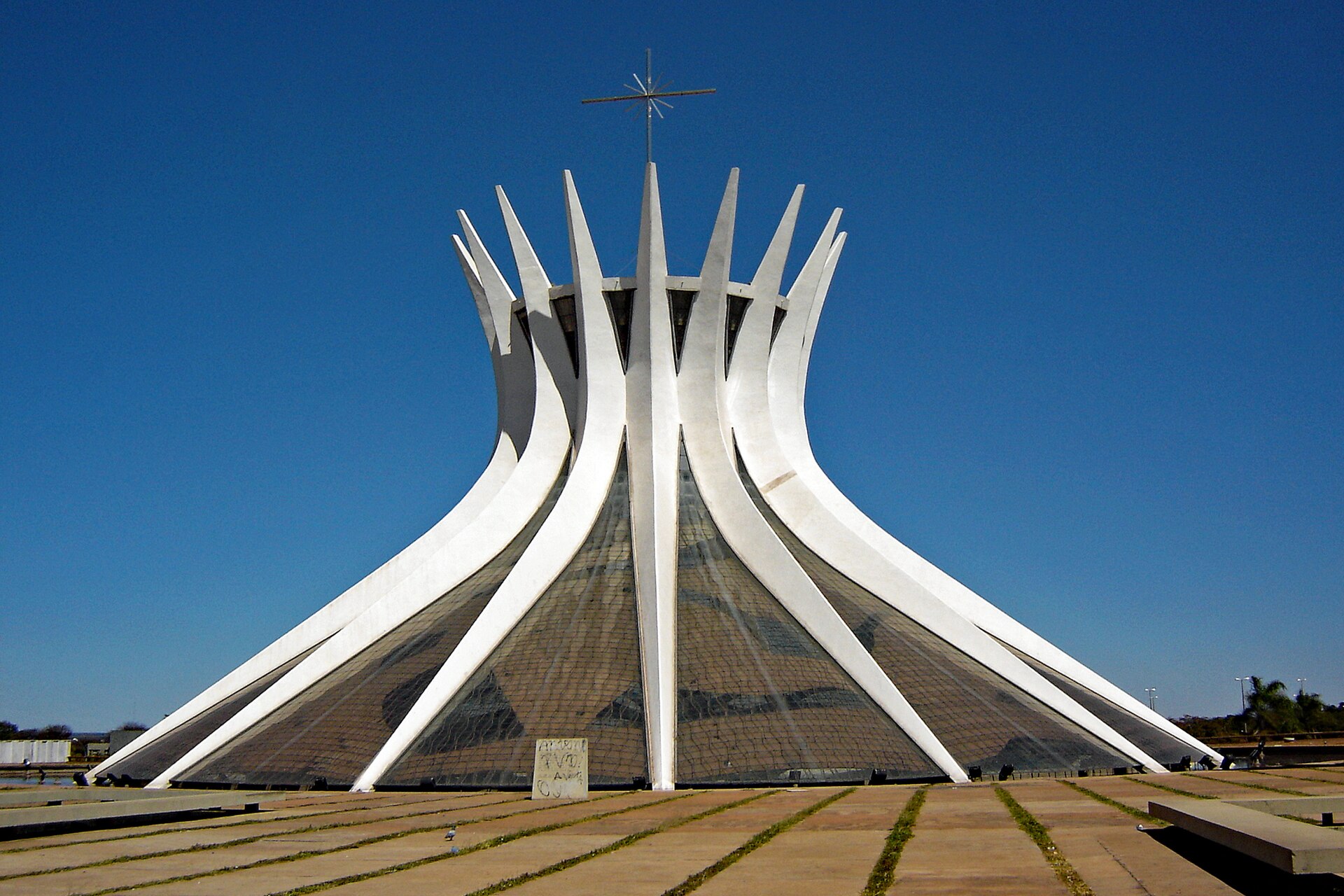
Brasília’s Cathedral of Our Lady of Aparecida is one of those rare places that doesn’t just catch the eye—it lingers in the mind long after you’ve left. Built in the heart of Brazil’s futuristic capital, the cathedral is a striking contrast to the traditional churches found elsewhere in the country. Its design feels almost weightless, as if the structure is defying gravity, rising effortlessly toward the sky. This was no accident. Oscar Niemeyer, the architect behind the project, wanted the building to evoke a sense of transcendence, as though it were shaped not by human hands but by light and air itself.
The cathedral’s exterior is dominated by sixteen curved concrete columns, their sweeping lines converging to form a circular dome. These columns aren’t just structural—they carry a deeper meaning, symbolizing hands raised in prayer or perhaps the collective reach of humanity toward something greater. Between them, stained-glass panels filter sunlight into soft, shifting patterns of blue and white, casting an ethereal glow across the interior. The effect is mesmerizing, as if the space itself is alive, breathing with the movement of light.
Inside, the cathedral breaks from convention. There are no ornate frescoes or gilded altars, no grand religious narratives painted across the walls. Instead, Niemeyer embraced minimalism, letting the architecture speak for itself. The altar sits at the center, surrounded by semicircular pews, reinforcing the idea of equality before the divine. Above, suspended from the ceiling, are abstract metal sculptures of angels—figures that aren’t immediately recognizable but invite contemplation. The simplicity of the design forces you to engage with the space in a different way, to consider what spirituality looks like when stripped of tradition.
Beneath the main hall lies the baptistery, its walls adorned with vibrant murals by Brazilian artist Athanasio Soldati. His work is a burst of color and energy, a stark contrast to the serene austerity of the cathedral above. The juxtaposition feels deliberate, as if to remind visitors that faith can take many forms—sometimes quiet and meditative, other times bold and expressive.
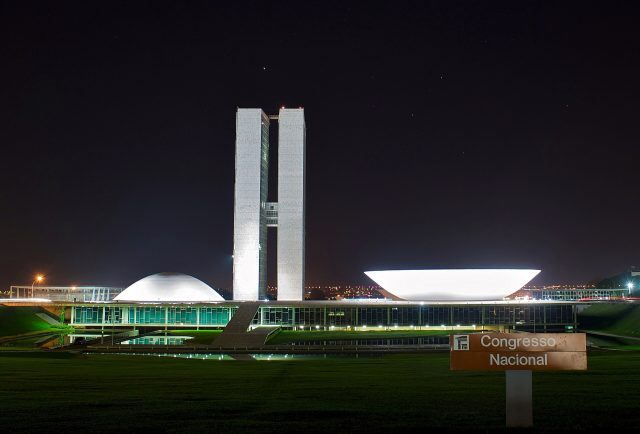
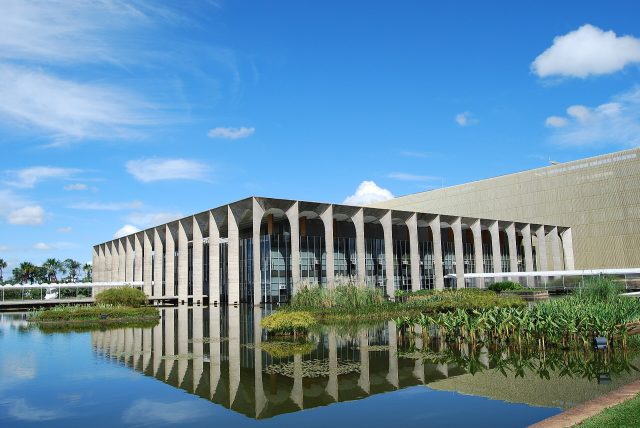
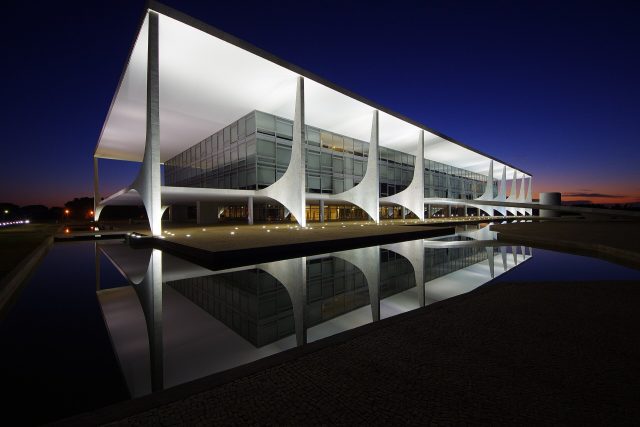
The cathedral is inseparable from the story of Brasília itself. When President Juscelino Kubitschek announced in 1956 that Brazil’s capital would move from Rio de Janeiro to the country’s interior, it wasn’t just a political decision—it was a vision. Brasília was meant to be a city of the future, a blank canvas where modernist ideals could take shape. Niemeyer, working alongside urban planner Lúcio Costa, designed not just individual buildings but an entire landscape, where every structure played a role in a larger narrative. The cathedral became one of the most iconic elements of this vision, a spiritual anchor in a city built on ambition.
What’s remarkable is how quickly the cathedral—and Brasília as a whole—came together. The city was constructed in just four years, a feat that required bold, efficient solutions. Niemeyer turned to concrete, a material often dismissed as cold and industrial, and transformed it into something fluid and graceful. The cathedral’s columns, for instance, appear delicate, almost fragile, yet they support the entire structure with quiet strength. It’s a testament to how engineering and artistry can merge to create something unexpected.
Today, the cathedral draws visitors from all over the world—not just the faithful, but architects, artists, and curious travelers. It’s a place where you can feel the pulse of Brasília, a city that was designed to be lived in, not just passed through. The surrounding park offers a quiet respite, with open spaces where locals gather to relax, read, or simply enjoy the stillness. There’s a sense of calm here that’s rare in capital cities, a reminder of the original intent behind Brasília: to create a place where life could unfold at its own pace.
The cathedral also serves as a cultural hub. Its unique acoustics make it an ideal venue for classical concerts, where music seems to fill every corner of the space. Occasionally, exhibitions or performances take place here, adding another layer to its identity. The building’s versatility is part of its charm—it’s not just a place of worship but a living part of the city’s cultural fabric.
Of course, the cathedral hasn’t been without its critics. Some argue that its modernist design is too radical for a religious space, while others see it as a perfect marriage of faith and innovation. But perhaps that’s the point. The cathedral doesn’t try to please everyone. It exists as it is, a product of its time and place, a symbol of Brazil’s mid-century optimism and creativity. It doesn’t need to justify itself—it simply is.
Visiting the Cathedral of Our Lady of Aparecida is more than just ticking off a landmark. It’s an experience that challenges expectations, inviting you to reconsider what a sacred space can be. There are no familiar signposts here, no traditional cues to guide you. Instead, you’re left to interpret the space on your own terms, to reflect on what spirituality means in a world that’s constantly changing. That’s why, decades after its completion, the cathedral still feels fresh, still has the power to move and inspire.