The Itamaraty Palace in Brasília is more than just a government building—it’s a quiet testament to Brazil’s diplomatic ambitions and the vision that shaped its capital. Designed in the early 1960s as part of the bold experiment to move the country’s political center inland, the palace was conceived not only as a functional space for international relations but as a symbol of modernity and openness. Oscar Niemeyer, the architect behind many of Brasília’s most iconic structures, collaborated with landscape designer Roberto Burle Marx to create a place where architecture and nature coexist in deliberate harmony. The result is a building that feels both monumental and effortlessly light, its curves and lines reflecting the ideals of transparency and dialogue.
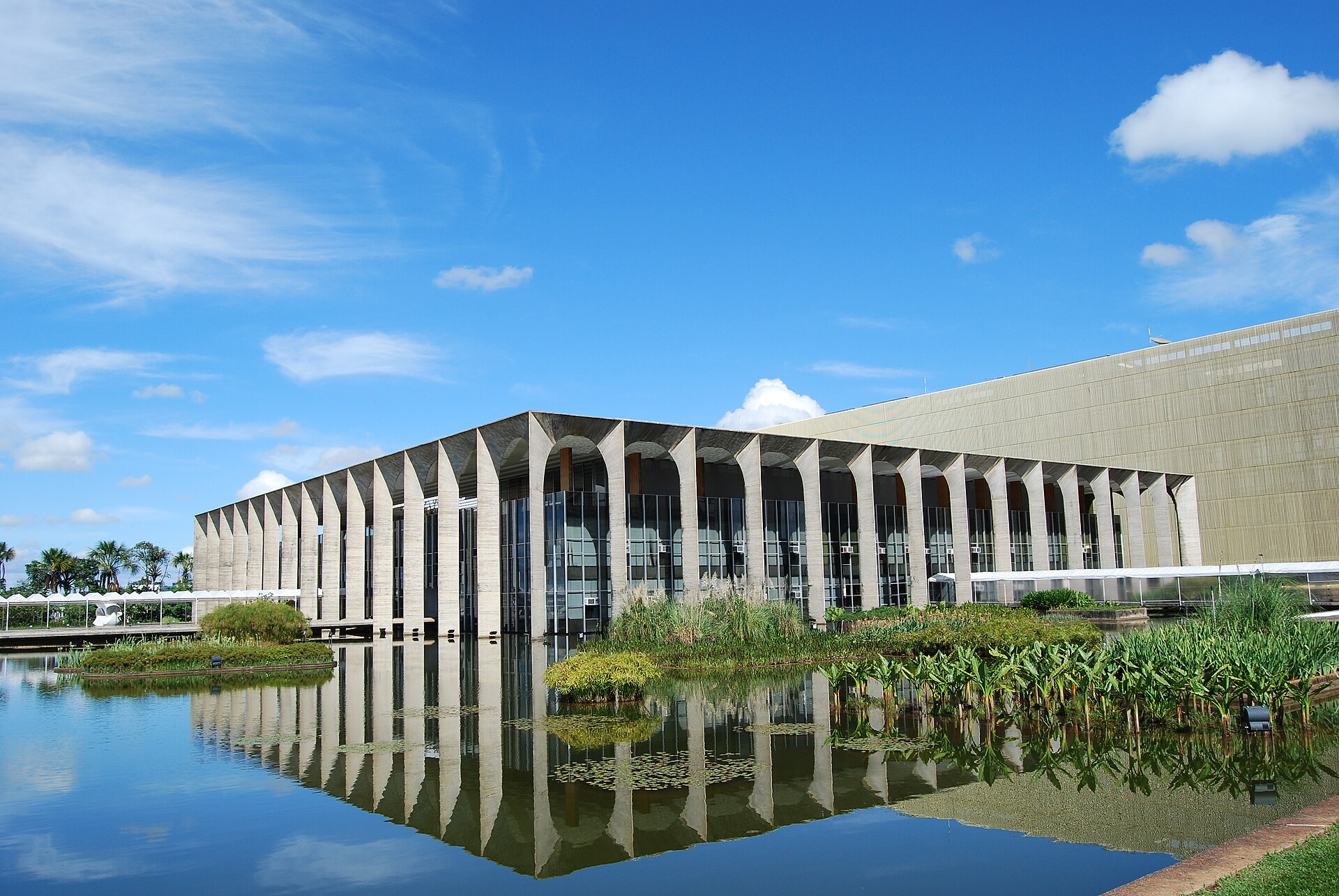
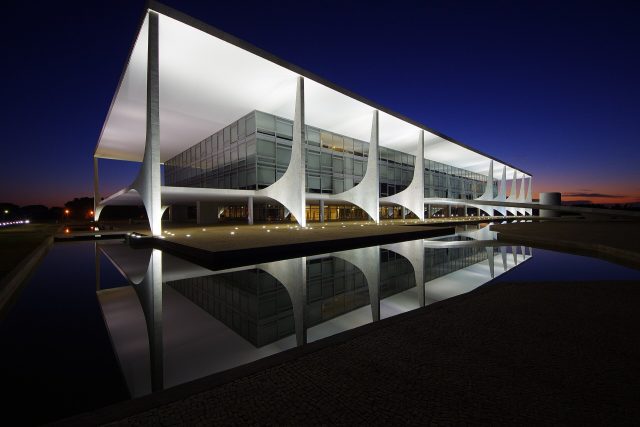
From the outside, the palace appears almost weightless, its vast glass facades held aloft by slender, parabolic columns—one of Niemeyer’s signature touches. These columns aren’t just structural; they give the building a sense of movement, as if the entire structure is gently rising from the ground. Inside, the design prioritizes space and simplicity. High ceilings and uncluttered halls create an atmosphere of solemnity without stiffness, where every material and angle serves a purpose. There’s no excess here, just a careful balance between formality and elegance, a setting meant to inspire both respect and ease.
As the headquarters of Brazil’s Ministry of Foreign Affairs, the Itamaraty Palace has witnessed decades of diplomatic history. Treaties have been signed in its halls, foreign dignitaries welcomed, and pivotal negotiations conducted. The grand reception hall, with its expansive windows overlooking Burle Marx’s meticulously designed gardens, is where much of this history unfolded. The gardens themselves are a work of art, blending native Brazilian flora with abstract patterns that echo the building’s modernist aesthetic. It’s a reminder that in Brasília, nature and architecture were never meant to compete but to complement each other.
Surrounding the palace is a reflective pool, a feature Niemeyer often used to enhance the ethereal quality of his designs. The water mirrors the building’s columns and glass walls, creating the illusion that the structure is floating. At night, when the palace is illuminated, the effect is even more striking, turning the building into a luminous presence against the dark sky. The grounds around the palace are open to the public, with pathways winding through gardens where visitors can pause to take in the architecture or simply enjoy the tranquility. It’s a rare moment of calm in a city built for purpose, not leisure.
While the Itamaraty Palace remains an active government building, it’s also open to visitors through guided tours. This offers a rare glimpse into the workings of Brazilian diplomacy, from the grand halls where official ceremonies are held to the Brazil Room, which houses gifts from foreign delegations. The collection includes everything from intricate handicrafts to rare artworks, each piece telling a story of Brazil’s relationships with other nations. Some exhibits even feature historical documents, offering a tangible connection to the country’s past. It’s a reminder that diplomacy isn’t just about politics—it’s also about culture, exchange, and the slow building of trust.
The palace was completed at a time when Brasília itself was still taking shape, a city carved out of the cerrado in just a few years. Every building in the new capital was meant to set a standard, not just for Brazil but for modern architecture as a whole. The Itamaraty Palace was no exception. Today, decades after its construction, it remains one of the most recognizable symbols of Brasília, a city that was once dismissed as a utopian folly but has since become a living, breathing metropolis. The palace endures as a physical representation of the ideals that shaped the capital: progress, innovation, and a belief in the power of design to reflect a nation’s aspirations.
For those interested in Brazil’s history or the evolution of modernist architecture, the Itamaraty Palace is a must-see. It captures the spirit of an era when the country was asserting its place on the global stage, embracing bold ideas and rejecting the past’s constraints. Yet despite its grandeur, the palace doesn’t feel imposing. There’s a warmth to it, perhaps because Niemeyer always designed with people in mind, or maybe because the work conducted within its walls has shaped the lives of millions. Either way, the building manages to be both a monument and a functional space, a rare achievement in a world where the two often exist separately.
What makes the Itamaraty Palace particularly interesting is that it hasn’t been relegated to the past. Unlike many historic buildings that become museums, this one remains a working part of Brazil’s government. Diplomats still meet in its halls, negotiations still take place behind its glass walls, and the gardens continue to be tended with care. This duality—being both a relic of the past and an active participant in the present—gives the palace a unique energy. Visitors don’t just see a snapshot of history; they witness a place that’s still very much alive, where the decisions made today will shape the country’s future.
If you find yourself in Brasília, take the time to visit the Itamaraty Palace, even if just to walk its grounds. The reflective pool, the play of light on the glass, the quiet rustle of the gardens—it’s a place that invites contemplation. And if you’re able to join a tour, you’ll leave with a deeper understanding of how Brazil sees itself in the world. The palace isn’t just a building; it’s a statement. It speaks of a country that values dialogue, that believes in the power of openness, and that isn’t afraid to dream big. In a city of bold designs and even bolder ideas, the Itamaraty Palace stands as a reminder of what architecture can achieve when it’s not just about bricks and mortar, but about the stories a nation wants to tell.