Brasília’s National Congress isn’t just a government building—it’s a statement. Designed in the late 1950s as the centerpiece of Brazil’s audacious new capital, it embodies the country’s mid-century ambition to reinvent itself. Architect Oscar Niemeyer, working alongside urban planner Lúcio Costa, didn’t just create a functional space for lawmakers; he turned the mechanics of democracy into something visible, almost tangible. The result is a structure that doesn’t just house politics but makes it part of the city’s identity.
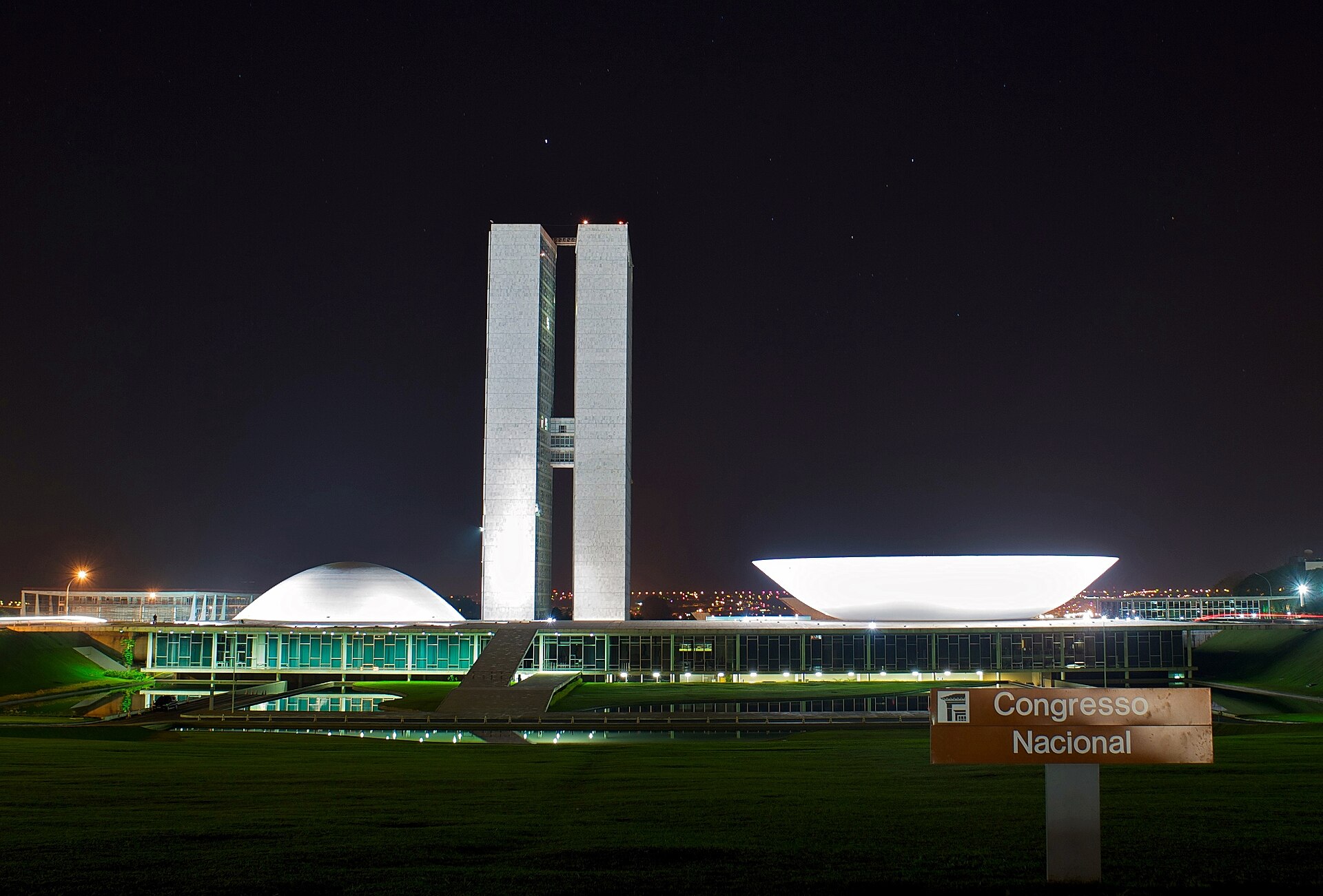
The building’s most striking feature is its silhouette: two sleek, identical towers rising from a vast esplanade, flanked by two contrasting domes. One dome curves outward, the other inward, representing the two chambers of Brazil’s legislature—the Senate and the Chamber of Deputies. Niemeyer’s design plays with symmetry and asymmetry, suggesting both harmony and tension in the political process. The towers themselves are unadorned, their glass and concrete surfaces reflecting the sky, while the domes anchor the composition, grounding the building in the earth. It’s a deliberate contrast, one that mirrors the push and pull of governance itself.
Inside, the National Congress feels surprisingly open. Wide corridors, high ceilings, and an abundance of natural light challenge the idea of politics as something cloistered or secretive. The Senate’s chamber retains a warmer, more traditional feel, with wood paneling and soft lighting, while the Chamber of Deputies is all sharp angles and modernist furniture. The difference isn’t accidental—it reflects the distinct roles of the two houses, one more deliberative, the other more dynamic. Even the furniture, with its futuristic lines, hints at the forward-looking spirit of Brasília’s founding.
The building’s history is inseparable from that of the city itself. When Brasília replaced Rio de Janeiro as Brazil’s capital in 1960, it wasn’t just a logistical shift—it was a gamble on the future. The National Congress was meant to be the heart of this new political experiment, a place where the country’s direction would be decided. But the early years were turbulent. The capital’s inauguration coincided with a military coup, and for nearly two decades, the building stood as a symbol of a democracy under siege. It wasn’t until the 1980s, with the return of civilian rule, that the Congress truly became what it was intended to be: a forum for debate, dissent, and public representation.
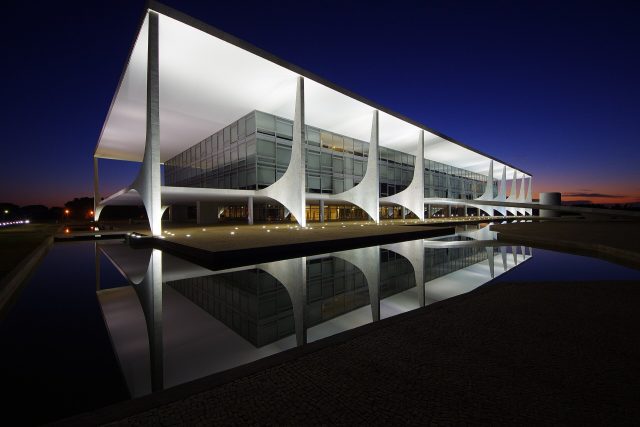
Today, the National Congress is more than just a workplace for politicians. It’s a public space, open to visitors who want to understand how Brazil’s government functions. While access to the interior is sometimes restricted, the exterior alone is worth the visit. The vast Plaza of the Three Powers, where the Congress stands alongside the Presidential Palace and the Supreme Court, is a lesson in urban design. The buildings are arranged in a way that emphasizes their independence while binding them together as part of a larger system. On any given day, you might see tourists snapping photos, school groups on field trips, or activists gathering to voice their demands. The plaza is never quiet, and that’s part of its purpose—it’s a stage for democracy in action.
Niemeyer’s design was revolutionary for its time. Rejecting the ornate neoclassicism of traditional government buildings, he embraced the principles of modernism: simplicity, functionality, and a belief that architecture could shape society. The National Congress doesn’t dominate its surroundings; it floats above them. The domes seem weightless, the towers slender and unobtrusive. Even the materials—concrete, glass, steel—were chosen for their honesty, their refusal to disguise their purpose. The result is a building that feels both monumental and approachable, a rare balance in civic architecture.
The plaza around the Congress is always alive with movement. It’s a place where people come to be seen and heard, whether they’re celebrating a victory, protesting a decision, or simply enjoying the open space. On weekends, families picnic on the grass, while during the week, the area buzzes with the energy of a working capital. Street vendors sell snacks and souvenirs, and the hum of conversation mixes with the occasional sound of a protest or a passing siren. The building itself, with its clean lines and bold forms, serves as a backdrop to all of this—a reminder that politics isn’t something distant or abstract, but a living, breathing part of daily life.
What makes the National Congress remarkable is how it manages to be both a symbol of the past and a living part of the present. Brasília was built as a city of the future, and the Congress was meant to be its beating heart. Decades later, it still feels ahead of its time, a testament to the idea that architecture can shape not just skylines, but societies. It’s a place where history is made, where laws are debated, and where people come to demand change. And yet, for all its political weight, it remains a work of art—one that invites you to look up, to think, and to imagine what a government could be.