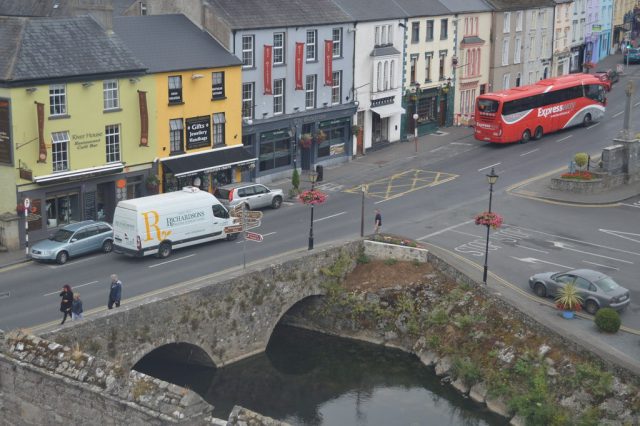
Clonmel isn’t the kind of town that draws crowds with grand landmarks or tourist traps. It sits quietly in County Tipperary, where the River Suir winds through streets lined with low stone buildings and the pace of life feels just a little slower. And yet, tucked among these unassuming lanes, there’s a place that holds something rare—a sense of belonging, a quiet pulse of creativity. That place is the Tipperary Excel Theatre.
The building itself doesn’t announce its presence with fanfare. There are no towering columns or gilded facades, just a modest brick exterior with large windows that let in the soft Irish light. Inside, the space is warm and unpretentious, designed more for connection than spectacle. The auditorium is intimate, with seats arranged so no one feels too far from the stage. The foyer, with its coffee machine and scattered chairs, feels like an extension of someone’s living room—if that living room happened to host poetry readings and folk concerts.
The theatre opened in the late 20th century, a time when Clonmel was shaking off its reputation as just another sleepy market town. The Excel wasn’t meant to be a grand statement; it was built to serve the community, whether that meant staging a play, hosting a music night, or simply giving people a place to gather. Over the years, it has become a kind of cultural anchor, not by being flashy, but by being reliable—a place where local artists, amateur performers, and visiting professionals all find a stage.
What sets the Excel apart is its programming. There’s no rigid formula here. One night, you might catch a production of a lesser-known Irish play; the next, a traditional music session where the fiddler and the audience end up swapping stories between sets. The theatre has a knack for balancing professional performances with grassroots events, often blending the two. When touring acts come through, they don’t just perform—they engage, whether it’s a post-show Q&A or an impromptu jam session in the foyer. The small size of the venue makes everything feel personal, as if the fourth wall isn’t just thin, but nonexistent.
Festivals are where the Excel truly comes alive. The town’s annual arts festival turns the theatre into a hub of activity, with everything from experimental theatre to workshops for aspiring writers. There’s a literary festival, too, where emerging voices read their work alongside established names, and the discussions spill out into the streets afterward. These events aren’t about spectacle; they’re about conversation, the kind that lingers long after the last act ends. For a few days each year, the Excel becomes the heart of Clonmel, and the town feels a little more alive because of it.
But the theatre’s role goes beyond performances. It’s a place where the community gathers—not just for entertainment, but for connection. On any given night, you’ll find a mix of ages in the audience: teenagers there for a gig, older couples who’ve been coming for decades, families with kids in tow. There’s no pretension here, no pressure to dress up or perform enthusiasm. People come because they want to be there, not because they’re chasing an experience. The Excel doesn’t need to be full to feel full; even a half-empty house has the warmth of a shared secret.
In recent years, the theatre has expanded its reach with educational programs. There are acting workshops for kids, lectures on Irish theatre history, and film screenings that range from indie gems to classic movies rarely shown on the big screen. These initiatives reflect the Excel’s ethos: it’s not just a venue, but a space for learning, for curiosity, for the kind of creativity that doesn’t need a spotlight to matter. The theatre has even started hosting occasional pop-up events—book clubs in the foyer, acoustic sets in the bar area—blurring the line between audience and participant.
Clonmel itself is the kind of town you stumble upon rather than seek out. It doesn’t have the dramatic cliffs of the west coast or the bustle of Dublin, but it has something just as valuable: a sense of place. The Excel embodies that. It’s not trying to be anything other than what it is—a small theatre in a small town, doing what it can with what it has. There’s no grand mission statement, no attempt to compete with bigger venues. Instead, it offers something simpler and, in its own way, more profound: a reminder that art doesn’t need to be grand to be meaningful.
If you ever find yourself in Clonmel, the Excel is worth a visit, even if there’s nothing on the schedule. The foyer is open during the day, and you might catch a local artist setting up an exhibition or a musician tuning a guitar in the corner. If you’re lucky, you’ll time your visit with a performance—maybe a play, maybe a concert—and you’ll understand why this place matters to the people who call Clonmel home. It’s not about the size of the stage or the fame of the performers. It’s about the way the theatre makes you feel: like you’re part of something, even if just for an evening. And in a world that often feels too loud and too fast, that’s no small thing.