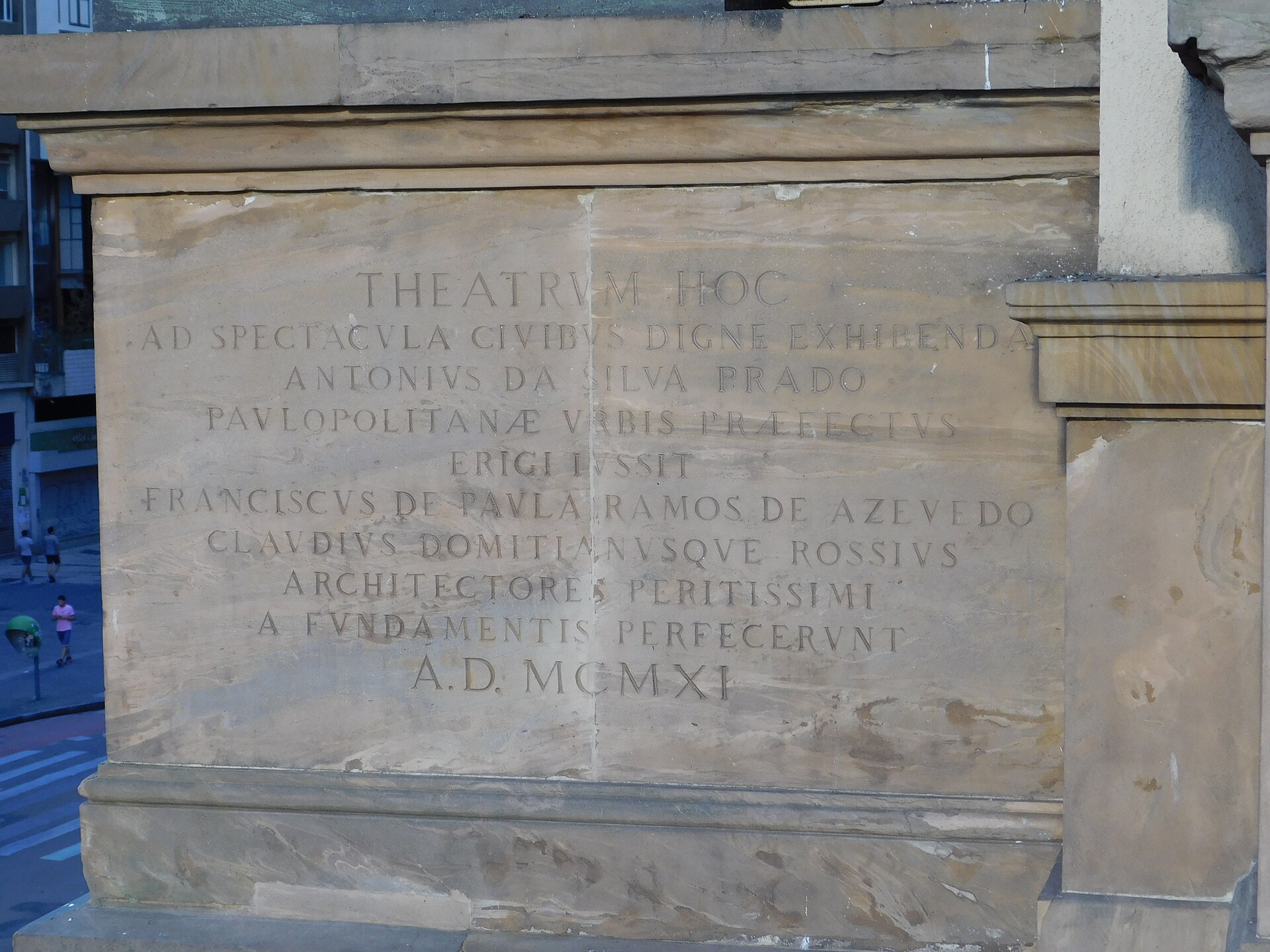
The Municipal Theatre of São Paulo stands as a quiet witness to the city’s ambitions and transformations. Built in the early 20th century, when São Paulo was riding the wave of a coffee-driven economic boom, the theatre was conceived as a statement of cultural arrival. The city’s elite, flush with wealth, wanted a venue that could rival the grand opera houses of Europe. Architects drew inspiration from the Palais Garnier in Paris, crafting a building that blended neoclassical elegance with baroque flourishes. The result was a structure that felt both imposing and refined, its façade adorned with sculptures and bas-reliefs celebrating the arts, while inside, marble staircases, gilded details, and crystal chandeliers created an atmosphere of opulence.
The theatre’s interior is a world unto itself. The auditorium’s ceiling, painted with scenes from Greek mythology, pays homage to the traditions of opera, while the foyer and corridors are lined with murals by prominent Brazilian artists. Even those who aren’t regulars at classical performances can’t help but feel the weight of history here. The building has hosted some of the most celebrated names in music and dance, from international opera stars to legendary ballet companies. But its significance goes beyond performances—it was here, in 1922, that the Week of Modern Art took place, a pivotal moment in Brazilian culture. Young artists and writers, including Anita Malfatti and Mário de Andrade, challenged conservative norms, and the theatre became the stage for this cultural rebellion.
Over the decades, the Municipal Theatre has been more than just a venue for the arts. It has served as a gathering place for the city’s most important moments, from political rallies to charity concerts. During World War II, it became a symbol of resistance, hosting events in solidarity with anti-fascist movements. In the 1960s, it provided a platform for voices opposing the military dictatorship. For many paulistanos, the theatre is a landmark, a point of reference in the city’s sprawling center, a place where São Paulo presents itself to the world.
The area around the theatre offers a rare moment of calm in the heart of the metropolis. A small park surrounds the building, where locals and visitors alike take refuge under the shade of trees. Nearby, museums, cafés, and cultural spaces create a neighborhood that feels like a journey through the city’s past. In the evening, when the theatre’s façade is illuminated, it takes on a particularly majestic presence, a reminder of how art can endure across generations.
Visiting the theatre isn’t just about attending a performance. Guided tours offer a glimpse behind the scenes, revealing dressing rooms, rehearsal spaces, and even the stage itself, where the view of the auditorium is unexpectedly intimate. The backstage areas hold costumes and sets from past productions, offering a tangible connection to how theatrical tastes and techniques have evolved over time. For many, these tours are a revelation, uncovering the rituals and traditions that keep the theatre alive.
São Paulo is a city of contrasts, where skyscrapers loom over historic buildings and bustling avenues give way to quiet corners. The Municipal Theatre is one of those corners—a place where the past feels present. It hasn’t been preserved as a relic but continues to evolve, hosting everything from classical operas to contemporary dance and experimental performances. The theatre’s ability to adapt while retaining its grandeur is part of what makes it so beloved. For paulistanos, it’s a source of pride; for visitors, it’s a window into the soul of the city.
Even if you’re not a regular at the opera, there’s something about the Municipal Theatre that draws you in. The building itself tells a story, not just of São Paulo’s cultural aspirations but of its resilience. It has weathered economic shifts, political upheavals, and changing tastes, yet it remains a vital part of the city’s identity. Whether you come for a concert, a tour, or simply to sit in the park outside, the theatre offers a moment of reflection—a chance to step out of the rush of modern life and connect with something enduring. In a city that never stops moving, that’s no small feat.