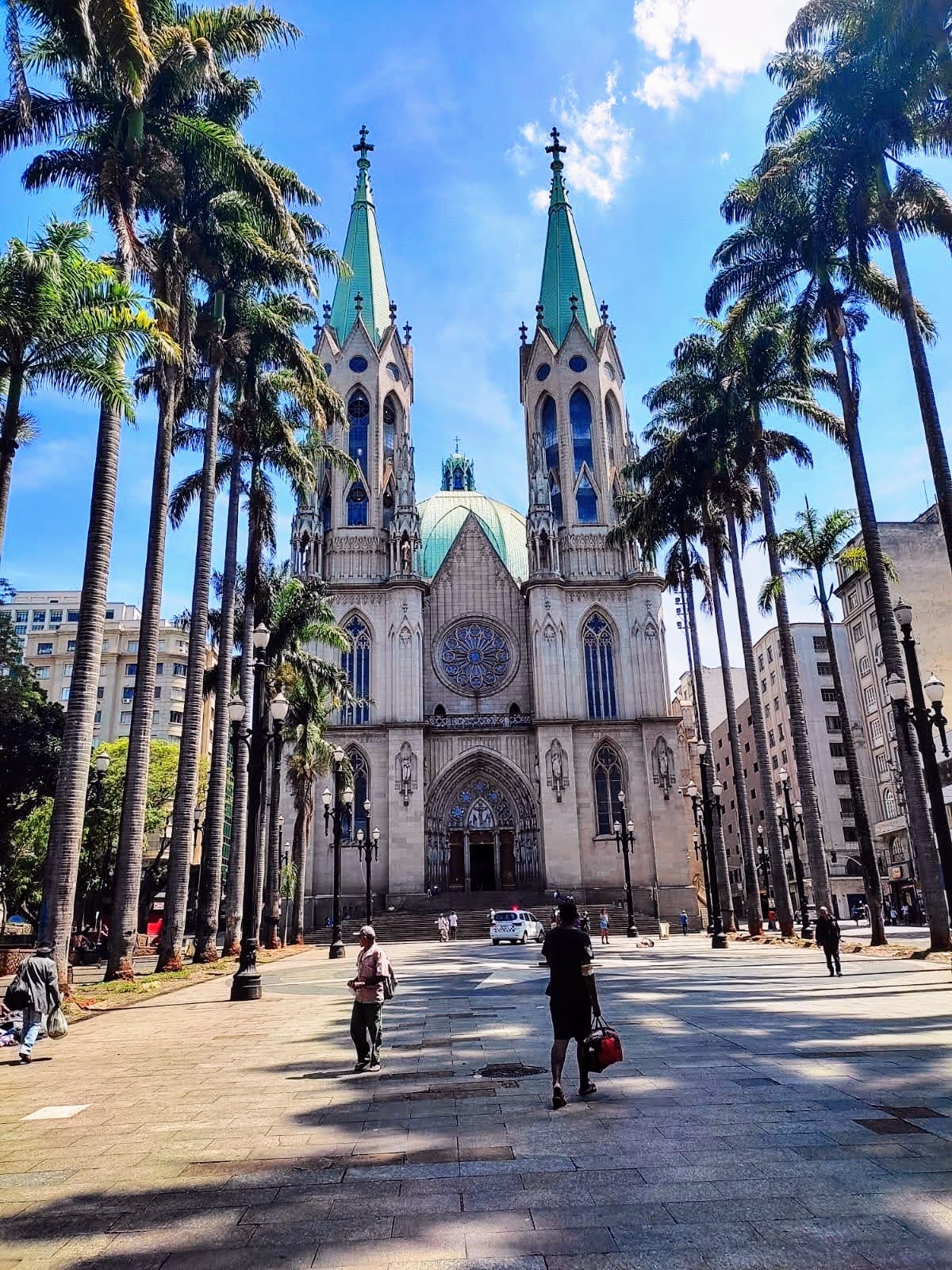
São Paulo Cathedral is one of those places that doesn’t reveal itself at first glance. From the outside, it can feel imposing, even a little austere, especially against the backdrop of the city’s relentless energy. But step inside, and the atmosphere shifts. The soaring vaults, the way light filters through stained glass, the quiet broken only by the echo of footsteps—it’s a space that demands pause. This isn’t just a church; it’s a monument to the city’s history, its contradictions, and its relentless ambition.
Construction began in 1913 on the site of an older colonial-era church, a decision driven by the archbishop of São Paulo, who wanted a cathedral worthy of the city’s growing importance. The project went to German architect Maximilian Emil Hehl, who drew inspiration from Europe’s great Gothic cathedrals. Yet Brazil’s climate, culture, and materials left their mark. The result is a building that blends Gothic forms with Renaissance touches and even subtle Brazilian influences, creating something entirely its own.
The work dragged on for nearly forty years. By 1954, São Paulo’s 400th anniversary, the cathedral was finally consecrated, though finishing touches continued for years after. The twin towers, each nearly ninety meters tall, dominate the facade, while above the main entrance, a massive rose window—one of the largest in the world—draws the eye. Inside, the scale is staggering: the nave stretches 110 meters, and the vaults rise thirty meters high. The space feels endless, especially when you tilt your head back and watch the light from the stained glass warm the stone.
Below the main floor lies the crypt, a quieter, more solemn space. Here, the remains of some of Brazil’s most notable figures rest among massive columns and low arches. The crypt also houses a small museum tracing the cathedral’s history and its ties to the city. Among the tombs is that of Tibiriçá, a 16th-century Indigenous leader who allied with Portuguese colonizers, as well as the first bishops of São Paulo. The atmosphere down here is different—detached from the bustle above, as if time moves slower.
The interior is rich with detail. The white marble altar, gilded and inlaid with precious stones, strikes a balance between grandeur and restraint. Side chapels dedicated to different saints line the nave, each with its own story and artistic flourishes. The Chapel of the Sacred Heart of Jesus features a statue by an Italian sculptor, while the stained glass—crafted by both Brazilian and European artists—depicts biblical scenes alongside unexpected motifs, like Indigenous patterns or symbols tied to Brazil’s history.
Beyond its religious role, the cathedral is a vital part of São Paulo’s urban fabric. It stands in Praça da Sé, once the heart of colonial São Paulo and now a crossroads of tourists, locals, and street vendors. The surrounding area is a patchwork of eras: colonial churches rub shoulders with modern skyscrapers, a reminder of how the city has grown from a small Jesuit settlement into a global metropolis. The cathedral itself seems to bridge these contrasts, anchoring the past in the present.
A visit here offers more than just an architectural experience; it’s a chance to reflect on the role of faith in Brazil. Catholicism here has absorbed African traditions and Indigenous beliefs, creating a spiritual landscape unlike any other. The cathedral embodies that complexity. It hosts not only masses but also concerts, exhibitions, and even civic events. During holidays, the church is adorned with flowers, and at Christmas, nativity scenes draw crowds. The building isn’t just a relic—it’s a living part of the city’s rhythm.
Despite its grandeur, the cathedral doesn’t feel out of place in São Paulo. It fits into the city’s skyline as naturally as the modern towers around it, perhaps because it shares the same qualities: ambition, diversity, and a constant negotiation between old and new. To walk through its doors is to step into a space where history and modernity coexist, where the city’s past and future are held in the same frame. It’s not just a monument to faith, but to the spirit of São Paulo itself.