Andria sits off the usual tourist routes in Puglia. The town moves at its own pace, where tradition isn’t preserved—it’s part of daily life. The past isn’t admired from a distance; it’s still here. Teatro Curci stands at the center of this quiet rhythm, as if the late 1800s never really left.
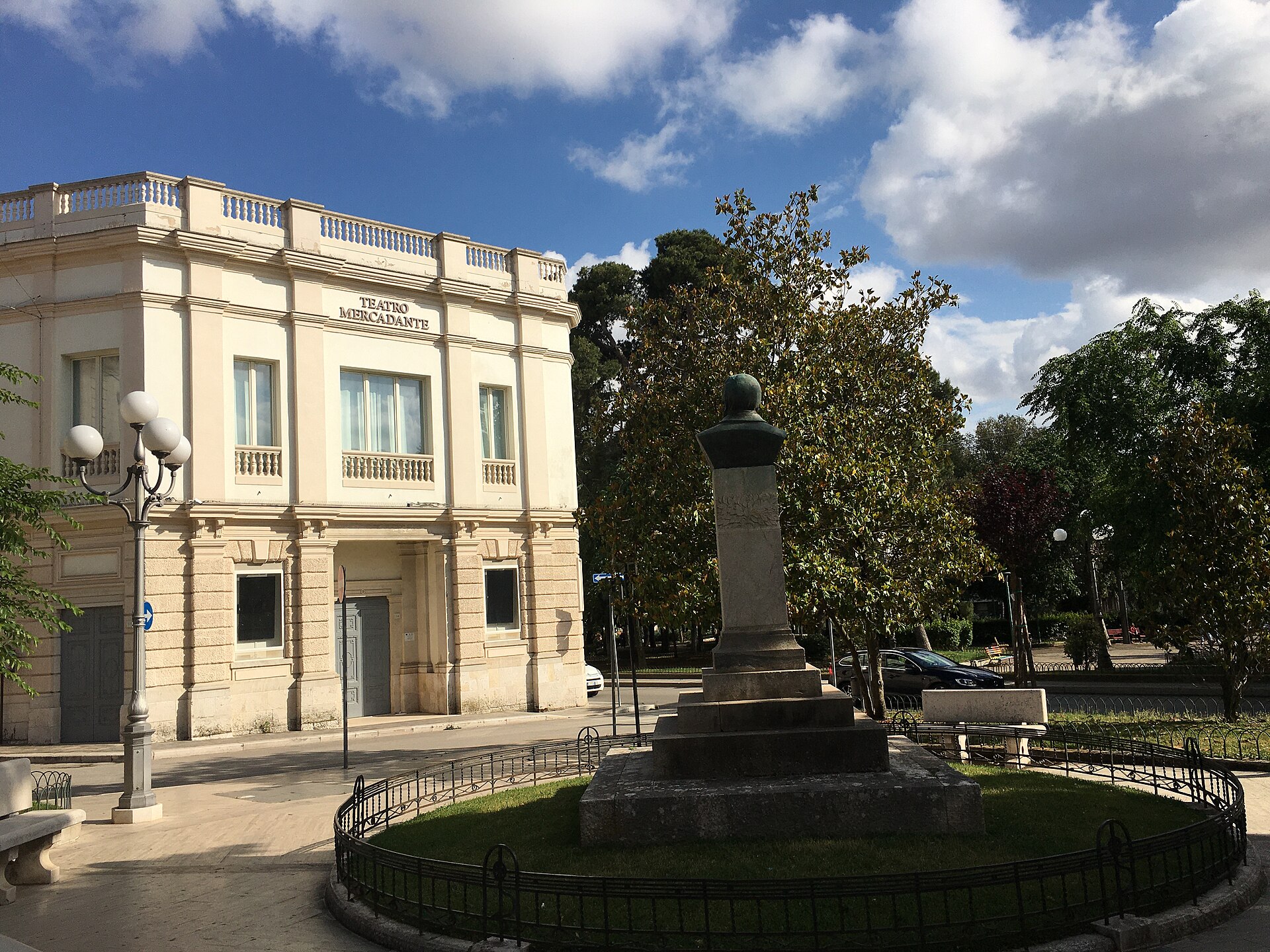
The theater’s facade is simple, with the clean lines and symmetry of 19th-century neoclassicism. Inside, the space opens up—ornate plasterwork, gilded details, a horseshoe-shaped auditorium designed to bring the audience close to the stage. It wasn’t built to be grand; with around five hundred seats, it was meant for intimacy, where every note and gesture could be felt. Today, it still serves its original purpose, though performances are fewer now. The building carries the weight of generations.
The theater is named after Domenico Curci, a composer from Andria who thrived during the golden age of Italian opera. His works, less remembered than Verdi’s or Puccini’s, were once celebrated across Italy. Naming the theater after him was the town’s tribute to a local figure whose music carried Andria’s name beyond its borders. Over time, the Teatro Curci has hosted opera, classical concerts, plays, and festivals that highlight the region’s cultural roots. It’s where art isn’t just performed—it’s part of the town’s identity.
Andria’s history isn’t locked in museums. It spills into the streets. The old town is a maze of narrow alleys lined with pale stone buildings, their facades worn by centuries. The central square buzzes with life—locals at cafés, children near fountains, the occasional tourist pausing to look around. The theater sits quietly here, a contrast to the everyday noise. In summer, when the evenings are warm, the shift is even clearer: the lively chatter of the piazza fades into the hushed anticipation of an audience settling into their seats.
What makes Teatro Curci special? It’s not just the architecture or the history. It’s how it fits into Andria’s life. There’s no tourist rush, no crowds fighting for photos. Instead, there’s continuity—a place where people come because they want to. Performances aren’t frequent, but when they happen, the experience lingers. The acoustics, still sharp despite the building’s age, carry every sound clearly. The atmosphere pulls you in, whether you’re sitting next to a lifelong resident or someone who, like you, found the town by chance.
The theater was built for Andria’s wealthier citizens, but it was never meant to be exclusive. Even then, it was a place where people from different backgrounds could gather for an evening. That hasn’t changed. Tickets are affordable, and the audience is a mix of locals and travelers looking for something beyond the usual sights. It’s a reminder that culture, at its best, isn’t about spectacle—it’s about connection.
Puglia is known for its trulli in Alberobello and the baroque beauty of Lecce. Teatro Curci doesn’t have their fame, but it has something they often lack: warmth. It’s not a monument frozen in time. It’s a living space that has adapted without losing what it was. There’s no forced nostalgia here. The theater simply is what it’s always been—a place where art and life meet, where the gilded details catch the light just as they did a century ago, and where time feels different.
If you find your way to Andria, Teatro Curci might feel like a discovery. The town doesn’t announce itself. It reveals itself slowly, in quiet corners and unassuming streets. You might wander in without expecting much, only to leave feeling like you’ve seen something rare. The theater is the same—plain on the outside, rich within. It’s a place to pause, to step away from the noise, and to remember what it’s like to be fully present, even for a little while.