San Domenico in Andria doesn’t announce itself. It stands in a town that rarely appears in guidebooks, though Andria sits in Puglia, away from Rome or Florence. There are no crowds here. The church feels like part of the town’s rhythm, where history and everyday life mix.
The church was built in the 13th century when Andria was a strategic stronghold in southern Italy. The town passed through Norman rulers, the Hohenstaufens, and later the Angevins. Originally part of a Dominican monastery, the church played a central role in the region’s religious and cultural life. The monks here preached, educated, and involved themselves in local politics.
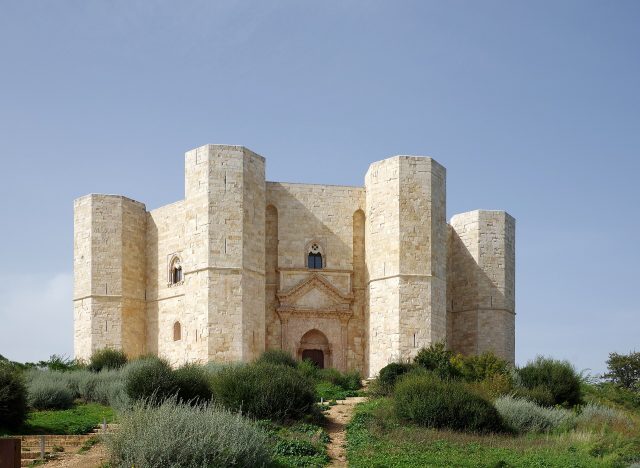
The exterior is unassuming. The facade blends Romanesque simplicity with Gothic touches—rough stone, clean lines, and narrow windows. The portal has carvings of saints and foliage. Above the entrance, a rose window once stood, but now only a niche remains.
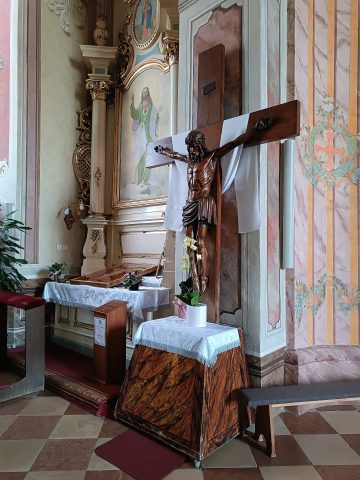
Inside, the contrast is sharp. Thick columns divide the nave, supporting vaulted ceilings painted with frescoes. Some are from the 14th century; others were added during the Baroque period. The walls show scenes from the lives of Christ, the Virgin Mary, and local saints. To the right of the altar, a chapel preserves a fresco of the Last Judgment, its faded figures still visible.
The altar is Baroque, with gilded stucco, colored marble columns, and statues of saints. At its center is an image of the Madonna and Child, believed to be miraculous. Locals say the icon once spared the town from plague. Every year, people gather to lay flowers and pray.
Beneath the altar is a crypt, found during 20th-century restoration work. This small, dim space was a burial site for monks and townspeople. The walls have faded frescoes of saints, and the floor is laid with ancient mosaic tiles. A few sarcophagi remain, including one said to belong to a 13th-century bishop.
San Domenico isn’t a tourist attraction. Visitors are rare. There are no guided tours or gift shops—just wooden benches to sit on and frescoes to study. In summer, the church offers shade from the heat. In winter, it feels warm.
Andria doesn’t try to impress. San Domenico reflects that. History isn’t always loud. Sometimes it waits in quiet corners for those who look beyond the obvious.