Lutsk’s Taras Shevchenko Theatre stands as one of the city’s most recognizable landmarks, not just for its cultural role but for the way it anchors the heart of the old town. Built in the early 20th century, the building reflects the architectural trends of its time, blending neoclassical elements with the more restrained, functional lines that became popular in the interwar period. Its façade, with its symmetrical columns and arched windows, gives a sense of grandeur without overwhelming the surrounding streets. Inside, the auditorium retains much of its original character, with a horseshoe-shaped balcony and ornate detailing that hints at the theatrical traditions of the past.
The theatre was named after Taras Shevchenko, Ukraine’s national poet, whose work has long been a symbol of cultural identity and resistance. This choice wasn’t accidental—by the time the theatre opened, Shevchenko’s legacy had already become a unifying force, especially in regions where Ukrainian language and traditions had been suppressed. The theatre itself became a space where that identity could be celebrated, whether through performances of his poetry, plays inspired by his life, or works by other Ukrainian writers. Over the decades, it has hosted everything from classical drama to modern experimental productions, adapting to the changing tastes of its audience while remaining a constant presence in the city’s cultural life.
Lutsk has always been a city where different influences intersect. Located in western Ukraine, it spent centuries under Polish, Lithuanian, and later Soviet rule, each leaving its mark on the local culture. The theatre, in many ways, embodies this layered history. During the Soviet era, it was a venue for state-approved performances, but it also became a place where Ukrainian-language productions could find an audience, even when official policies discouraged them. After Ukraine gained independence, the theatre’s role shifted again, as it began to engage more openly with contemporary Ukrainian themes and experimental forms. Today, it balances these different eras, offering a mix of classic and new works that reflect both the city’s past and its present.
Walking into the theatre, you notice how the space feels lived-in, as if every corner carries the echoes of past performances. The foyer, with its high ceilings and old-fashioned chandeliers, has a slightly worn elegance, the kind that comes from decades of use. The walls are lined with photographs of actors and productions from different eras, a visual timeline of the theatre’s history. Some of the names are familiar to locals, while others are forgotten outside of these walls, but together they tell a story of a place that has been central to Lutsk’s cultural life for generations.
The theatre isn’t just a relic of the past, though. It remains an active part of the city’s rhythm, with a season that includes everything from Shakespeare to contemporary Ukrainian playwrights. The programming is eclectic, often reflecting the theatre’s willingness to take risks. One season might feature a classic operetta, while the next could bring in a modern dance performance or a political satire. This flexibility has helped the theatre stay relevant, even as other cultural institutions in the region have struggled to adapt. For locals, it’s a place where they can see something familiar or discover something entirely new, all within the same walls that have hosted performances for over a century.
What makes the Taras Shevchenko Theatre special isn’t just its architecture or its history, but the way it feels like a living part of the city. Unlike larger, more polished venues in Kyiv or Lviv, it has an intimacy that comes from being deeply rooted in its community. The audience here isn’t just passive spectators—they’re often people who grew up attending performances, who remember seeing their parents or grandparents in the same seats. There’s a sense of continuity, as if the theatre isn’t just a building but a shared experience passed down through generations.
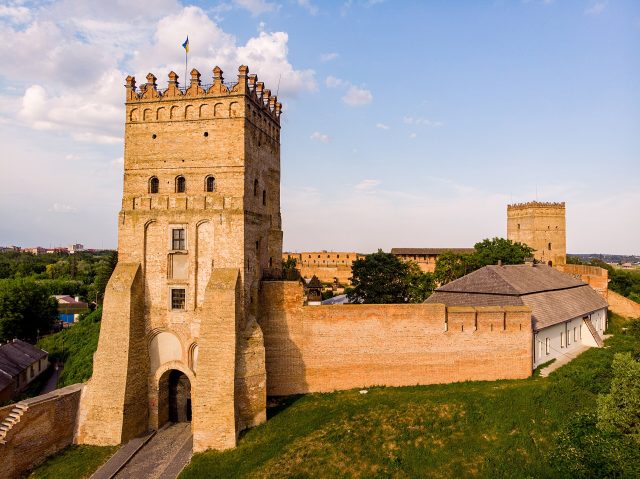
Outside, the theatre is surrounded by the quiet streets of Lutsk’s old town. The area has a slower pace than the bustling center, with cobblestone lanes and low-rise buildings that give it a timeless feel. Nearby, the Lubart’s Castle looms over the city, a reminder of Lutsk’s medieval past, while cafes and small shops offer a glimpse of its present. The theatre fits seamlessly into this landscape, neither overshadowing the history around it nor fading into the background. It’s a place where the past and present coexist, much like the city itself.
For visitors, the theatre offers more than just a performance. It’s a chance to see how culture functions in a place where history is always present. Whether you attend a play, take a guided tour, or simply sit in the foyer with a coffee, you get a sense of how deeply the arts are woven into the fabric of Lutsk. The theatre doesn’t put on a show for tourists—it exists first and foremost for its audience, and that authenticity is what makes it worth experiencing. In a city where every street seems to have a story, the Taras Shevchenko Theatre is one of the best places to hear them.