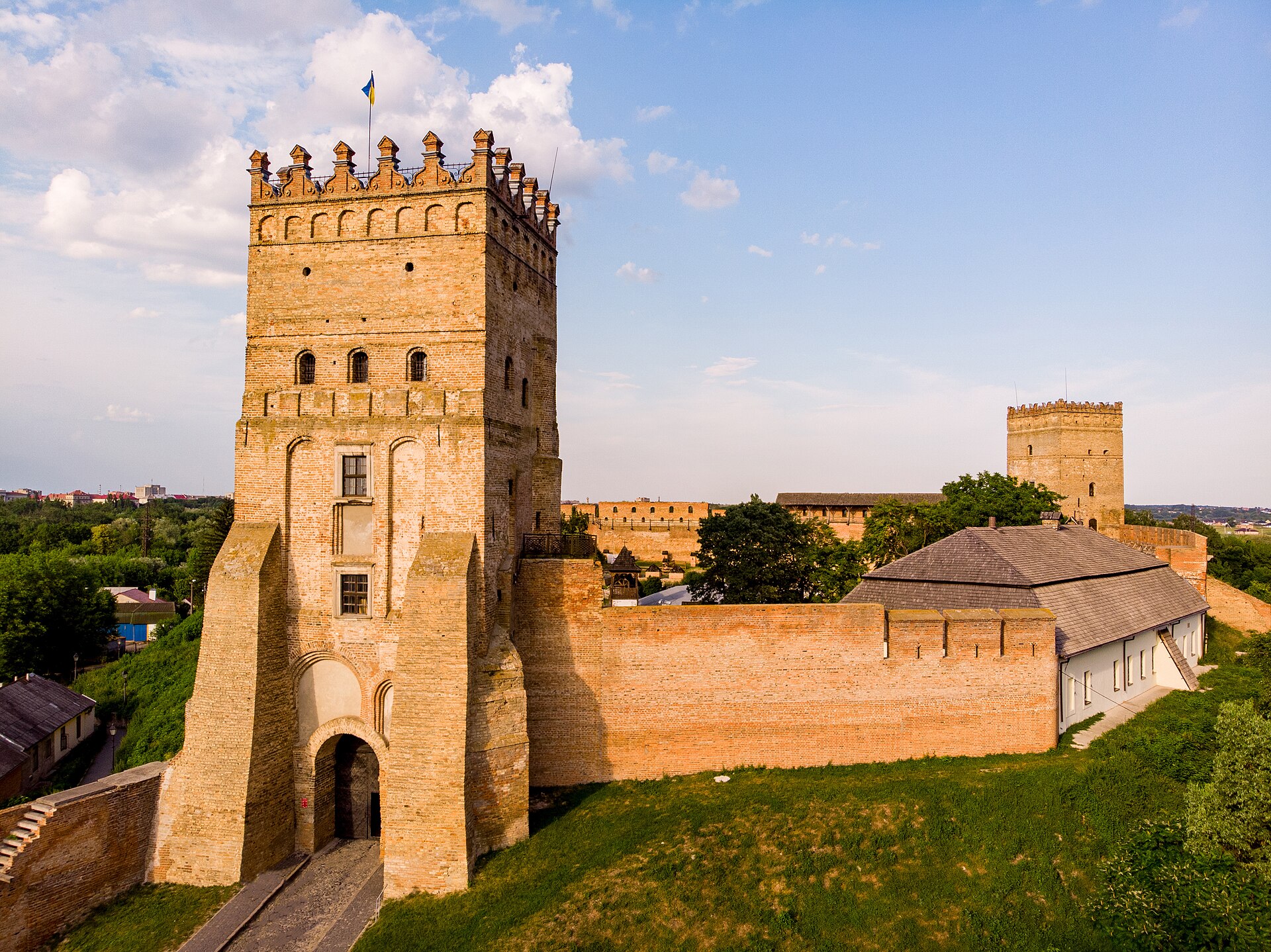
Lutsk Castle, also known as Lubart’s Castle, stands as one of Ukraine’s most striking medieval fortresses, a silent witness to centuries of shifting power, conflict, and cultural exchange. Perched on a gentle rise above the Styr River, its massive stone walls and towers dominate the skyline of Lutsk, a city that has long been a crossroads of Eastern Europe. The castle’s origins trace back to the 14th century, when it was built by Prince Lubart, a ruler of the Grand Duchy of Lithuania, though its foundations may rest on even older fortifications. Over the centuries, it has served as a royal residence, a military stronghold, and a symbol of resistance, its walls bearing the marks of sieges, fires, and reconstructions that shaped the region’s history.
The architecture of Lutsk Castle is a blend of Gothic and Renaissance influences, reflecting the tastes and necessities of the eras it has endured. The fortress is roughly triangular in shape, with three surviving towers—Vladych, Styrska, and Vladycha—each serving a distinct purpose in its defense. The Vladych Tower, the tallest and most imposing, was once the main entrance, accessible only by a drawbridge over a deep moat. Its thick walls and narrow windows were designed to withstand artillery fire, a testament to the castle’s role as a military bastion. Inside, the courtyard reveals remnants of residential buildings, a chapel, and a well, offering glimpses into the daily life of its inhabitants. The castle’s design was not just about defense; it was also a statement of power, a physical manifestation of the authority of its rulers.
Walking through the castle’s gates, it’s easy to imagine the bustle of medieval life that once filled its courtyards. In its heyday, Lutsk was a thriving center of trade and politics, a city where merchants, diplomats, and soldiers converged. The castle hosted kings, including Władysław II Jagiełło of Poland, who held a famous congress here in 1429, gathering European monarchs to discuss the threat of the Ottoman Empire. The echoes of such gatherings linger in the stone halls, where the weight of history feels almost tangible. Over time, the castle’s role evolved; it became a prison, a barracks, and even a museum, each phase leaving its mark on the structure. The scars of cannon fire, the worn steps of staircases, and the faded frescoes in the chapel all tell stories of survival and adaptation.
One of the most intriguing aspects of Lutsk Castle is its connection to the broader history of Volhynia, a region that has been a battleground for competing powers. The castle’s strategic location made it a prize for Lithuanian, Polish, and later Russian rulers, each of whom sought to control its walls. During the Khmelnytsky Uprising in the 17th century, the castle withstood a prolonged siege, a testament to its formidable defenses. Yet, like many fortresses of its time, it eventually lost its military significance as warfare evolved. By the 19th century, it was no longer a frontline stronghold but a relic of a bygone era, its stones repurposed for new uses. The castle’s survival is partly due to its remote location, which spared it from the widespread destruction that ravaged other historic sites during the world wars.
Today, Lutsk Castle is a place where history feels alive, not just preserved in exhibits but embedded in the very fabric of the building. The fortress houses a museum that traces the region’s past, from its medieval origins to its role in modern Ukraine. Visitors can climb the towers for panoramic views of Lutsk, where the old town’s cobblestone streets and Baroque churches blend with the more modern cityscape. The castle’s courtyard often hosts cultural events, from medieval fairs to concerts, breathing new life into its ancient stones. Yet, even without these modern additions, the castle has a quiet power, a sense of timelessness that makes it more than just a tourist attraction. It’s a place where the past and present coexist, where the stories of kings and commoners alike are etched into the walls.
Beyond its historical significance, Lutsk Castle is a reminder of the resilience of the places and people who have called this region home. The castle has survived fires, wars, and neglect, yet it remains standing, a symbol of endurance. Its restoration in the 20th century was a labor of love, an effort to preserve not just a building but a piece of Ukraine’s identity. For locals, the castle is a source of pride, a tangible link to the generations that came before. For visitors, it offers a chance to step back in time, to walk the same paths as medieval knights and Renaissance nobles. The castle’s atmosphere is one of quiet dignity, a place where history is not just remembered but felt.
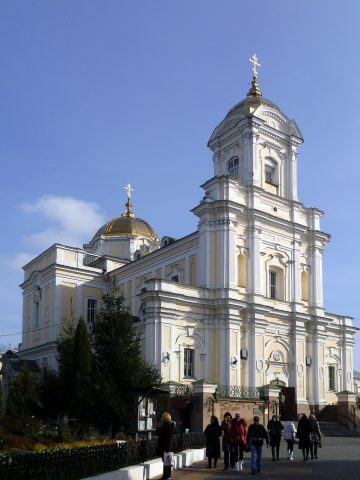
The surrounding city of Lutsk adds another layer to the castle’s story. Once a major center of the Grand Duchy of Lithuania, Lutsk has retained much of its old-world charm, with narrow streets, wooden houses, and churches that date back centuries. The castle’s presence looms over the city, a constant reminder of its medieval past. Nearby, the Jesuit College and the Dominican Monastery speak to the city’s religious and cultural heritage, while the modern cafes and shops reflect its ongoing evolution. Lutsk is a city of contrasts, where the past and present coexist in a way that feels organic rather than forced. The castle, with its imposing silhouette, serves as an anchor, grounding the city in its history while allowing it to grow and change.
Visiting Lutsk Castle is not just about seeing a historic site; it’s about experiencing a place that has shaped and been shaped by the people who lived here. The castle’s walls have seen triumph and tragedy, peace and war, and each visitor adds their own chapter to its story. Whether you’re drawn by the architecture, the history, or simply the chance to wander through a place that has stood for centuries, the castle offers something rare: a sense of connection to the past. It’s a place where the weight of history is palpable, where every stone has a story to tell. And in a world that often feels transient, that sense of permanence is a rare and precious thing.