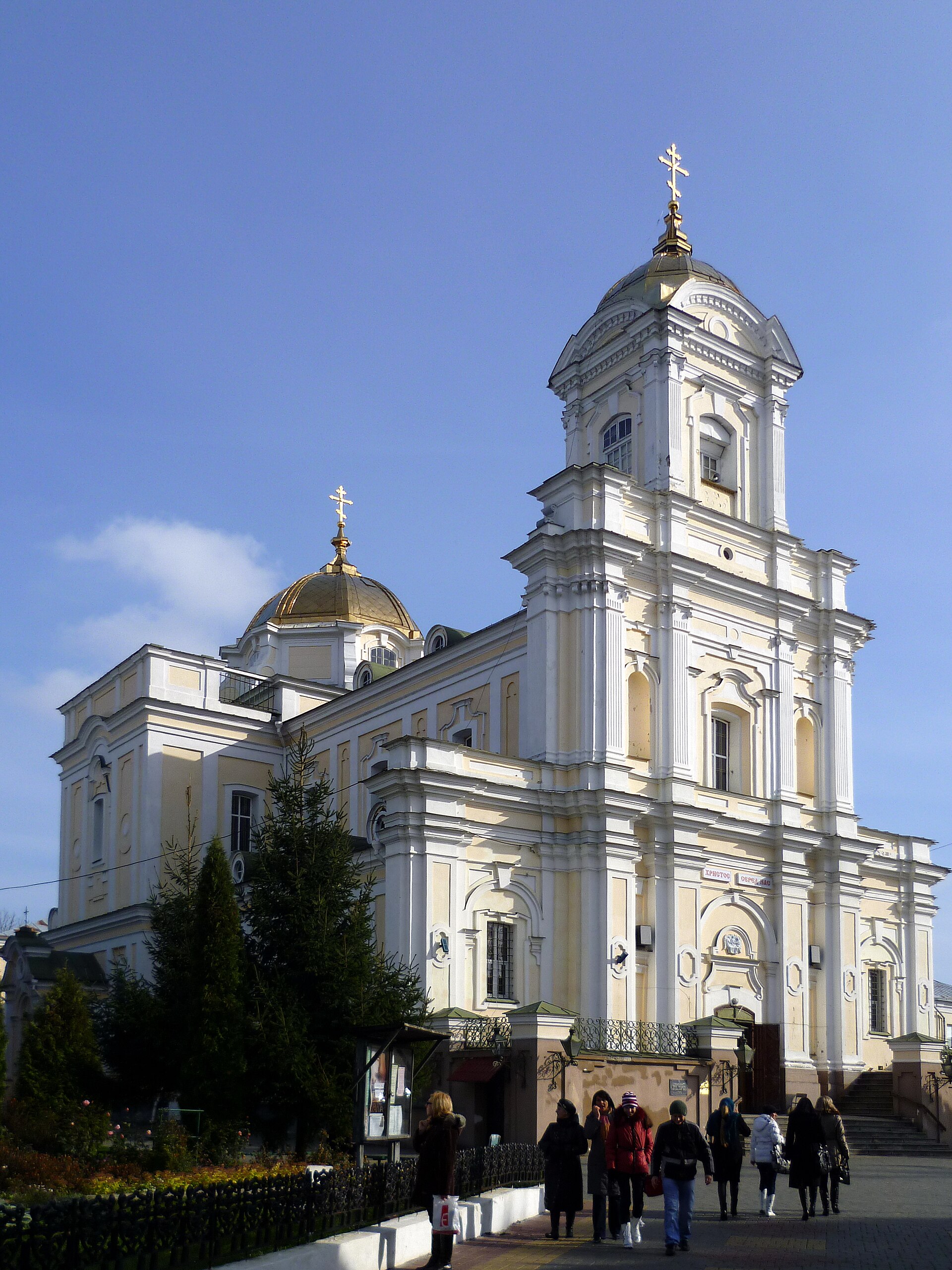
Lutsk is a city where history lingers in every corner, its skyline shaped by ancient churches that tell stories of a distant past. Among them, the Holy Trinity Cathedral stands as a quiet giant, its white stone walls rising above the high banks of the Styr River. On clear days, sunlight catches the domes, making them glow against the sky—a sight that has drawn eyes for centuries. The cathedral isn’t just a place of worship; it’s a bridge to an era when Volhynia was a powerful principality, a crossroads of cultures and faiths.
Construction began in the late 16th century, when Lutsk was flourishing as a key trade and cultural hub of the Grand Duchy of Lithuania. The cathedral was meant to be the main Orthodox church of Volhynia, and its architecture reflects the transitional period of its time. Gothic influences are visible in the sturdy buttresses, while Renaissance details add a touch of elegance to the otherwise robust structure. Inside, the space feels vast and airy, with high windows flooding the nave with light. The frescoes and iconostasis, though worn by time, still carry the weight of centuries of devotion.
The cathedral has witnessed its share of upheavals. In the 17th century, during wars and shifting powers, it changed hands multiple times—first as a Catholic church, then back to Orthodox control. The Soviet era brought a different kind of neglect: the building was repurposed as a warehouse, and later, a museum of atheism. It wasn’t until the late 20th century that the cathedral was returned to the faithful, and since then, it has slowly reclaimed its role as a spiritual heart of the city. On feast days, the sound of bells rings out over Lutsk, a reminder of traditions that have endured despite everything.
What makes the cathedral fascinating isn’t just its appearance but its engineering. Thick walls, vaulted ceilings, and a system of supporting pillars give the structure a sense of permanence, as if it were built to last forever. Inside, traces of the past remain—carved wooden elements of the iconostasis, fragments of old frescoes—all carefully restored. The 19th-century iconostasis, with its gilded details and intricate craftsmanship, stands out as a masterpiece in its own right. It’s a piece of history that connects the present to the layers of time beneath it.
The cathedral is deeply woven into the story of Lutsk and Volhynia. Its walls have seen princes and hetmans, merchants and artisans, all of whom left their mark in some way. Over the centuries, it has been a silent witness to church councils, political negotiations, and moments of both triumph and sorrow. Today, it remains more than just a religious site; it’s a place where history feels tangible. For many locals, the cathedral is a symbol of the city itself, a spiritual anchor in the midst of everyday life.
Visitors often overlook the small details that make the cathedral special. The old tombstones embedded in the walls, for instance, or the faded fragments of frescoes in the side chapels. Each stone seems to hold a story, and even the quietest corner can reveal something unexpected. In summer, the surrounding park is lush and green, a perfect spot to sit and take in the view of the cathedral’s grand facade. In winter, the building takes on a different kind of majesty, its domes dusted with snow, the glow of streetlights reflecting in the windows.
Beyond its religious significance, the cathedral is part of Lutsk’s cultural life. Concerts of sacred music, exhibitions, and gatherings on history and art are held here, drawing people from all walks of life. On holidays, the cathedral fills with worshippers, and the atmosphere becomes warm and festive. Even for those who aren’t religious, a visit here leaves a lasting impression—an awareness of something timeless, a thread connecting past and present.
Lutsk is a city where every stone whispers of history, and the Holy Trinity Cathedral is one of its most eloquent voices. It stands at the intersection of eras, a reminder that the past doesn’t vanish but lives on in architecture, in people, and in the traditions they uphold. To visit is to step into a story that began centuries ago and continues to unfold, one that shapes the city’s character even today.