Lutsk Brotherhood is one of those rare places where history isn’t just preserved in stone—it breathes, lingers in the air, and quietly demands attention from anyone who passes by. Tucked into the heart of Lutsk, this architectural complex has been intertwined with the city’s cultural and religious life for centuries. It’s a place where personal stories, pivotal events, and architectural traditions merge into something greater than the sum of its parts. The buildings here don’t just stand; they tell a story of resilience, faith, and the enduring power of community.
The brotherhood emerged in the late 16th century as an alliance of Orthodox townspeople and clergy determined to safeguard their faith and heritage amid shifting political tides. At the time, Volhynia was part of the Polish-Lithuanian Commonwealth, where Catholicism was gaining ground, and Orthodox communities faced increasing pressure. Brotherhoods like this one became strongholds of resistance, centers of education, and hubs of charity. They defended the rights of believers, established schools, and even set up printing presses. The Lutsk Brotherhood was among the most influential in the region, leaving a lasting mark on Volhynia’s cultural and intellectual life.
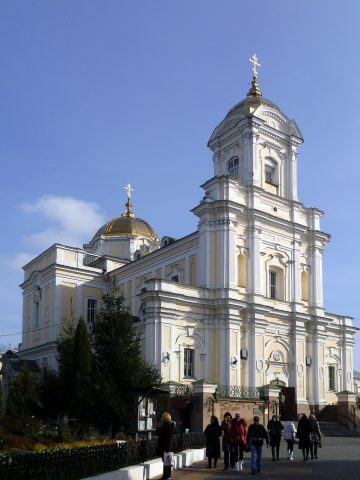
The complex’s centerpiece is the Epiphany Church, built in the early 17th century with funds from the brotherhood’s members and parishioners. The church blends Ukrainian Baroque with Renaissance influences, a combination that sets it apart in this part of Ukraine. Its facades are adorned with pilasters, arched niches, and decorative pediments, while the interior strikes a balance between simplicity and elegance. The 18th-century iconostasis is particularly noteworthy—a masterpiece of woodcarving and icon painting that reflects the skill and devotion of its creators.
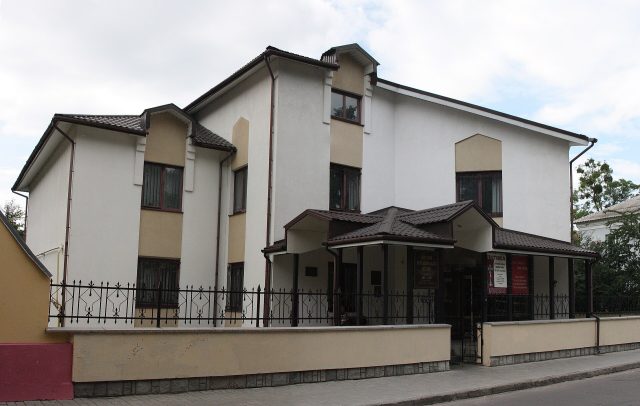
Adjacent to the church stands the brotherhood’s school, one of the oldest educational institutions in Volhynia. Founded in the early 1600s, it played a crucial role in spreading knowledge among the local population. The curriculum went beyond theology, covering grammar, rhetoric, philosophy, and arithmetic. Students came from diverse backgrounds—children of townspeople, priests, and even minor nobility—making the school accessible to different social classes. Though the building has undergone renovations over the centuries, it still stands today, now housing a museum that explores the brotherhood’s history and its contributions to education and culture.
The bell tower, added in the 18th century, rises above the complex, serving as both an architectural focal point and a symbol of spiritual continuity. Built in the late Baroque style, its facades are decorated with stucco and ornamental details typical of the period. For centuries, the sound of its bells marked the rhythm of life in Lutsk—not just calling the faithful to prayer, but reminding the city of its shared identity and traditions. Even now, the bells ring on special occasions, echoing through the old streets as they have for hundreds of years.
The brotherhood’s printing press, established in the 17th century, was one of the first in Volhynia and played a vital role in the region’s literary culture. It produced liturgical texts, textbooks, and polemical works defending Orthodox beliefs. The press was known for its high-quality publications, which circulated far beyond Volhynia. While little remains of the original printing house, its legacy lives on in rare books now held in museums and libraries, silent witnesses to a time when the written word was both a tool and a weapon.
There’s a distinct atmosphere to the brotherhood complex, one that’s hard to miss the moment you step onto its grounds. Despite being just a short walk from Lutsk’s central square, the area feels removed from the hustle of modern life. The cobblestone streets of the Old Town lead here, winding past buildings that seem to whisper stories of the past. The church, school, and bell tower form a cohesive whole, each structure complementing the others in a way that feels deliberate, almost timeless. Even after centuries, the complex remains well-preserved, its buildings standing as a testament to the care and reverence they’ve inspired.
Today, the Lutsk Brotherhood is more than just a historical monument—it’s a living part of the city’s spiritual and cultural life. The Epiphany Church still holds services, baptisms, and weddings, while the museum welcomes visitors eager to learn about the brotherhood’s history. Tourists can explore the exhibits, climb the bell tower for a view of the Old Town, or simply wander the grounds, soaking in the quiet dignity of the place. For many, it’s not just a stop on a sightseeing itinerary but a moment of connection—a chance to reflect on the values and traditions that have shaped this corner of Ukraine.
What makes the Lutsk Brotherhood special is its ability to evoke the past without feeling like a relic. It’s a place that speaks of faith, struggle, and the enduring human desire to preserve identity in the face of adversity. Every stone, every icon, every page printed in its press carries the memory of those who came before. And perhaps that’s why it still feels alive—not as a museum piece, but as a chapter in an ongoing story, passed down through generations. Whether you come for history, architecture, or a moment of quiet reflection, the brotherhood leaves an impression that lingers long after you’ve walked away.