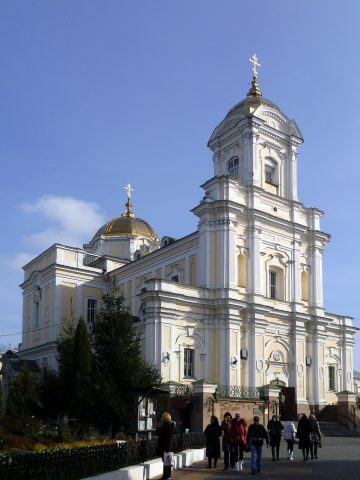
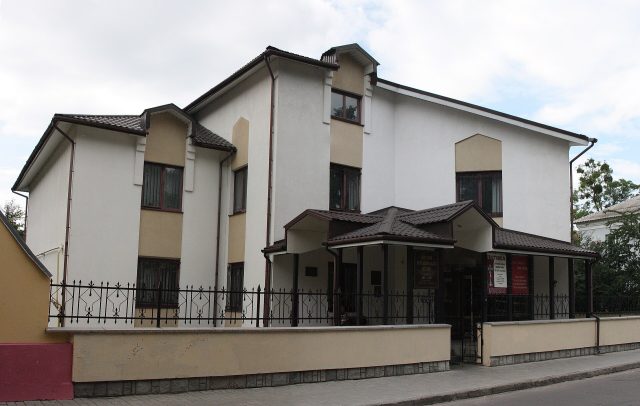
Lutsk’s Lutheran Church stands quietly on Karaimska Street, a building that has witnessed the city’s transformations over nearly two centuries. Constructed in the mid-1800s, it was built as a spiritual home for Lutsk’s German community, which had settled in Volhynia during a period of economic and cultural exchange. The church was more than a place of worship—it was a gathering point for merchants, craftsmen, and families who shaped the region’s development. Today, it remains a subtle yet striking reminder of the city’s layered past, where different faiths and traditions once coexisted.
The church’s architecture reflects the neo-Gothic style favored by Protestant communities across Europe at the time. Its pointed arches, slender spires, and intricate stonework give it an air of lightness, despite its solid structure. Inside, the space is uncluttered, in keeping with Lutheran principles of simplicity and functionality. There are no elaborate frescoes or gilded icons, just wooden pews, a modest organ, and the soft glow of old chandeliers. The atmosphere is one of quiet reflection, a contrast to the more ornate churches found elsewhere in the city.
Lutsk has long been a crossroads of cultures, and the Lutheran community was one of many that left its mark. Germans began arriving in the 18th century, drawn by opportunities under Russian rule, and they played a key role in the region’s trade and industry. The church served not only as a religious center but also as a social hub for Lutherans of various backgrounds—Germans, Poles, Czechs—who found common ground in their faith. For decades, it was a place where languages and customs mingled, a small but vital part of the city’s identity.
The 20th century brought dramatic changes. After the Russian Revolution, the church was seized by the Soviet state, and its purpose shifted. At different times, it housed a warehouse, a gymnasium, and even a cinema. During World War II, it suffered damage but survived, a rare feat in a city that saw much destruction. By the late 1980s, restoration efforts began, and today the church has been returned to the Lutheran community, though its congregation is far smaller than it once was.
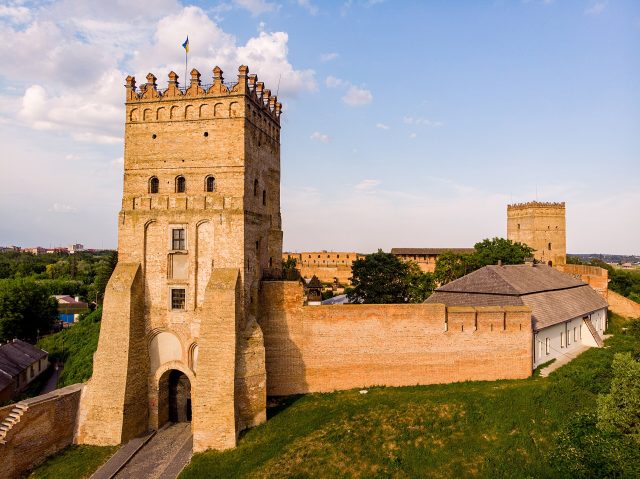
What makes the church special is how seamlessly it fits into Lutsk’s historic fabric. The city’s old streets, the Lubart Castle, and its grand cathedrals all tell stories of power and grandeur, but the Lutheran Church offers something different—a glimpse into the everyday lives of ordinary people. It doesn’t demand attention like a fortress or a palace, yet its presence is quietly compelling. It speaks of a time when Lutsk was a mosaic of communities, each contributing to the city’s rhythm.
Visitors can step inside during services or occasional concerts, where the old organ still fills the space with music. The building isn’t a museum, but it doesn’t need to be. Its value lies in its authenticity, in the way it preserves the memory of those who once gathered here. For those who take the time to notice, it’s a reminder that history isn’t just about monuments—it’s also about the small, unassuming places where people lived, prayed, and built their lives.
Lutsk isn’t a city most would associate with Lutheranism, but that’s part of what makes the church intriguing. It’s a relic of a time when the city was more diverse than it is today, when different languages and traditions coexisted in its streets. Walking through Lutsk’s old quarter, it’s easy to imagine the sounds of German, Polish, and Ukrainian blending together, each leaving its mark on the city’s character. The Lutheran Church is just one piece of that story, but it’s a piece that helps complete the picture.