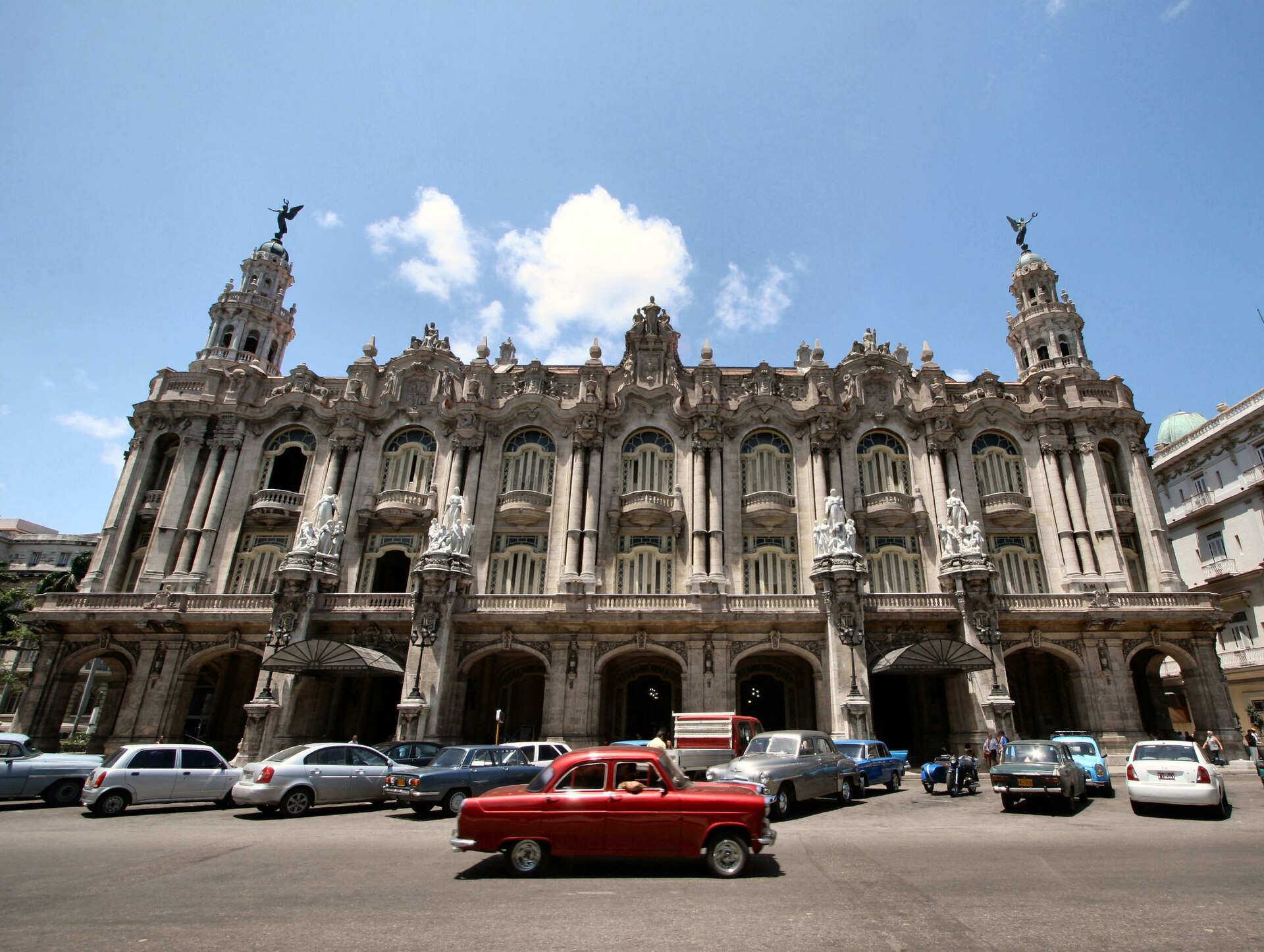
The Gran Teatro de La Habana is one of those rare places that seems frozen in time, preserving the spirit of an era long past. Nestled in the heart of Old Havana, it isn’t just a building—it’s a living witness to the island’s history, culture, and passions. The theater’s facade, adorned with figures of muses and dancers, immediately draws the eye, but the real magic begins inside, where every hall and corner breathes with the weight of the past.
Constructed in the early 20th century on the site of the old Teatro Tacón—once considered one of the finest theaters in Latin America—the Gran Teatro was built with the ambition of a young republic eager to make its mark on the world stage. Architects drew inspiration from European designs but infused them with local character, resulting in a structure that blends the opulence of Baroque, the elegance of Art Nouveau, and the exotic flair of the tropics. The grand auditorium, with its gilded balconies, crystal chandeliers, and intricate plasterwork, evokes an age when Havana was a playground for wealthy Americans and Europeans, a city where glamour and excess were the norm.
Today, the Gran Teatro remains not just an architectural landmark but a vibrant cultural hub. It hosts opera and ballet performances, classical and contemporary concerts, festivals, and even political events. A special place in its repertoire is reserved for the Cuban National Ballet, founded by Alicia Alonso. The company, renowned worldwide, frequently performs here, and catching a show is an experience in itself. The auditorium is always packed, the atmosphere electric, especially when legendary performers take the stage.
Yet the Gran Teatro is more than just a temple of high art. It has a life of its own, where the stories of ordinary people and celebrities intertwine. Over the years, its stage has welcomed luminaries like Sarah Bernhardt, Enrico Caruso, and Anna Pavlova, as well as Cuban icons such as Omara Portuondo and Chucho Valdés. Films have been shot here, music videos recorded, interviews conducted. Even if you’re not an opera or ballet enthusiast, stepping inside is worth it just to feel the pulse of the place. The foyer is always bustling—some waiting for a performance to begin, others lounging on plush sofas, a few snapping photos against the marble columns.
The architectural details of the theater are striking. The facade features sculptures representing different art forms—music, dance, theater, and painting—while above the entrance, a figure of the goddess of victory stands as if to remind visitors that art transcends time. Inside, the contrast between the lavish public spaces and the more modest backstage areas is fascinating. Marble staircases, stained-glass windows, and wrought-iron railings create the sense of stepping into another world, one where time moves more slowly.
The theater sits on Fraternity Square, one of the liveliest spots in Old Havana. Around it, the city hums with energy—street musicians play son and salsa, vendors sell fresh fruit and cigars, tourists pose for photos against colonial buildings. The Gran Teatro absorbs this vibrancy, becoming part of it. When evening falls and the lights come on, it transforms into a beacon of culture, drawing in anyone who wants to connect with the true soul of Cuba.
For many Cubans, the Gran Teatro is more than just a theater—it’s a symbol of national pride. It has witnessed pivotal moments in the country’s history, from premieres to political rallies. During difficult times, it remained a sanctuary, a place where art reminded people of their shared humanity. Today, it continues to play that role, welcoming not only professionals but also amateurs—workshops, lectures, and exhibitions are often held within its walls.
You don’t have to attend a performance to experience the Gran Teatro. Occasionally, tours are offered, allowing visitors to peek behind the scenes and learn more about its history. Even if you don’t speak Spanish, the atmosphere speaks for itself. Walking up the marble staircase, wandering the high-ceilinged corridors, and stepping into the auditorium, it’s impossible not to feel the weight of history. Every sound, every echo seems to carry the applause of audiences who sat in those same seats a century ago.
The Gran Teatro de La Habana is more than just a building. It’s a place where past and present collide, where art becomes life and life becomes art. When you visit, you’re not just watching a show or sightseeing—you’re touching the soul of Cuba, its passions, dreams, and hopes. And long after you leave, the memory of this place lingers, a quiet reminder of the power of culture to endure.