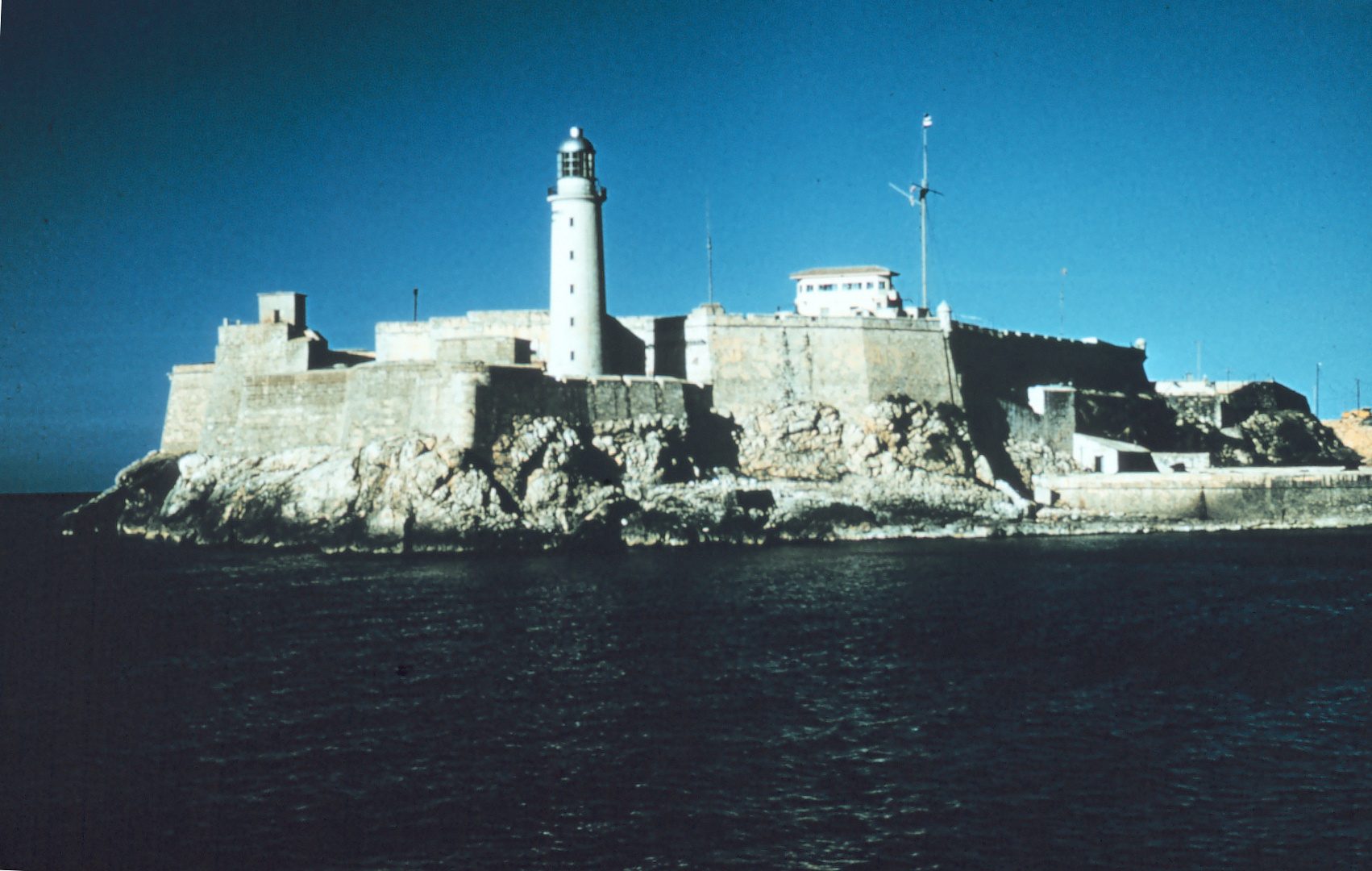
El Morro Fortress stands on a rocky promontory at the entrance to Havana’s harbor, its weathered silhouette unchanged for centuries. The massive stone walls rise above the sea, a silent witness to pirates, colonial battles, and the island’s long history. Today, it’s more than just an open-air museum—it’s a place where locals and visitors alike come to feel the sea breeze and take in the view of the bay from above.
Construction began in the late 16th century, when Spain realized how vulnerable its Caribbean colony was. Havana was a crucial stop for treasure ships sailing from the New World to Europe, and the fortress was built to protect it. The work dragged on for decades: first the bastions and walls, then the moat, casemates, and gunpowder stores. Italian and Spanish engineers designed it using the latest fortification techniques of the time, making it nearly impregnable. Yet history proved that even the strongest defenses could be breached—like when the British briefly captured Havana in the 17th century.
The fortress’s most striking feature is La Cabaña, the central tower that dominates the complex. From its heights, you can see the harbor, the old city, and the Atlantic beyond. Inside, old cannons still point toward the sea, as if ready to fire at any moment. Nearby stands the lighthouse, added in the 19th century but fitting seamlessly into the fortress’s design. Its light still guides ships at night, though now it’s more tradition than necessity.
Walking through El Morro, it’s easy to imagine the bustle of life here during Spanish rule. Narrow stone corridors lead to dark gunpowder cellars, where barrels once stored explosives, and open courtyards where soldiers drilled. Some rooms still bear faded murals and inscriptions left by the garrison. One of the most famous is an image of the Virgin Mary, patron saint of sailors, painted on a bastion wall. Guides often say the fortress never surrendered without a fight, and its defenders stood firm even in the hardest times.
Nowadays, El Morro blends past and present. In the evenings, musicians play traditional Cuban music, and couples gather on the walls to watch the sunset. On certain days, the fortress holds cannon-firing ceremonies, echoing the signals that once announced arriving ships or danger. The boom of the cannon rolls across the bay, and for a moment, it feels like time has turned back.
The fortress is deeply woven into Cuban culture. It appears in literature and films, and for Habaneros, it symbolizes resilience and independence. In the 20th century, it housed a military garrison, and after the revolution, it became a museum. Today, its exhibits cover not just the colonial era but also Cuba’s fight for independence, with displays of old weapons, maps, and ship models that once sailed the Caribbean.
One of El Morro’s most intriguing features is its network of underground tunnels. Built for soldiers to move quickly between bastions while staying protected, some passages remain intact and can be explored. Others have collapsed or been sealed off, leaving their secrets hidden beneath the stone.
El Morro is a place where history feels tangible at every turn. There’s none of the usual tourist rush, and even in peak season, you can find a quiet spot to sit on the walls and watch the sea. For many Habaneros, the fortress is part of their personal story—some remember childhood visits, others served here in the military, and some just come to walk its walls on weekends. That’s what makes El Morro special: it’s not just a monument, but a living part of the city that continues to evolve with it.