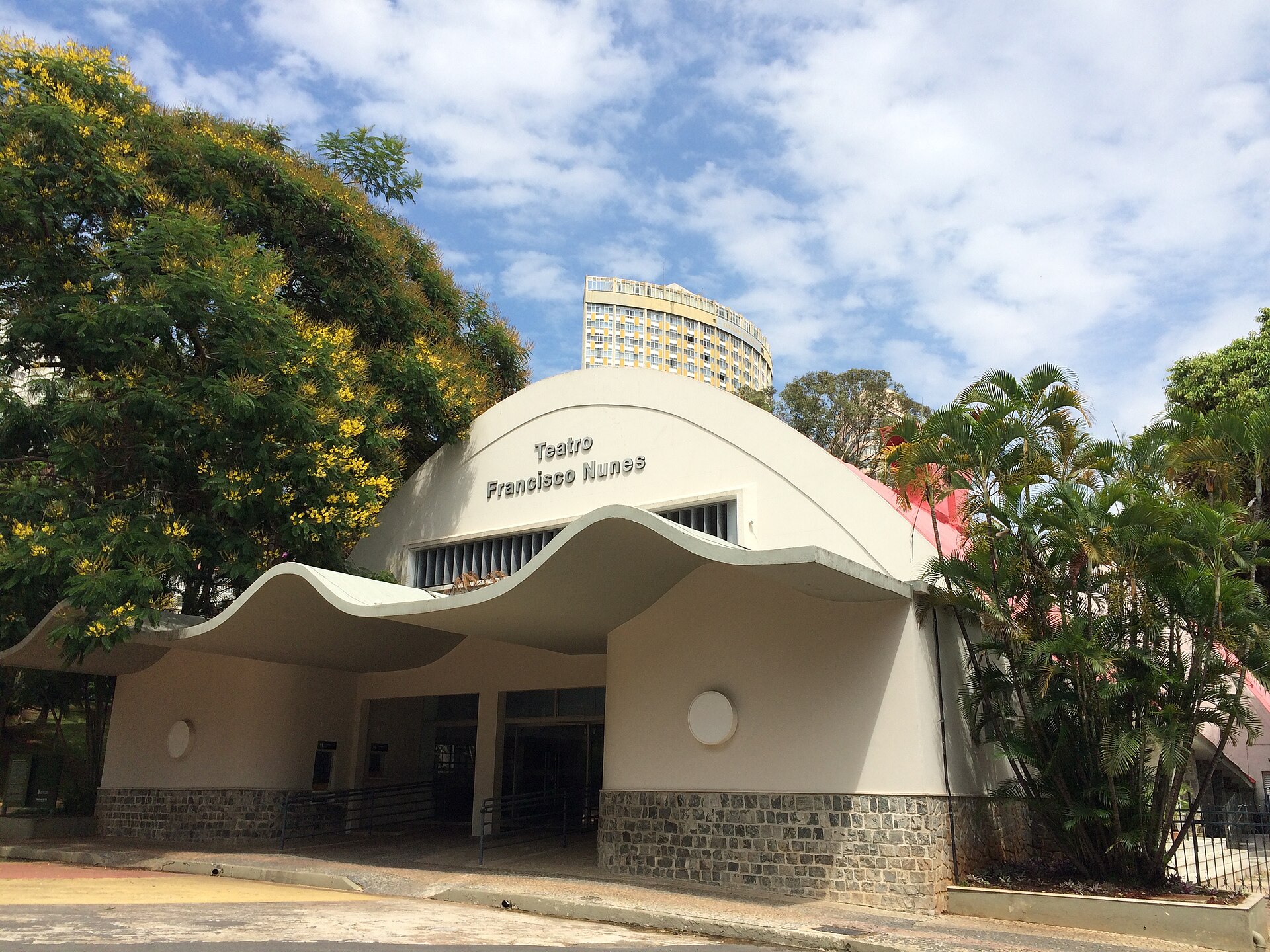
Belo Horizonte has a way of holding onto places that feel like time capsules—spaces where the spirit of mid-20th-century Brazil still lingers. The Francisco Nunes Theater is one of them. Built in 1950, it quickly became a cornerstone of the city’s cultural life, a place where the creative energy of post-war Brazil found its voice. Named after a composer and conductor from Minas Gerais, the theater wasn’t just a venue; it was a statement. In an era when the country was redefining itself, it stood as proof that art mattered, that live performance could still move people in ways nothing else could.
The building itself is a product of its time—clean lines, practical design, and an almost obsessive attention to acoustics. Every detail, from the slope of the seats to the lighting rigs, was engineered to serve the performance. There’s nothing flashy about it, no grand facades or ornate decorations. Instead, the architecture is quietly confident, designed to disappear the moment the lights dim and the first note sounds. It’s the kind of place where the space itself seems to hold its breath, waiting for the show to begin.
Over the decades, the theater has seen its share of ups and downs. There were moments when it seemed like live performance might fade into obscurity, drowned out by the noise of new entertainment forms. But the Francisco Nunes endured, stubbornly clinging to its purpose. Today, its stage hosts everything from classic Brazilian plays to bold experimental works, from local musicians to international touring acts. The repertoire shifts with the times, but the theater’s essence remains the same—a place where art isn’t just consumed but experienced.
Festivals have become a defining part of its identity. The annual theater arts festival, for instance, draws performers from across Brazil, turning the city into a temporary hub of creativity. For young actors and directors, stepping onto this stage is a rite of passage. It’s where careers are made, where artists test themselves against the expectations of audiences and critics alike. The theater doesn’t just showcase talent; it shapes it.
The building sits in a part of the city that feels like a quiet secret. The surrounding streets are lined with low-slung houses, small cafés, and bookshops—places where time moves a little slower. It’s not a tourist hotspot, but that’s part of its charm. This was the heart of Belo Horizonte’s cultural scene in the mid-20th century, a neighborhood where artists, writers, and musicians gathered before and after shows. Walking these streets today, you can almost hear the echoes of past conversations, the clink of coffee cups in the hours leading up to a premiere.
In recent years, the theater has expanded its role. It’s no longer just a place for performances but a space for dialogue. Open lectures, workshops, and artist talks have become regular features, turning the venue into a kind of cultural crossroads. Here, ideas are exchanged as freely as tickets at the box office. The theater has adapted, but it hasn’t lost sight of what makes it special—the sense of immediacy, the way a live performance can make an entire room feel connected.
There’s something almost defiant about the Francisco Nunes in an age when so much of culture has moved online. It’s a reminder that some experiences can’t be replicated on a screen. The hush of an audience before a play begins, the way a singer’s voice fills a room without amplification, the shared laughter or silence that binds strangers together—these are things that only happen in person. The theater doesn’t just preserve the past; it insists on the value of the present moment.
For Belo Horizonte, the Francisco Nunes is more than a building. It’s a piece of the city’s identity, a place where the past and present coexist. It’s where the energy of post-war Brazil meets the creativity of today, where tradition and innovation share the same stage. And perhaps that’s the real magic of the place—not just what happens under the lights, but the way it makes you feel part of something larger than yourself.