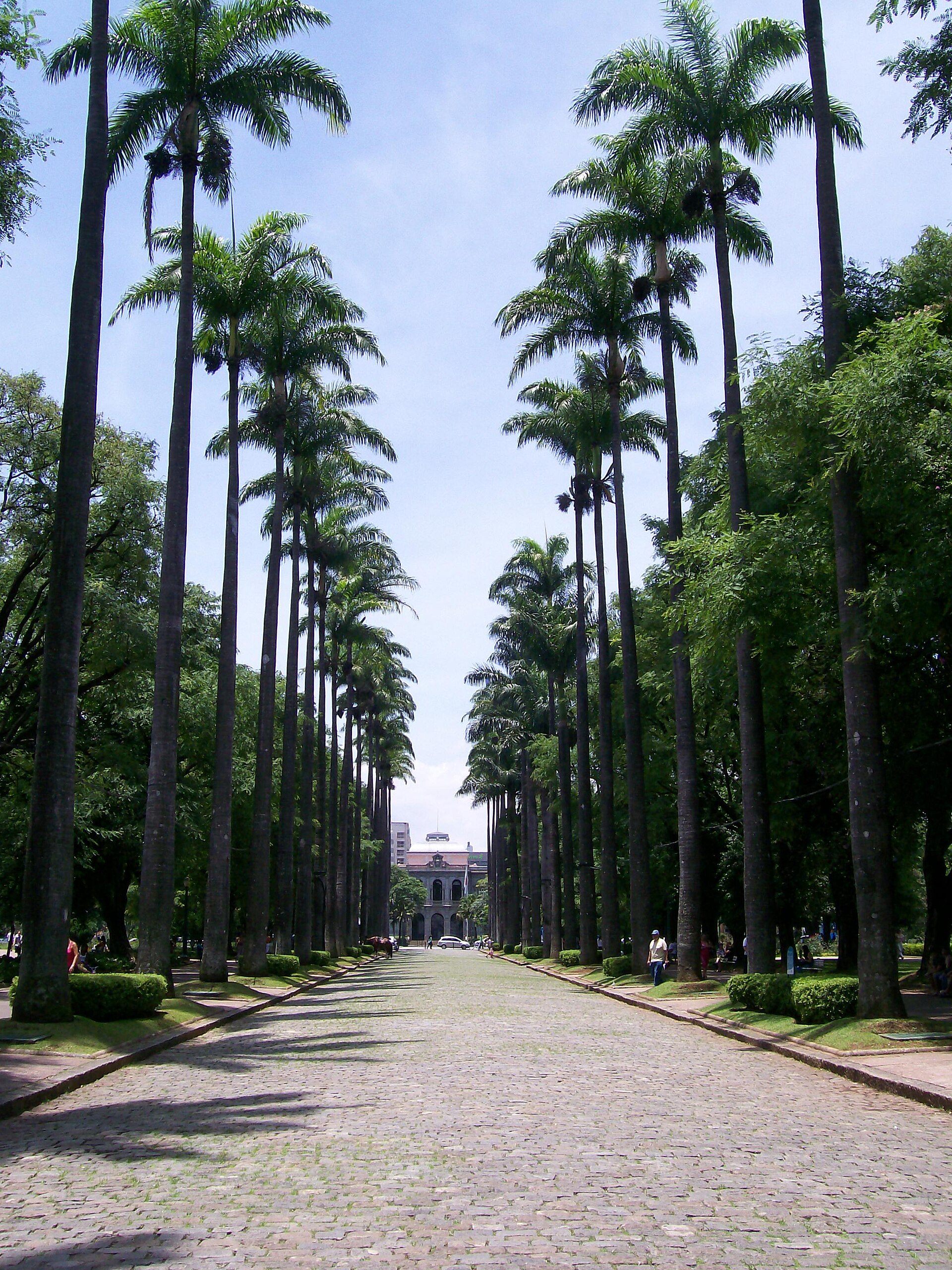
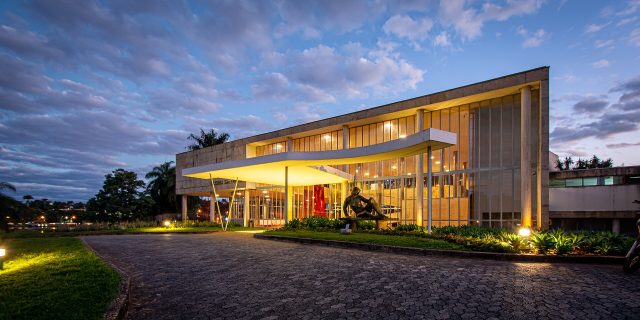
Liberdade Square in Belo Horizonte is one of those rare places where a city’s past and present exist side by side without competing for attention. It wasn’t just designed as a public space—it was conceived as a statement. When Belo Horizonte was chosen as the new capital of Minas Gerais in the late 19th century, replacing the colonial-era Ouro Preto, the planners wanted something that would embody progress, order, and the ambitions of a young state. The square became that symbol, its layout borrowing from European urban design but softened by the tropical climate and the easygoing rhythm of Brazilian life.
The buildings around the square tell the story of Minas Gerais in layers. The most imposing is the Palácio da Liberdade, once the official residence of the state’s governors. Built in a neoclassical style with touches of baroque, its white columns and symmetrical façade stand as a reminder of the time when Minas was carving out its identity within Brazil. Inside, the preserved interiors—furniture, artwork, and decorative details—offer a glimpse into the tastes and priorities of different eras. The palace isn’t just a museum piece; it’s a place where history feels lived-in, not just preserved.
Next to it, the Secretariat of Education building presents a stark contrast. Designed in the art deco style that was fashionable in the 1930s, its clean lines and geometric shapes reflect a different kind of modernity—one that valued efficiency and simplicity over ornamentation. The building fits surprisingly well into the square’s ensemble, proving that architectural harmony doesn’t always require uniformity. Nearby, the state library holds a collection of rare books and documents, some dating back to the colonial period, making it a quiet but essential part of the square’s cultural landscape.
Liberdade Square isn’t just an open-air museum. It’s a place where the city breathes. On any given day, you’ll see students cutting across the paths on their way to class, office workers taking a lunch break under the trees, or tourists pausing to admire the architecture. In the evenings, the square takes on a different character. The streetlights cast a warm glow on the facades, and the air fills with the hum of conversation and the occasional sound of music from a spontaneous performance. On weekends, small concerts or art installations often pop up, drawing locals who come to relax, meet friends, or simply enjoy the atmosphere.
At the center of the square stands a statue of Tiradentes, the national hero who led an 18th-century uprising against Portuguese rule. The monument isn’t just a tribute to one man—it’s a reminder of Minas Gerais’ role in Brazil’s struggle for independence. The statue is surrounded by flowerbeds, and the area around it is a popular spot for guided tours to gather or for visitors to sit and soak in the surroundings. It’s one of those places where history feels tangible, not just something you read about in books.
The square is also home to several cultural institutions. The Minas Gerais State Museum offers a deep dive into the region’s history, from pre-Columbian artifacts to colonial-era relics and geological specimens that highlight the state’s mineral wealth. For those more interested in contemporary culture, the nearby Mário de Andrade Cultural Center hosts exhibitions, performances, and workshops, adding a modern layer to the square’s identity. The mix of old and new makes the area feel dynamic, as if the past and present are in constant conversation.
What makes Liberdade Square special is how seamlessly it blends into the daily life of Belo Horizonte. It’s not a place you visit just to check off a tourist attraction—it’s where the city’s pulse is strongest. There’s no overwhelming hustle like in São Paulo or Rio, but neither does it feel sleepy or neglected. The square has been the heart of Belo Horizonte since the city’s founding, and it still serves that role today. Whether you’re here to explore the architecture, learn about history, or just people-watch from a bench, the square offers something for everyone.
In recent years, the square has also become a gathering spot for younger crowds. On weekends, you might stumble upon a flash mob, an impromptu dance performance, or groups of friends lounging on the grass. During the summer, small cafés and drink stands set up shop, selling everything from iced coconut water to fresh fruit juices. In the cooler months, vendors switch to hot chocolate and warm snacks. The square adapts to the seasons, but it always retains its welcoming, unpretentious vibe.
Liberdade Square is more than just a landmark—it’s a living part of Belo Horizonte. It bridges the gap between the city’s official face and its everyday life, between history and modernity, between culture and casual relaxation. You could spend an hour here or an entire afternoon, and each visit would feel different. Maybe you’ll notice an architectural detail you missed before, or stumble upon a historical fact that changes how you see the city. Or perhaps you’ll just sit back and let the atmosphere wash over you, content to watch the world go by.