Mineirão isn’t just a stadium—it’s where Brazil’s football passion takes physical shape. Built in the mid-20th century, it became one of Belo Horizonte’s defining landmarks, a city often overlooked by travelers but just as meaningful to football fans as Rio or São Paulo. There’s no such thing as indifference here. Even first-time visitors quickly absorb the atmosphere, where every match feels like a celebration and every goal has the power to electrify an entire neighborhood.
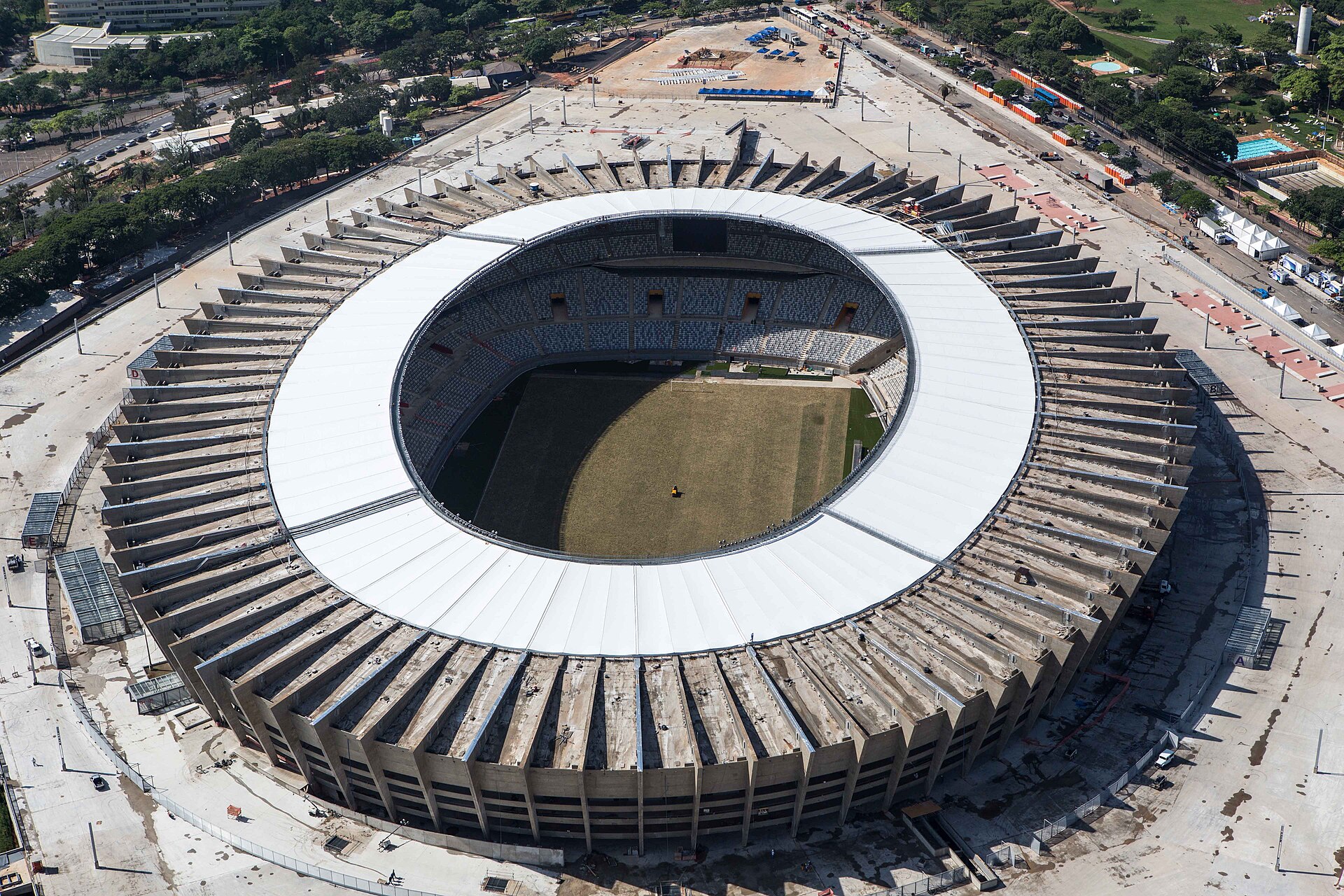
The stadium’s architecture is straightforward but effective. Once one of the largest in the world by capacity, it has since been surpassed, though its scale still commands attention. The stands rise steeply, like an amphitheater, turning every spectator into part of a single, roaring whole. Unlike modern arenas with their glass facades and climate control, Mineirão stays true to its roots—raw concrete, exposed steel, and minimal ornamentation. That simplicity is what makes it special. There’s nothing here but football and the people who live for it.
The stadium’s history is woven into the fabric of Brazilian football. It hosted World Cup matches, including the infamous 2014 semifinal where Brazil suffered a crushing defeat to Germany. That game wasn’t just a sporting tragedy; it became a moment forever etched into the city’s memory. For local fans, Mineirão isn’t just a place of victories—it’s where defeats, too, leave their mark, sometimes even more vividly. The pre-World Cup renovations gave it a modern edge, but the soul remained intact. The roar of the crowd still drowns out any artificial noise from the speakers.
Belo Horizonte is a working-class, industrial city, and Mineirão reflects that character. There’s none of the glamour found in Rio or São Paulo, where football can feel like a high-society event. Here, it’s simpler. People come with their families, their kids, their friends—just to spend an evening doing what they love. Tickets are affordable, and the atmosphere feels more like a backyard gathering than a polished spectacle. Even if you’re not a football fan, you can sense how the sport brings people together, making them part of something bigger.
Among Mineirão’s most devoted followers are the supporters of two local clubs: Cruzeiro and Atlético Mineiro. Their rivalry is one of Brazil’s fiercest, and when they face off, the stadium becomes a cauldron of emotion. Even those who don’t know the finer points of the game can’t help but get swept up in it—shouts, songs, drums, flags—all blending into something raw and alive. In those moments, Mineirão stops being just a stadium and becomes a place where the line between the game and reality blurs.
Outside of match days, the stadium still has a pulse. Concerts, festivals, even political rallies take place here, but football always comes first. On game days, the surrounding streets buzz with food vendors, musicians, and fans draped in team colors. The air smells of grilled meat and beer, and snippets of pre-match chatter drift from every café. For the city, Mineirão isn’t just a sports venue—it’s part of its cultural DNA, a place where collective memories are made.
If you ever find yourself in Belo Horizonte, it’s worth visiting Mineirão even when there’s no game. Walking through the empty stands, you can almost hear them filling with thousands of voices, feel the silence that only exists here in the early morning. In those moments, the stadium feels almost alive, as if it remembers every goal, every loss, every tear and every burst of joy. That’s what makes it more than just a landmark—it’s where football’s history keeps unfolding, day after day.