Nestled on a corner of Charleston’s bustling streets, the Dock Street Theatre building is one of those rare places that feels untouched by the rush of modern life. Constructed in the mid-1800s, it has stood through the city’s many transformations—from a thriving port hub to a quiet corner of history. Over the years, its walls have housed more than just performances; it has been a warehouse, offices, even a movie theater. Yet despite these changes, the building has always carried the echoes of its original purpose, a quiet reminder of Charleston’s cultural past.
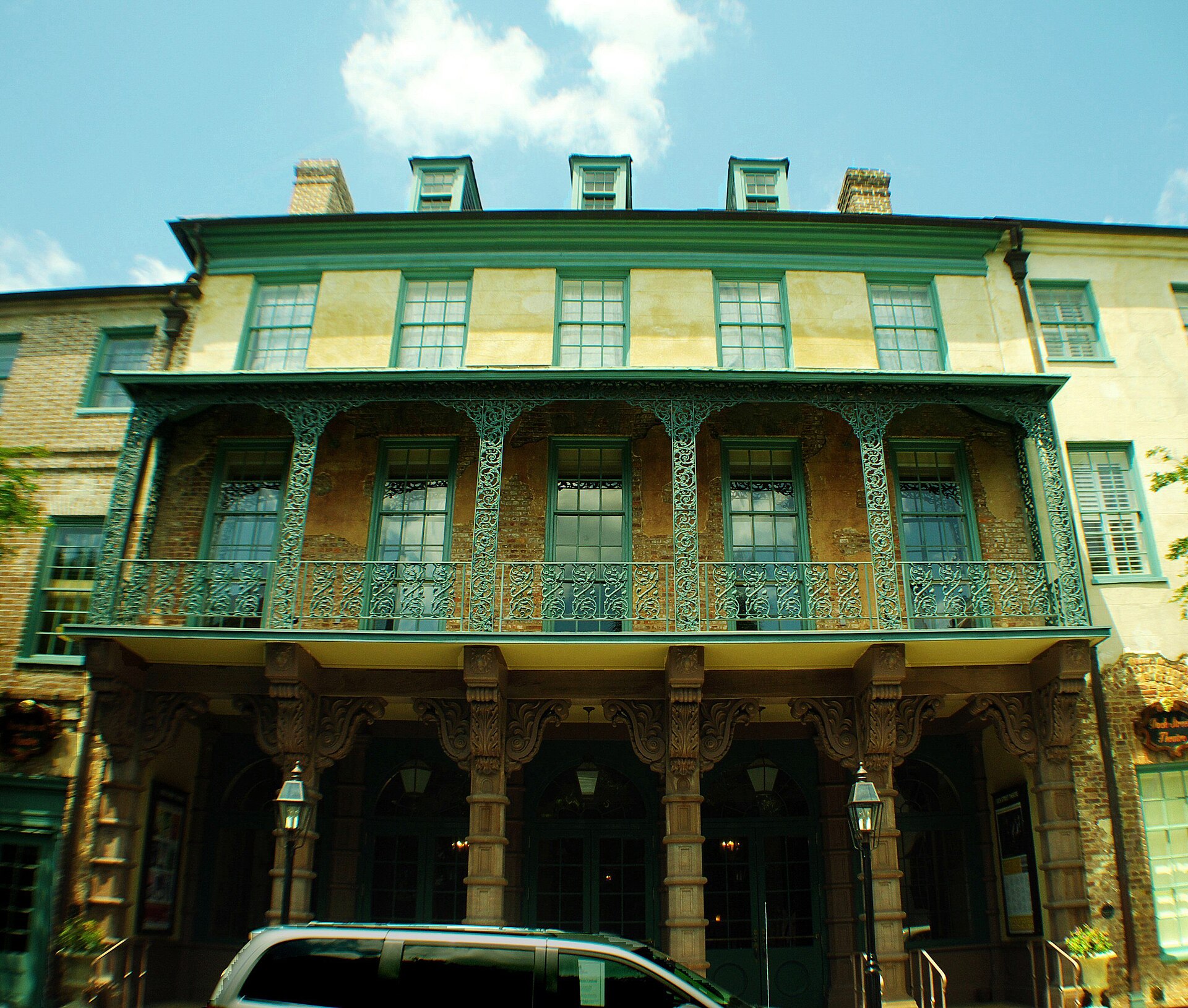
The architecture is unassuming but striking in its simplicity. The facade, with its large arched windows and understated detailing, reflects the commercial style of Charleston’s 19th-century buildings. Inside, the original wooden beams and sturdy columns remain, along with a spacious hall and balcony that once held hundreds of spectators. The years have left their mark—faded paint, worn floors, the occasional crack in the plaster—but these imperfections only add to the building’s charm. There’s no grandiosity here, just a sense of authenticity, as if the walls themselves could tell stories of the people who once filled the space.
In the 1800s, Charleston was a cultural heartbeat of the South, and the Dock Street Theatre played its part. The city was known for its vibrant arts scene, drawing performers from New York and Europe. Shakespearean plays, operas, and concerts were staged here, catering to the tastes of Charleston’s elite. After the Civil War, like much of the city, the theater fell into decline, only to be revived in the 20th century for occasional performances. Today, it still opens its doors for small productions, jazz nights, or private events, a nod to its original role in the city’s cultural life.
What makes the Dock Street Theatre particularly interesting is its connection to everyday Charleston. Unlike more exclusive venues, this was never a place reserved for the wealthy alone. Merchants, sailors, and dockworkers all passed through its doors, making it a gathering spot for the city’s diverse population. Even now, when the theater isn’t in regular use, it occasionally hosts tours or impromptu performances, offering a glimpse into the city’s past. There’s a sense of accessibility here, a feeling that this was always a place for the people, not just the privileged.
Charleston itself is a living museum, where every street and building seems to whisper stories of the past. The Dock Street Theatre fits seamlessly into this tapestry, standing near the old port where ships once unloaded goods from around the world and the historic district where grand plantation homes still line the streets. Walking by, it’s easy to imagine the generations of Charlestonians who have passed through its doors, the voices that once filled its halls, the untold stories lingering in its corners.
The theater isn’t one of Charleston’s most famous landmarks, and that might be its greatest strength. Its value lies not in fame but in its authenticity. There are no perfectly restored interiors here, just the raw, unpolished beauty of a building that has seen history unfold. If you’re lucky enough to visit during an event, the space comes alive with music or the murmur of actors on stage, and for a moment, it’s as if time has stood still.
For those who appreciate history, architecture, or simply places with character, the Dock Street Theatre is a quiet gem. It doesn’t demand attention or draw crowds, and that’s precisely what makes it special. This is a place where the past isn’t behind glass—it’s woven into the fabric of the city itself. Charleston is full of such corners, each offering a different perspective on the American South. The Dock Street Theatre may be one of the quietest, but its stories are among the most enduring.