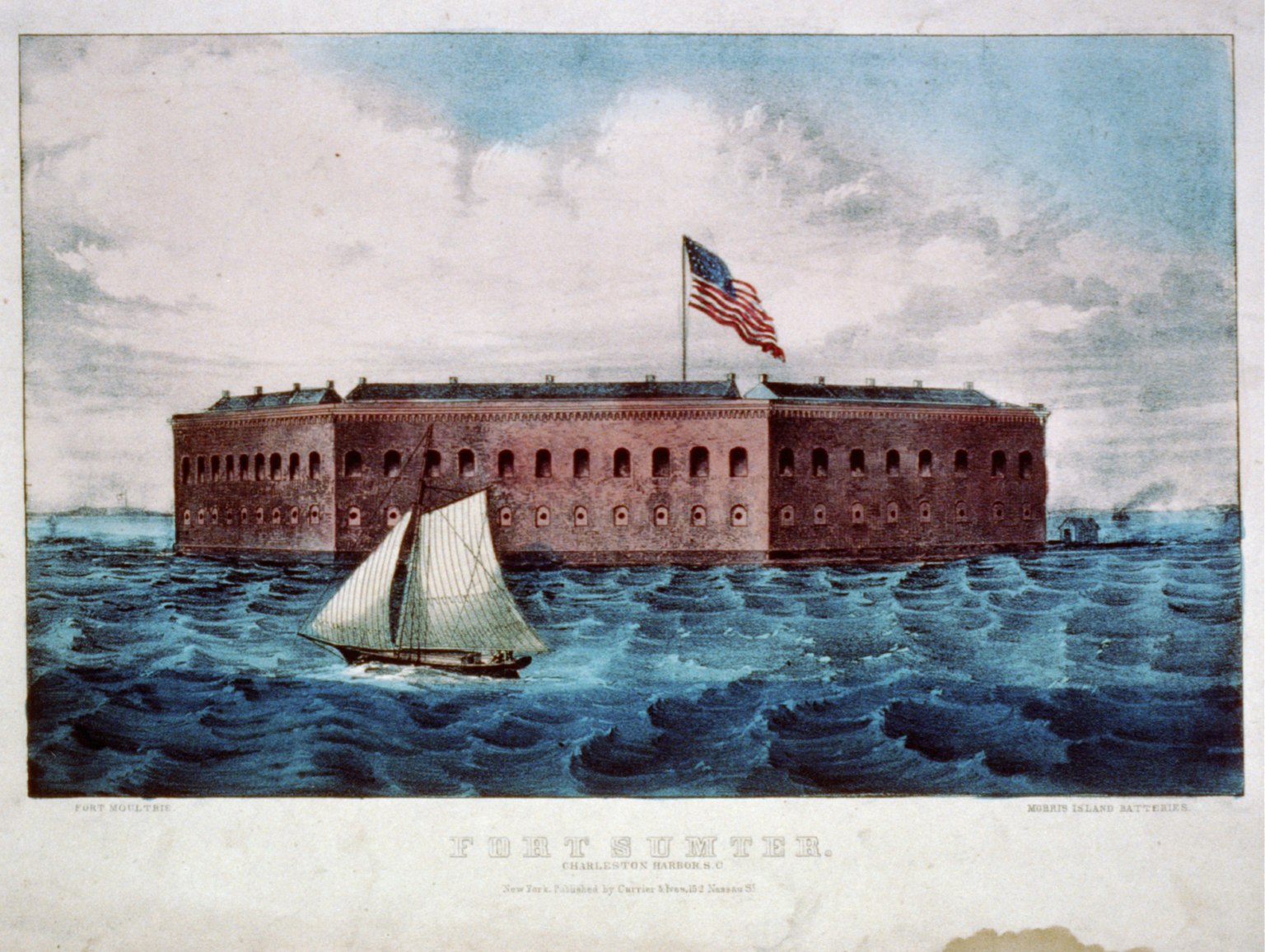
Fort Sumter stands on a small island in Charleston Harbor. In April 1861, the first shots of the Civil War were fired here, starting a conflict that divided the nation and left lasting scars. The fort is a pentagonal brick structure with thick walls and narrow gun ports, built after the War of 1812 when the U.S. needed stronger coastal defenses. Charleston was a key Southern port, and Sumter was part of a network of forts meant to guard against naval attacks. By 1861, the fort was still unfinished, its garrison isolated.
The walls, though sturdy, were not built to endure the 34-hour bombardment by Confederate forces that led to the Union surrender. Four years of war followed, reshaping the country. Today, the fort remains a quiet monument to that moment. Its weathered bricks and rusted cannons show the violence that erupted here. There are no grand reconstructions—just the raw remnants of history.
To reach Fort Sumter, you take a ferry from downtown Charleston. The ride lasts about half an hour. As the boat moves through the harbor, you can picture the scene in 1861: Union ships trying to break the blockade, Confederate batteries along the shore, and the fort caught in the middle. The island is little more than a man-made mound, barely above the water. Inside, you walk along crumbling walls, look into gun emplacements, and visit a small museum with artifacts from the era—cannonballs, uniforms, personal letters.
For many Americans, Fort Sumter is a place to reflect. The Civil War wasn’t a simple conflict; it pitted brother against brother, state against state. The museum doesn’t simplify this. Displays include accounts from soldiers on both sides and from enslaved people whose labor built much of Charleston. Their freedom became a central issue of the war. The names of the first casualties are on memorial plaques, a reminder of how quickly peace can break. Visitors often linger here, reading the inscriptions, the wind the only sound.
After the war, the fort was abandoned. Its walls eroded under coastal weather. In the early 20th century, interest in Civil War history grew, and efforts began to preserve what remained. Today, the National Park Service manages it. The fort may not be as striking as other historic sites, but its significance is clear. The past isn’t neatly packaged—it lingers here.
The harbor is deceptively peaceful. On clear days, you see Charleston’s skyline, once one of the wealthiest cities in the South. In the 19th century, its port thrived on cotton and the slave trade. The elite shaped the region’s social and political landscape. The ideas that led to secession and war were born here, in Charleston’s drawing rooms and churches. Standing on the fort’s walls, you feel the weight of that history. Decisions made in this city echoed for generations.
A visit to Fort Sumter isn’t just about the past. Many questions from the Civil War—federal authority versus states’ rights, equality versus oppression—remain unresolved. The fort doesn’t offer answers, but it forces you to confront the consequences of those early choices. The war that began here claimed more American lives than any other. Its legacy is still debated today.
Even now, as tourists take photos of the cannons and the harbor, the island’s quiet feels heavy. For history enthusiasts, Fort Sumter is a must-see. But its appeal goes beyond military history. The stillness of the harbor, the way light catches the old bricks, the knowledge that this was where everything changed—it stays with you. The fort doesn’t just tell a story. It makes you part of it.