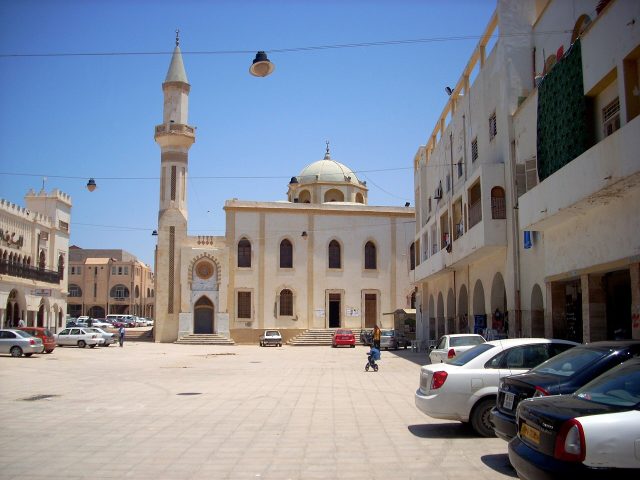
Benghazi’s old theatre stands as a quiet witness to the city’s layered past, a place where the echoes of mid-20th-century ambition still linger in its stone and stucco. Built during a time when Libya was carving out its modern identity, the theatre was more than just a venue for performances—it was a statement. Its architecture reflects the era’s aspirations, blending the grandeur of European design with subtle nods to local craftsmanship. The building’s clean lines and imposing columns suggest a city reaching toward something greater, while the intricate details inside hint at the traditions that refused to be erased.
The theatre occupies a central spot in Benghazi, surrounded by the kind of streets that feel lived-in rather than staged. Cafés spill onto sidewalks, shopkeepers call out to passersby, and the air carries the scent of strong coffee and warm bread. The building itself is hard to miss—its broad steps lead up to a façade that commands attention, even if the paint has dulled with time. Inside, the auditorium once hummed with life: balconies curved around the stage, velvet seats held generations of audiences, and the chandeliers cast a golden glow over everything. For decades, this was where the city gathered, not just for entertainment but for moments that shaped its collective memory.
Over the years, the theatre has played many roles. During the Italian colonial period, it was a gathering place for the European community, a slice of home in a foreign land. After Libya gained independence, it became a stage for national pride, hosting performances of Arabic plays and classical music. Politicians gave speeches here, artists debuted their work, and families marked milestones in its grand hall. The theatre wasn’t just a building; it was a backdrop to the city’s evolving story, adapting to each new chapter while retaining its own character.
The architecture tells its own story, a mix of influences that mirrors Benghazi’s history. From the outside, it could pass for a European opera house, with its symmetrical design and stately columns. But step inside, and the details reveal something different—the geometric patterns on the walls, the way light filters through arched windows, the occasional flourish of local artistry. It’s a building that bridges worlds, much like the city itself. The marble floors, once polished to a shine, and the heavy drapes framing the stage speak of an era when such places were built to last, to impress, to endure.
Today, the theatre is quieter than it once was. The crowds have thinned, and the stage sees fewer performances, though it hasn’t been entirely abandoned. Occasionally, a concert or exhibition breathes life back into the space, but more often, it stands empty, a relic of a different time. For many in Benghazi, it’s a place tied to personal memories—first dates, school trips, the thrill of seeing a favorite actor take the stage. Even in its current state, it holds a kind of dignity, a reminder that some things outlast the circumstances that created them.
Benghazi is a city of contrasts, where the past and present exist side by side, sometimes uneasily. The theatre is one of those places where the layers are most visible. Walk past it on a weekday, and you might see children playing in the square nearby, vendors setting up stalls, or an old man sitting on the steps, lost in thought. It’s easy to imagine the building as it once was—alive with music, laughter, the rustle of programs in the hands of an eager audience. The theatre isn’t just a monument; it’s a piece of the city’s soul, a place where history isn’t just remembered but felt.
Like many landmarks in Libya, the theatre has weathered its share of hardships. Years of conflict and neglect have left their marks—peeling paint, cracked plaster, the slow decay of time. Yet its survival is a small act of defiance. In a country where so much has been lost, the fact that the theatre still stands, still holds space in the city’s heart, is significant. It’s a testament to the people who have cared for it, who see in its walls something worth preserving.
For visitors, the theatre offers a different kind of experience than the usual tourist sites. There’s no grand entrance fee, no guided tour with rehearsed facts. Instead, it invites you to slow down, to look closely at the details—the way the light hits the columns at dusk, the faded elegance of the lobby, the quiet dignity of a place that has seen so much. Even if you can’t go inside, the building and its surroundings tell a story. It’s a reminder that Benghazi’s identity isn’t just tied to its port or its oil fields, but to the culture that has grown here over generations, stubborn and resilient. The theatre doesn’t shout its history; it lets you discover it, one step at a time.