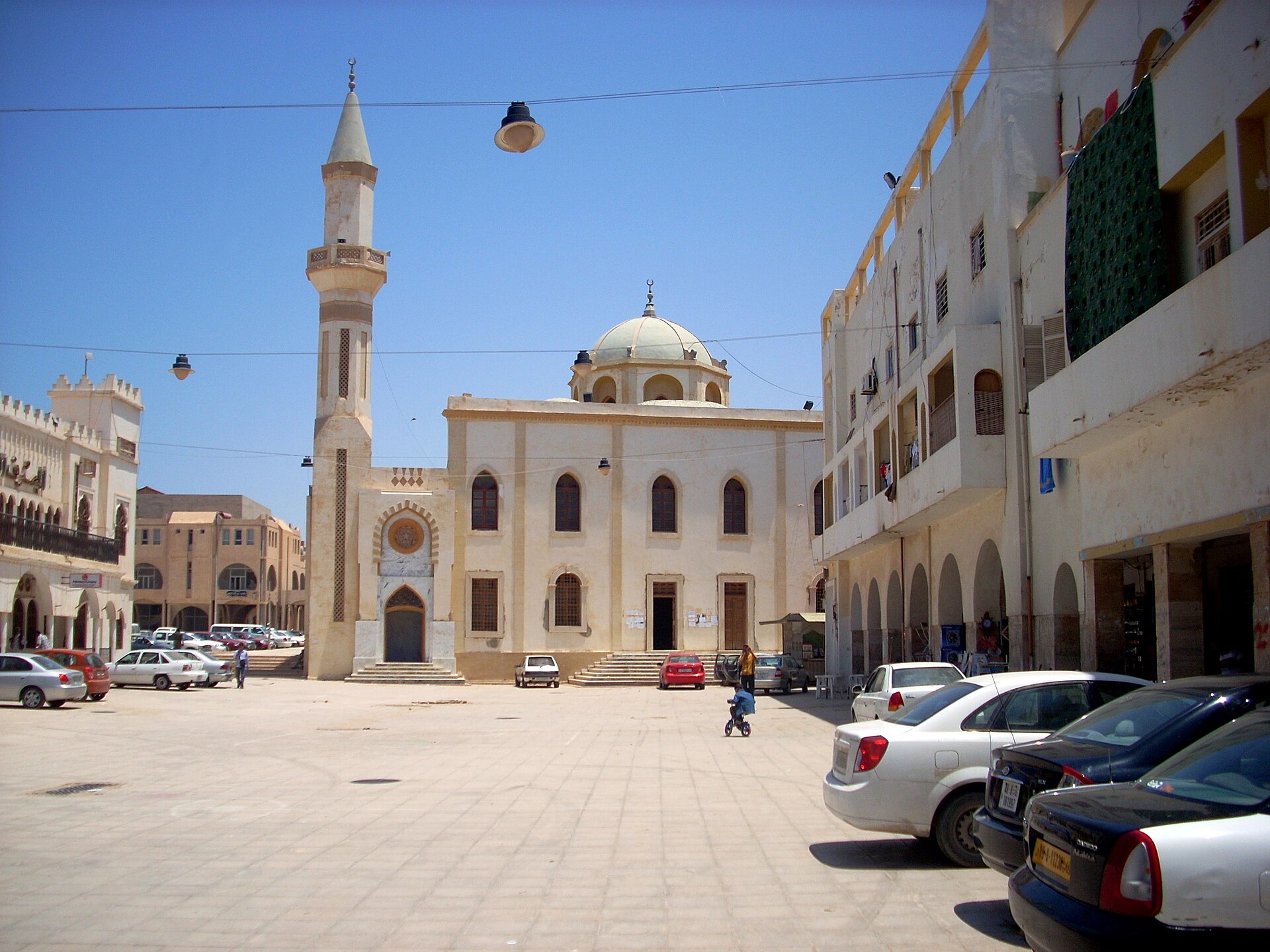
Great Mosque of Benghazi, known locally as Al-Jami al-Kabir, stands quietly in the heart of the city’s old quarter, a place where history lingers in the narrow streets and the soft light filtering through arched doorways. Built in the mid-18th century, it has witnessed the ebb and flow of empires, the rise and fall of trade routes, and the daily rhythms of a city that has always been more than just a port on the Mediterranean. Unlike the grand mosques of Cairo or Istanbul, with their towering domes and intricate tilework, this one carries itself with a quiet dignity, its simplicity speaking volumes about the people who built it and those who still call it home.
The mosque was commissioned by Ali Karamanli, a ruler from the dynasty that governed Libya during a period when Benghazi was a modest but vital hub for trade between the interior and Europe. More than just a place of worship, it was meant to be a symbol of stability, a gathering point for a community that relied on both faith and commerce to hold itself together. Over the centuries, it became woven into the fabric of the city, a place where people came not only to pray but to talk, to settle disputes, and to mark the passing of time. The walls have absorbed countless conversations, the footsteps of generations echoing in the cool, shaded interior.
Architecturally, the mosque reflects the Ottoman influence of its time—a rectangular structure with a flat roof supported by sturdy columns, and a single minaret rising above the rooftops. Inside, the space is uncluttered: whitewashed walls, woven carpets underfoot, and wooden beams overhead. There are no gilded calligraphic panels or elaborate mosaics, just the quiet interplay of light and shadow through small, high windows. On hot afternoons, the thick walls keep the heat at bay, and the air inside feels still, as if time itself moves more slowly here. The minaret, once used to call the faithful to prayer, still stands as a silent sentinel over the old quarter, its presence a constant in a city that has seen so much change.
The mosque has not remained untouched by history. In the 19th century, when Italian forces took control of Benghazi, the building served multiple purposes—sometimes as an administrative office, other times as a refuge during wartime. Yet through it all, its core identity remained intact. Today, it continues to function as a place of worship, though visitors are rare. For locals, it is a familiar landmark, a place to pause amid the hustle of daily life and reconnect with something deeper. The surrounding streets, with their low sandstone buildings and winding alleys, feel like a world apart from the modern city. Here, life moves at a different pace, dictated by the call to prayer, the rhythm of the market, and the slow passage of the sun across the sky.
The area around the mosque is a living museum of sorts. The old souk, just steps away, is a maze of stalls selling everything from spices to handcrafted silverwork, their wares displayed in a way that feels unchanged for decades. In the early morning, the scent of fresh bread and roasted coffee fills the air, mingling with the sounds of bargaining and laughter. By evening, the streets grow quiet, the only movement the flicker of lanterns reflecting in puddles after a rare rain. It’s a place where the past isn’t just remembered—it’s still very much alive, in the way people greet each other, in the recipes passed down through generations, in the stories told over cups of strong, sweet tea.
During Ramadan, the mosque takes on a special significance. The courtyard fills with people breaking their fast at sunset, the air rich with the aroma of dates, soup, and freshly baked sweets. After evening prayers, the streets come alive with families sharing meals and neighbors offering food to those in need. The building hums with energy, its walls echoing with voices and the clatter of dishes. It’s a reminder that for all its historical weight, the mosque is first and foremost a place of community, a space where faith and daily life intersect in the most ordinary and profound ways.
For travelers, the Great Mosque of Benghazi may not be the kind of place that immediately draws the eye. There are no grand facades or dramatic legends attached to it, no tour buses lining up outside. But that’s precisely what makes it worth visiting. It doesn’t demand attention; it simply exists, a steady presence in a city that has seen its share of upheaval. To walk through its doors is to step into a different rhythm, one that hasn’t been drowned out by the noise of the modern world. The old quarter, with its labyrinthine streets and timeworn buildings, feels like a place where history isn’t just something you read about—it’s something you can touch, smell, and feel in the cool shade of the mosque’s interior.
If you find yourself in Benghazi, take the time to wander the streets around the mosque in the late afternoon, when the light turns golden and the shadows stretch long across the pavement. Sit in a nearby café, sip mint tea, and watch as the call to prayer drifts from the minaret, blending with the sounds of the city. The mosque won’t overwhelm you with spectacle, but it will leave you with something far more lasting—a sense of connection to a place where the past and present coexist, not as opposites, but as layers of the same story.