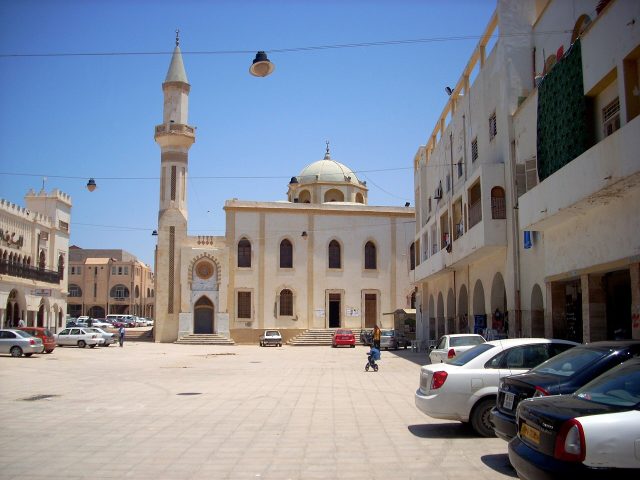
Tikrit Square in Benghazi is one of those places where the city’s past lingers just beneath the surface. Tucked into the heart of the old center, it feels like a quiet witness to decades of life unfolding around it. The streets here still move to the rhythm of an earlier time—narrow, winding, and lined with low-rise buildings whose facades bear the marks of years gone by. Some are crumbling gently, their paint peeling in places, while others have been patched up just enough to keep them standing. The square itself isn’t large, but its significance to the people of Benghazi is impossible to overstate. It’s where the city gathers, whether for protests, celebrations, or just the simple act of passing time.
The architecture around Tikrit Square tells a story of shifting influences. In the early 20th century, Benghazi was under Italian rule, and traces of that era remain in the arched doorways, wrought-iron balconies, and high ceilings of some buildings. These structures stand alongside more utilitarian modern constructions, their plain facades a contrast to the ornate details of their older neighbors. The square’s role as a public space is evident in the way it adapts to different needs—temporary stages for speeches, makeshift stalls for vendors, or open ground for crowds to spill into during events. It’s a place that bends to the moment, never quite settling into a single identity.
The name Tikrit carries its own weight in history. It refers to the Iraqi city that became a symbol of resistance during the 1969 revolution, when Muammar Gaddafi came to power in Libya. Renaming the square was an act of political symbolism, tying it to the ideals of that era. Over time, though, the name has taken on a life of its own. For many in Benghazi, Tikrit Square is less about ideology and more about the everyday—where you meet friends, grab a cup of tea, or watch the world go by. The politics of the past are still there, but they’re woven into the fabric of daily life rather than dominating it.
What makes Tikrit Square special is how unfiltered it feels. There’s no grand monument here, no polished tourist attraction. Instead, it’s a place where the city’s pulse is most visible. In the mornings, the square wakes up slowly. Vendors set up their stalls, arranging pyramids of fresh fruit or steaming kettles of tea. Office workers hurry past on their way to work, while older men gather at café tables, shuffling dominoes with practiced ease. By afternoon, the pace eases. Children dart between pedestrians, their laughter mixing with the hum of conversation. The air carries the scent of spices, grilled meat, and strong coffee, a reminder that this is a place where people live, not just visit.
The shops and workshops around the square offer a glimpse into the city’s practical side. Small businesses thrive here, selling everything from handmade leather goods to spare parts for aging cars. The fabric stores are particularly striking, their shelves stacked with vibrant bolts of cloth—deep reds, electric blues, and gold-embroidered patterns that hint at Libya’s rich textile traditions. Nearby, you might find a tailor hunched over a sewing machine, stitching together a traditional dress, or a cobbler repairing shoes with tools that look like they’ve been passed down through generations. The square isn’t stuck in the past, though. Modern influences creep in, with stalls selling cheap electronics or imported cosmetics, a sign of how the city adapts even as it holds onto its roots.
Tikrit Square has seen its share of upheaval. During the 2011 civil war, it became a focal point for protests, a place where people gathered to voice their hopes and frustrations. In the years since, it has remained a space for public discourse, though these days, the conversations are as likely to be about the price of bread as they are about politics. For outsiders, the square offers a rare chance to see Libya beyond the headlines—a place where life continues, messy and resilient. It’s not a postcard image of the country, but something far more real.
As evening falls, the square transforms. The heat of the day gives way to a cooler breeze, and the cafés come alive. Strings of lights flicker on, casting a warm glow over the tables. The scent of shakshuka—eggs poached in a spiced tomato sauce—fills the air, mingling with the smoky aroma of grilled lamb. Locals settle in for long conversations, their voices rising and falling in the rhythm of Arabic. Music drifts from a radio or a phone speaker, sometimes traditional, sometimes modern, but always fitting the mood. There’s no rush here. People linger over their meals, savoring the moment as much as the food.
What Tikrit Square lacks in grandeur, it makes up for in authenticity. There are no grand monuments or luxury hotels, no carefully curated experiences for visitors. Instead, it’s a place where the city’s character is laid bare. It’s where you’ll find the old men playing backgammon in the shade, the women haggling over the price of vegetables, and the teenagers scrolling through their phones while sipping sweet mint tea. It’s where history isn’t just remembered—it’s lived. For anyone curious about Benghazi beyond the guidebooks, Tikrit Square is the kind of place that stays with you long after you’ve left. It’s not just a square; it’s a slice of life.