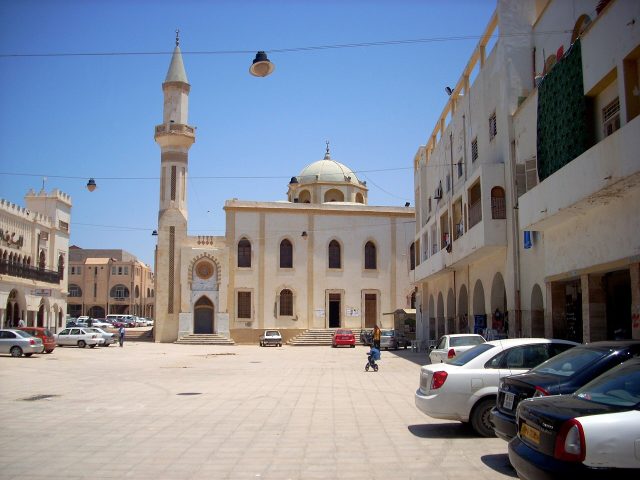
Benghazi’s cathedral stands as a quiet monument to the city’s layered past, a structure that has witnessed the ebb and flow of power, faith, and identity over the decades. Built in the early 20th century during Italy’s colonial rule over Libya, it was conceived not just as a place of worship but as a statement—an attempt to imprint European influence onto the North African landscape. The cathedral’s presence in Benghazi reflected a broader effort to reshape the city in the image of its colonizers, blending religious purpose with urban ambition. Though it no longer serves its original function, the building remains a tangible link to an era when borders between cultures were fluid, and the city’s character was still taking shape.
The architecture of the cathedral is a study in contrasts, where Italian neoclassical design meets the realities of a Mediterranean climate. The façade, with its columns and arched windows, carries the hallmarks of early 20th-century European styles, yet the materials and proportions feel adapted to the local environment. Inside, the high ceilings and filtered light create a sense of space that feels both grand and intimate. The building was never meant to be just a church; it was part of a larger vision to transform Benghazi into a city that mirrored the administrative and cultural centers of Italy. Around it, squares and government buildings once formed a new colonial heart, though much of that layout has since faded into the city’s modern fabric.
When Libya gained independence in the 1950s, the cathedral’s role began to shift. The Catholic community in Benghazi dwindled, and the building’s religious significance waned. Over the years, it has served various purposes—housing cultural exhibitions, temporary events, or simply standing empty. Today, it functions more as a historical landmark than an active place of worship, its walls holding the echoes of those who once gathered there. For many, it’s a reminder of a time when the city’s identity was still being negotiated, when different faiths and cultures coexisted in ways that now feel distant.
Benghazi’s turbulent history has left its mark on the cathedral, as it has on the city itself. During World War II, the building endured bombings, and in the decades that followed, it weathered political upheavals and regime changes. The 2011 revolution brought further disruption, though the cathedral emerged relatively unscathed compared to other parts of the city. Now, it stands as a relic of a different era, one that doesn’t always align with modern Libya but remains a part of its story nonetheless. The building’s resilience mirrors the city’s own ability to endure, even as its surroundings continue to change.
For those interested in architecture, the cathedral offers a glimpse into the practicalities of colonial design. Unlike the ornate cathedrals of Europe, this one is understated, built with a sense of functionality that reflects the challenges of constructing in a foreign land. The columns, vaults, and decorative details are well-crafted but lack the extravagance of metropolitan counterparts. Yet, there’s a certain harmony in how the building fits into its surroundings. It doesn’t feel out of place among the older structures of Benghazi; instead, it has become part of the city’s visual rhythm, a quiet constant amid the flux of time.
Locals and visitors alike still engage with the cathedral in small, everyday ways. Some come to sit in its shadow, others to take photographs, and a few to imagine what the city must have looked like when the building was at the center of religious life. The area around it is alive with the sounds of a working city—markets, traffic, the hum of daily routines. The cathedral watches over it all, a silent observer to the changes that have swept through Benghazi. It’s no longer a place of worship, but it remains a gathering point of sorts, a spot where the past and present intersect.
In recent years, there’s been growing recognition in Libya of the need to preserve historical sites like this one. The cathedral isn’t just a building; it’s a piece of living history, a testament to the people who shaped Benghazi and the forces that shaped them. Restoring such places isn’t just about architecture—it’s about keeping stories alive. Without them, the nuances of the past risk fading into obscurity. For now, the cathedral endures, a reminder that even in a city marked by upheaval, some things manage to outlast the passage of time.
For travelers in Benghazi, the cathedral can be an unexpected discovery. The city is a place where history and modernity collide, and this building offers a way to understand how Libya’s identity has been forged. It’s not the kind of attraction that draws crowds or makes it into glossy travel guides, but that’s part of its appeal. There’s no grand narrative here, no carefully curated experience—just a building that has seen generations come and go, its walls holding the weight of memory. To visit it is to step into a quieter corner of Benghazi’s story, one that feels more personal than monumental.