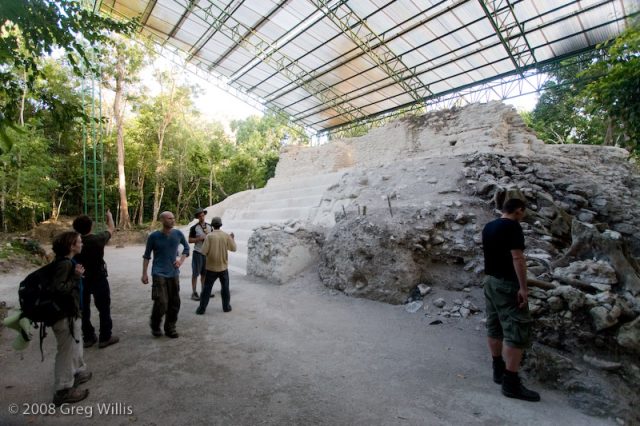
Tamarindito is one of those places that rarely makes it into guidebooks, yet it holds the quiet essence of the ancient Maya world. Tucked away in the dense tropical forests of Petén, not far from Santa Elena de la Cruz, this archaeological site feels like a secret waiting to be discovered. There are no crowds here, no tour buses, no flashy signs—just the stillness of the jungle, broken only by the calls of birds and the rustle of leaves. While better-known sites like Tikal or Yaxchilán draw visitors by the thousands, Tamarindito offers something different: a chance to experience Maya history in its raw, unfiltered form, far from the gloss of commercial tourism.
Archaeologists have been uncovering Tamarindito’s secrets since the mid-20th century, and the site continues to reveal new insights into the lives of its ancient inhabitants. Once part of the Petexbatún kingdom, a powerful Maya polity during the Classic period, the city flourished between the 7th and 8th centuries. At its height, Tamarindito was a center of politics, culture, and trade, ruled by its own dynasties who oversaw the construction of temples, palaces, and public spaces. Today, only the weathered stone remains of those structures stand, but their scale and craftsmanship still command attention.
The heart of the site is the acropolis, a raised complex that looms above the surrounding forest. Steep stone staircases lead to its summit, where the remnants of temples and royal buildings bear intricate carvings and glyphs. Among the most significant finds is Stela 5, a monument inscribed with the names and dates of Tamarindito’s rulers. These texts have helped historians piece together the city’s history and its connections to neighboring kingdoms. Nearby, the remains of a ball court hint at the importance of the Maya ballgame, a ritual as much as a sport, often tied to religious ceremonies and even human sacrifice.
What sets Tamarindito apart from many other Maya cities is its formidable defensive structures. Unlike the open ceremonial centers of Tikal or Palenque, this site is surrounded by thick walls and moats, evidence of the frequent conflicts that plagued the region. The Petexbatún kingdom was a hotbed of warfare, and Tamarindito’s fortifications suggest it was no stranger to siege and struggle. By the late Classic period, as the Maya civilization began its decline, the city was gradually abandoned. Scholars still debate the reasons—whether drought, resource depletion, or internal strife played the decisive role—but the ruins stand as a silent testament to a world in transition.
Reaching Tamarindito is an adventure in itself. From Santa Elena, the journey involves a drive along rough, winding roads through the jungle, followed by a hike through dense vegetation. There are no visitor centers, no marked trails, no vendors selling souvenirs—just the untamed landscape and the ancient stones that have witnessed over a thousand years of history. Local guides, who know the area intimately, can point out hidden details: faint traces of murals on crumbling walls, rare plants, or the tracks of wildlife that still call the forest home. Their stories bring the ruins to life, filling in the gaps between what archaeologists have uncovered and what remains unknown.
The atmosphere at Tamarindito is one of quiet reverence. Standing atop the acropolis, looking out over the endless green canopy, it’s easy to imagine the city as it once was—a bustling center of ceremony, trade, and daily life. The wind carries the echoes of the past, a reminder that time moves differently here. For those fascinated by the Maya, Tamarindito offers more than just ruins; it’s a place to connect with the people who built them, to wonder about their beliefs, their struggles, and their eventual disappearance.
Visiting Tamarindito requires a bit of preparation. There are no informational plaques or neatly paved paths, so it’s best to come with a sense of curiosity and a willingness to explore. The dry season, from November to April, is the most comfortable time to visit, when the roads are passable and the mosquitoes are less relentless. Bring water, a hat, and sturdy shoes—the hike can be long, and the jungle doesn’t give up its secrets easily. Most importantly, treat the site with respect. The ruins are fragile, and the artifacts belong to history, not to souvenir hunters.
In a world where so many ancient sites have been polished for mass tourism, Tamarindito remains refreshingly untouched. It’s a reminder of how fleeting human achievements can be, and how precious it is to preserve what little remains. For travelers who seek something beyond the usual postcard destinations, this place offers a rare opportunity—to step off the beaten path, to listen to the stories the stones have to tell, and to feel, if only for a moment, the weight of time itself. If you ever find yourself in Guatemala and want to experience the Maya world in a way few others do, Tamarindito is waiting.