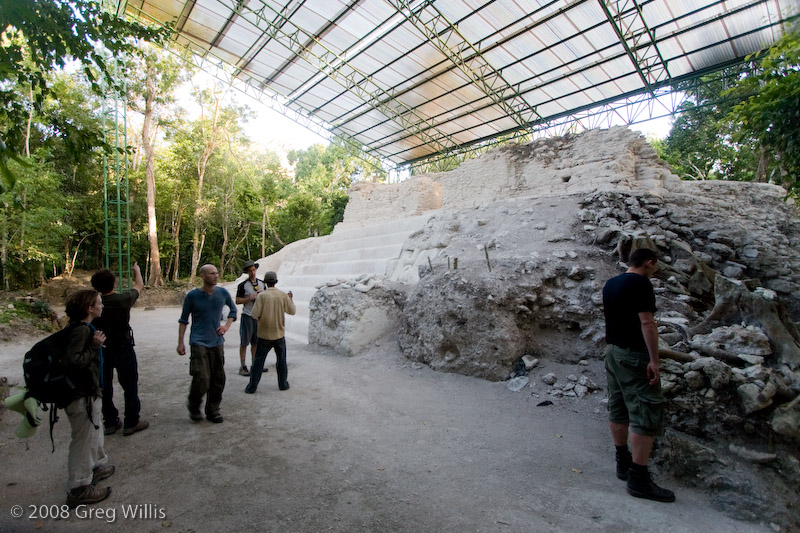
El Mirador is one of those places that makes you realize how little we truly understand about ancient civilizations. Tucked deep within the jungles of northern Guatemala, this vast Maya city lay hidden for centuries beneath a dense canopy of tropical forest. Its rediscovery in the mid-20th century was nothing short of astonishing—archaeologists didn’t just stumble upon scattered ruins, but an entire metropolis complete with towering pyramids, grand plazas, and an intricate network of roads that once connected it to other Maya cities. Today, El Mirador is recognized as one of the largest and oldest cities of the Maya world, its scale rivaling even the most famous sites like Tikal or Palenque.
The city first took shape around the 6th century BCE, but its golden age came during the Preclassic period, long before the Maya reached their peak. At its height, El Mirador wasn’t just a city—it was a political and cultural powerhouse, controlling vast territories. Tens of thousands of people lived here, and its rulers likely wielded immense influence. Archaeological evidence suggests it was both an administrative hub and a religious center, where rituals were performed, temples dedicated to Maya gods were built, and pyramids rose as symbols of the connection between earth and sky.
The most striking structure in El Mirador is La Danta, one of the largest pyramids in the world by volume. Standing 72 meters tall, its base covers an area larger than a football field. Unlike many other Maya pyramids, La Danta wasn’t built all at once—it grew layer by layer, each new ruler adding another tier to commemorate their reign. Climbing to the top today offers a breathtaking view of the endless jungle stretching to the horizon, as well as the remnants of other pyramids that once formed part of this sprawling urban landscape.
Reaching El Mirador is no easy feat, which is partly why it remains less visited than other Maya sites. From the nearest town of Flores or the village of Santa Elena, travelers must first make their way to Carmelita, then embark on a 60-kilometer journey through the jungle—either on foot or by mule. The trek takes several days and demands good physical condition, but those who undertake it are rewarded with more than just ruins. The Petén jungle is alive with wildlife: howler monkeys swing through the trees, toucans call from the branches, and if luck is on your side, you might even spot a jaguar. The forest is loud, vibrant, and full of life, making the journey as memorable as the destination itself.
Like many Maya cities, El Mirador was abandoned around the 9th century CE. The reasons for its decline remain debated—some scholars point to climate change and drought, while others suggest social upheaval or warfare. Whatever the cause, the city vanished beneath the jungle, forgotten for centuries. It wasn’t until 1926 that a researcher flying over the forest spotted its ruins from the air. Serious excavations began in the 1970s, yet much of the site remains unexplored. Each year, archaeologists uncover new structures, artifacts, and murals, slowly piecing together the story of this ancient civilization.
What makes El Mirador special today is its sense of untouched history. Unlike Chichén Itzá or Tikal, it sees few visitors, which lends the site an almost mystical atmosphere. Standing atop La Danta, with the jungle stretching endlessly in every direction, it’s easy to imagine the city as it once was—bustling with priests conducting rituals, merchants trading goods, and rulers making decisions that shaped an empire. El Mirador was part of a vast network of Maya settlements, connected by raised stone causeways known as *sacbeob*, which led to other major centers like Tikal and Calakmul.
Despite its remoteness, El Mirador is slowly gaining attention from travelers seeking adventure and a deeper connection to history. There are no luxury hotels or restaurants here, just the chance to camp near the ruins under a sky filled with stars and the sounds of the nocturnal jungle. Many come not only for the ruins but for the surrounding nature—the Mirador-Río Azul Reserve is one of the last untouched stretches of tropical forest in Central America, home to rare species of flora and fauna. A walk through these jungles feels like stepping back in time, where the past and present coexist in silence.
El Mirador is a place that humbles you. A city that once dominated a civilization now lies in ruins, reclaimed by the forest. Yet that very fact is what makes it so compelling—here, history and nature intertwine, a reminder that even the greatest empires eventually fade. For those willing to make the journey, El Mirador isn’t just another tourist stop. It’s a revelation, a glimpse into a world that still holds countless secrets, waiting to be uncovered.