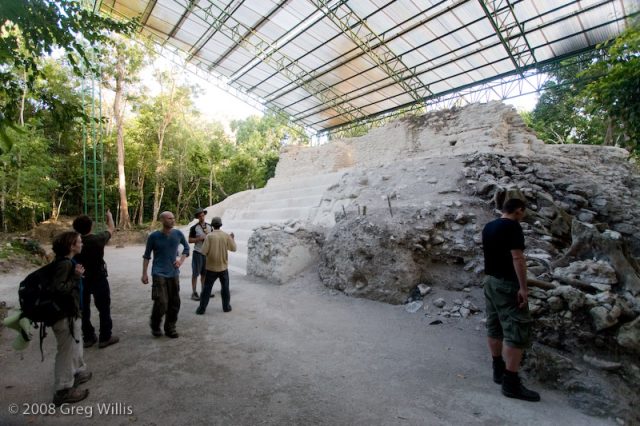
Aguateca is one of those places you visit not for grand spectacle, but for the quiet weight of time. Tucked deep in the Petén jungle of northern Guatemala, these Maya ruins don’t have the fame of Tikal or the polished presentation of Quiriguá. That’s precisely what makes them compelling. There are no crowds here, no souvenir stands, just the slow reclaiming of stone by forest—the crumbling walls, the moss-covered stairways, the stelae standing as they have for over a thousand years, as if the city’s inhabitants had stepped away only yesterday.
The story of Aguateca is woven into the final chapter of the Maya Classic period. By the 8th and 9th centuries, it had become a significant political and cultural hub, closely tied to the powerful kingdom of Dos Pilas. Perched on a strategic plateau surrounded by deep ravines, the city was nearly impregnable, its natural defenses reinforced by man-made ditches and walls. Yet in the late 9th century, Aguateca was abruptly abandoned. Archaeologists have found shattered pottery, half-finished buildings, and signs of hasty departure—clues that suggest its people left under duress, though the exact reasons remain unclear. War, resource depletion, or social upheaval may have played a role, but the ruins offer no definitive answers.
The architecture here reflects the late Classic Maya style, with its own distinct character. The central plaza is flanked by palaces and temples built from local limestone, carved with the precision of skilled artisans. The most striking structure is the ruler’s palace—a two-story building with narrow windows and intricate facades, where the city’s elite likely lived and governed. Nearby, stelae inscribed with glyphs recount tales of military victories and dynastic alliances. Some of these carvings remain remarkably well-preserved, though the jungle is slowly erasing them, vine by vine.
What sets Aguateca apart is its sense of vulnerability. Unlike many Maya cities built in open plains, this one was designed for defense. The ravines provided a natural barrier on one side, while artificial fortifications guarded the rest. Excavations have uncovered evidence of fires and destruction, hinting at the constant threat of attack. It’s possible that the very wars that once made Aguateca a formidable stronghold ultimately led to its downfall. At some point, the city’s defenses failed, and its people vanished, leaving behind a place that feels suspended between triumph and collapse.
Reaching Aguateca is part of the experience. From Flores, the journey involves hours of bouncing along rough roads, followed by a hike through dense jungle. Local guides point out the calls of howler monkeys echoing through the trees or the occasional rustle of a tapir moving through the undergrowth. At night, the forest comes alive in a different way—the air hums with the chorus of insects and frogs, and the beam of a flashlight reveals only fragments of the path ahead. There’s a sense of isolation here, but also of connection—to the land, to the past, to something larger than the fleeting presence of visitors.
A visit to Aguateca isn’t a typical tourist stop. There are no reconstructed buildings, no interpretive signs, no neatly packaged history. Instead, the ruins invite you to piece together the story yourself. You can imagine the city as it once was: priests in elaborate headdresses moving between temples, the rhythmic beat of drums during ceremonies, the scent of copal incense rising into the humid air. The silence now is profound, broken only by the wind in the trees or the distant cry of a bird. It’s a place where time feels both vast and fragile, where the weight of centuries settles into your bones with every step.
Despite its remoteness, Aguateca has begun to attract those seeking something beyond the usual tourist trail. There’s no jostling for space here, no guided tours rushing from one site to the next. Many visitors arrive at dawn, watching as the first light spills over the treetops and illuminates the tops of the temples. In those moments, the city feels almost alive, as if its people had merely stepped away and might return at any moment. The illusion is fleeting, but powerful.
What makes Aguateca special is its refusal to be easily understood. It doesn’t offer a neatly curated narrative or a dramatic spectacle. Instead, it presents a puzzle—one that requires patience, curiosity, and a willingness to sit with uncertainty. The ruins are modest in scale, but their quiet presence speaks volumes. This isn’t a theme park version of the past; it’s a raw, unfiltered glimpse into a civilization at its height, a place where the echoes of history are still palpable. If you’re lucky, you might leave feeling as though you’ve touched something timeless, if only for a little while.