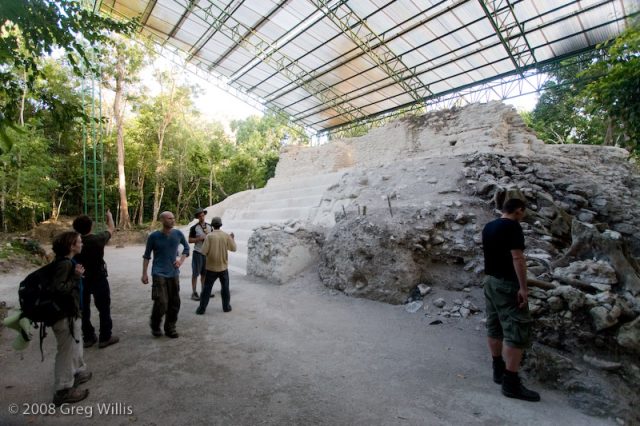
El Perú, also known as Waka’, is one of those rare places where time seems to stand still, hidden deep within the dense jungles of northern Guatemala’s Petén region. Unlike the more famous Maya sites like Tikal, which draw crowds of visitors, El Perú remains largely untouched, offering a sense of discovery to those who make the journey. There are no tourist buses here, no souvenir stands—just the rustling of leaves, the distant calls of howler monkeys, and the quiet whisper of the wind as it moves through the ancient stone structures. The ruins feel alive in a way that few places do, as if the past is still lingering just beneath the surface.
The city was founded around 500 BCE, but its golden age came during the Classic Maya period, between 250 and 900 CE. At its height, El Perú was a significant political and commercial hub, strategically positioned between two Maya superpowers: Tikal and Calakmul. It controlled trade routes and served as a diplomatic crossroads, where rulers and emissaries from rival cities would meet. Archaeological excavations have uncovered evidence of elite residences, ceremonial plazas, and royal tombs, including one discovered in 2004 that contained the remains of a king buried with jade ornaments, intricately carved bones, and ceramic vessels. These artifacts, now displayed in Guatemalan museums, hint at the city’s former wealth and influence.
The architecture of El Perú follows the classic Maya style but with its own distinct features. The most imposing structure is the pyramid known as M13-1, its steps rising above the treetops like a silent sentinel of the past. From the top, the view stretches across the jungle, offering a glimpse of what the Maya priests once saw as they tracked the movements of the stars. Nearby, palace complexes and carved stelae tell stories of warfare, alliances, and dynastic power. One of the most striking is Stele 34, which depicts a ruler adorned in an elaborate headdress, surrounded by symbols of authority. The glyphs etched into the stone are still being deciphered, slowly revealing the city’s role in the broader Maya world.
What makes El Perú particularly fascinating is its sense of mystery. Unlike larger sites that have been extensively restored, much of the city remains buried beneath the jungle, waiting to be uncovered. Each archaeological season brings new discoveries—fragments of pottery, remnants of murals, or the outlines of buildings long forgotten. The site feels like an ongoing puzzle, with each piece adding to the picture of a civilization that once thrived here. For those who visit, it’s not just about seeing the ruins; it’s about imagining the lives of the people who built them, the rituals they performed, and the stories they left behind.
Reaching El Perú is part of the adventure. The journey begins in Flores, a small island town on Lake Petén Itzá, where travelers set out on a rough, winding road that cuts through the jungle. The drive takes about two hours, depending on the season, with the last stretch often requiring a four-wheel-drive vehicle or a guided trek on foot. Along the way, the landscape shifts from open farmland to dense forest, where the air grows thick with humidity and the sounds of wildlife fill the silence. Howler monkeys roar in the distance, toucans dart between the trees, and if you’re lucky, you might spot a coatimundi or a troop of spider monkeys. The final approach to the site is on foot, following a narrow path that leads to the heart of the ruins.
There are no hotels or restaurants at El Perú, just a small camp where archaeologists and visitors can set up hammocks or tents for an overnight stay. The lack of modern amenities only adds to the sense of stepping back in time. The ruins themselves are a mix of crumbling stone and vibrant greenery, with vines creeping over the structures and moss softening the edges of the ancient walls. The ceiba trees, sacred to the Maya, tower overhead, their roots twisting into the earth like ancient fingers. At sunset, the light turns the stones golden, casting long shadows that seem to stretch from the past into the present.
El Perú is not a place for those seeking comfort or entertainment. There are no guided tours with headsets, no gift shops selling trinkets, no crowds jostling for the best photo spot. Instead, it offers something far more valuable: a chance to experience the Maya world as it once was, unfiltered and unspoiled. Here, you can stand in the silence of the jungle and imagine the sound of drums echoing through the plazas, the scent of copal incense drifting from the temples, the murmur of traders haggling over goods in the marketplace. The ruins are more than just stones; they are a testament to a civilization that shaped this land and left behind a legacy that still resonates today.
For travelers tired of the well-trodden path, El Perú is a reminder that some of the most rewarding experiences lie off the beaten track. It’s a place where history feels tangible, where the past isn’t just something you read about in books but something you can almost touch. The site is still being explored, still revealing its secrets, and that sense of discovery is part of what makes it so compelling. Whether you come for the archaeology, the adventure, or simply the chance to disconnect from the modern world, El Perú offers a rare opportunity to step into another time. And perhaps, in the quiet of the jungle, you’ll find yourself wondering about the people who once called this place home—and what they would think of the world today.