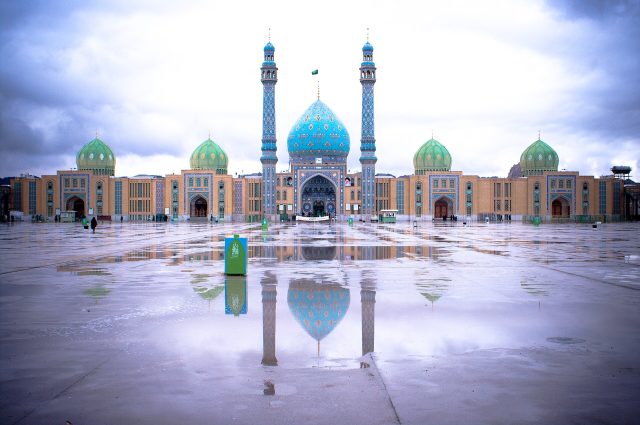
The Shrine of Hazrat Masoumeh in Qom is one of Shia Islam’s most revered sites, second only in spiritual significance to the holy cities of Mecca, Medina, and Najaf. It marks the resting place of Fatima al-Masoumeh, the sister of the eighth Shia Imam, Reza, whose life and death are deeply woven into the history of the city itself. What was once a modest stop along ancient trade routes has grown into a major center of pilgrimage, drawing visitors from across Iran and beyond. The shrine’s presence has shaped Qom’s identity, turning it into a place where faith, tradition, and daily life intersect in quiet, enduring ways.
The architectural splendor of the shrine is the result of centuries of devotion and craftsmanship. Early structures date back to the ninth century, but the complex truly flourished under the Safavid and Qajar dynasties, when its golden dome, marble arcades, and expansive courtyards took their current form. The dome, gilded and gleaming under the sun, has been restored many times over the years, yet it remains a constant symbol of reverence. Inside, the walls are adorned with intricate tilework—floral patterns and Quranic calligraphy executed by master artisans of their time. The craftsmanship reflects both the artistic traditions of Persia and the deep spiritual meaning embedded in every detail.
At the heart of the shrine lies the tomb of Fatima al-Masoumeh, enclosed by delicate silver latticework that separates the sacred from the profane. Pilgrims approach with quiet prayers, touching the grille or leaving written petitions, believing that their pleas will be heard here. The space around the tomb is always alive with movement—some recite the Quran in hushed tones, others converse softly, and a few simply sit in contemplation. Even on the busiest days, the atmosphere retains a sense of stillness, as if time itself slows within these walls.
Qom has grown around the shrine, and the city’s rhythm is set by the ebb and flow of pilgrims. The old quarter, with its narrow alleys and clay-brick houses, still echoes the days when caravans would rest here on their journeys. The bazaar thrives with activity, offering everything from religious souvenirs to traditional sweets, often given as tokens of gratitude. Locals, many of whom are descendants of those who have long served the shrine, move through their days with a quiet familiarity, accustomed to the steady stream of visitors who come seeking solace or connection.
The story of Fatima al-Masoumeh is steeped in legend. According to tradition, she traveled from Medina to Merv to visit her brother but fell ill and died in Qom at the age of twenty-eight. Her passing transformed the city, which became a burial site for other prominent Shia figures and, eventually, a destination for pilgrimage. Today, her tomb is not just a place of mourning but a symbol of resilience—a reminder of faith that endured even in exile.
The shrine is far more than a historical monument; it is a living institution that continues to evolve. In recent decades, the complex has expanded to include new prayer halls, libraries, and theological schools where scholars and students gather to study. Religious festivals, lectures, and gatherings draw thousands, particularly during Ashura and Arbaeen, when the streets of Qom fill with processions and the air hums with the sound of prayers and drumbeats. These moments of collective devotion are a testament to the shrine’s enduring role in the spiritual life of the community.
For many Iranians, a visit to Hazrat Masoumeh is a pilgrimage in the truest sense—a chance to connect with the history of their faith. But even those who come as outsiders, with no religious ties, often find themselves moved by the atmosphere. There is no rush here, no sense of being hurried along by tourism. Instead, the courtyards offer quiet corners, the pages of the Quran turn with a soft rustle, and the flicker of candles near the tomb casts a gentle light. Qom and its shrine exist in their own time, a place where reflection comes as naturally as breath.