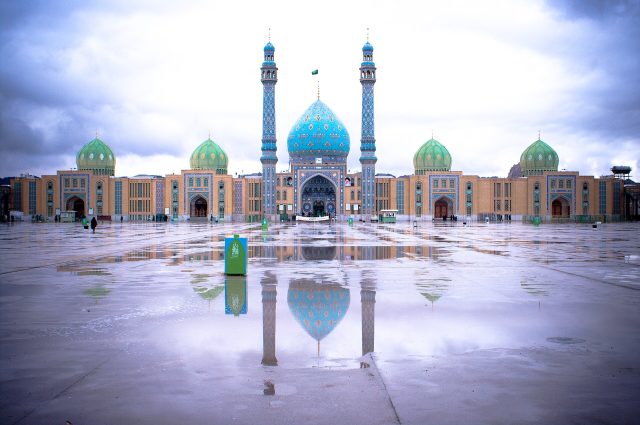
The Shrine of Fatima Masumeh in Qom is one of Shia Islam’s most revered sites, drawing pilgrims from across Iran and beyond. It is not merely an architectural landmark but a spiritual heart tied to the early history of Islam and the family of the Prophet Muhammad. Fatima Masumeh, the sister of the eighth Shia Imam, Ali al-Rida, died here in the ninth century, and her tomb has since become a place of devotion and reflection for millions. The shrine’s significance extends beyond religion—it is a living testament to centuries of faith, scholarship, and cultural evolution.
The architecture of the shrine is striking, even for those unfamiliar with its religious symbolism. Over the centuries, the complex has grown and transformed, absorbing influences from different eras. The golden dome, visible from afar, dominates the skyline, its brilliance catching the sunlight by day and glowing under artificial lights at night. Inside, the courtyards are adorned with intricate mosaics, carved patterns, and calligraphic inscriptions, each element carrying layers of meaning. The mirrored halls are particularly mesmerizing, their reflections creating an illusion of infinity, as if inviting contemplation of something beyond the material world.
Qom itself has long been a stronghold of Shia thought, and the shrine’s history is deeply intertwined with the city’s identity. According to tradition, Fatima Masumeh traveled to visit her brother but fell ill and died in Qom. Her burial site became a sacred destination, and over time, a vast complex emerged around it—madrasas, libraries, mosques, and lodgings for pilgrims. Today, the shrine is not just a religious site but a palimpsest of history, with traces of Seljuk, Safavid, and modern influences visible in its structures. The city’s role as a center of learning and devotion has only grown, making it one of Iran’s most important spiritual hubs.
The atmosphere inside the shrine is unlike that of typical tourist attractions. Even during peak pilgrimage seasons, there is a quiet solemnity, broken only by murmured prayers and the soft footsteps of visitors. Pilgrims approach the tomb, touch the latticework, and offer prayers or sit in silent reflection. For many, this is a place of solace, where the weight of daily life lifts, and a connection to the past feels tangible. While the shrine welcomes all visitors, regardless of faith, it is important to respect local customs, including modest dress and decorum.
Qom is a city of contrasts. On one hand, it is a bustling modern metropolis with universities, shopping centers, and busy streets. On the other, it remains an ancient religious center where time seems to slow. The shrine sits at the heart of the city, its influence shaping everything from architecture to daily life. Here, tradition and modernity coexist—women in chadors chat on smartphones, while students study in cafes near centuries-old madrasas. The city’s dual identity is evident in its streets, where the scent of traditional sweets mingles with the hum of motorbikes.
For those interested in history and culture, the shrine offers more than just a religious experience. Its libraries house rare manuscripts, and its museums display artifacts tied to Fatima Masumeh’s life and the broader Shia tradition. Even without deep knowledge of Islamic theology, visitors can appreciate the craftsmanship of ancient carpets, miniature paintings, and astronomical instruments. The complex is a treasure trove of art and scholarship, reflecting the intellectual and spiritual legacy of the region.
Visiting the shrine also provides a glimpse of Iran beyond the usual tourist trail. Qom is not like Tehran or Isfahan, where foreigners are a common sight. Here, life unfolds at its own pace, and locals regard visitors with curiosity rather than familiarity. The city has its own rhythm—quiet teahouses serving sweet pastries, small shops selling religious souvenirs, and families strolling in the cooler evening hours. The shrine’s presence is felt everywhere, from the golden dome looming over the skyline to the quiet conversations in its courtyards.
The Shrine of Fatima Masumeh is a place where faith, history, and everyday life converge. It is not a destination for those seeking spectacle or entertainment but for those who want to understand what draws people from distant places. There are no grand declarations here, just quiet devotion and a sense of belonging to something greater. Even for those who do not share the beliefs of the pilgrims, the sincerity and tranquility of the shrine leave a lasting impression. It is a reminder that some places transcend their physical boundaries, offering a moment of stillness in a world that rarely slows down.