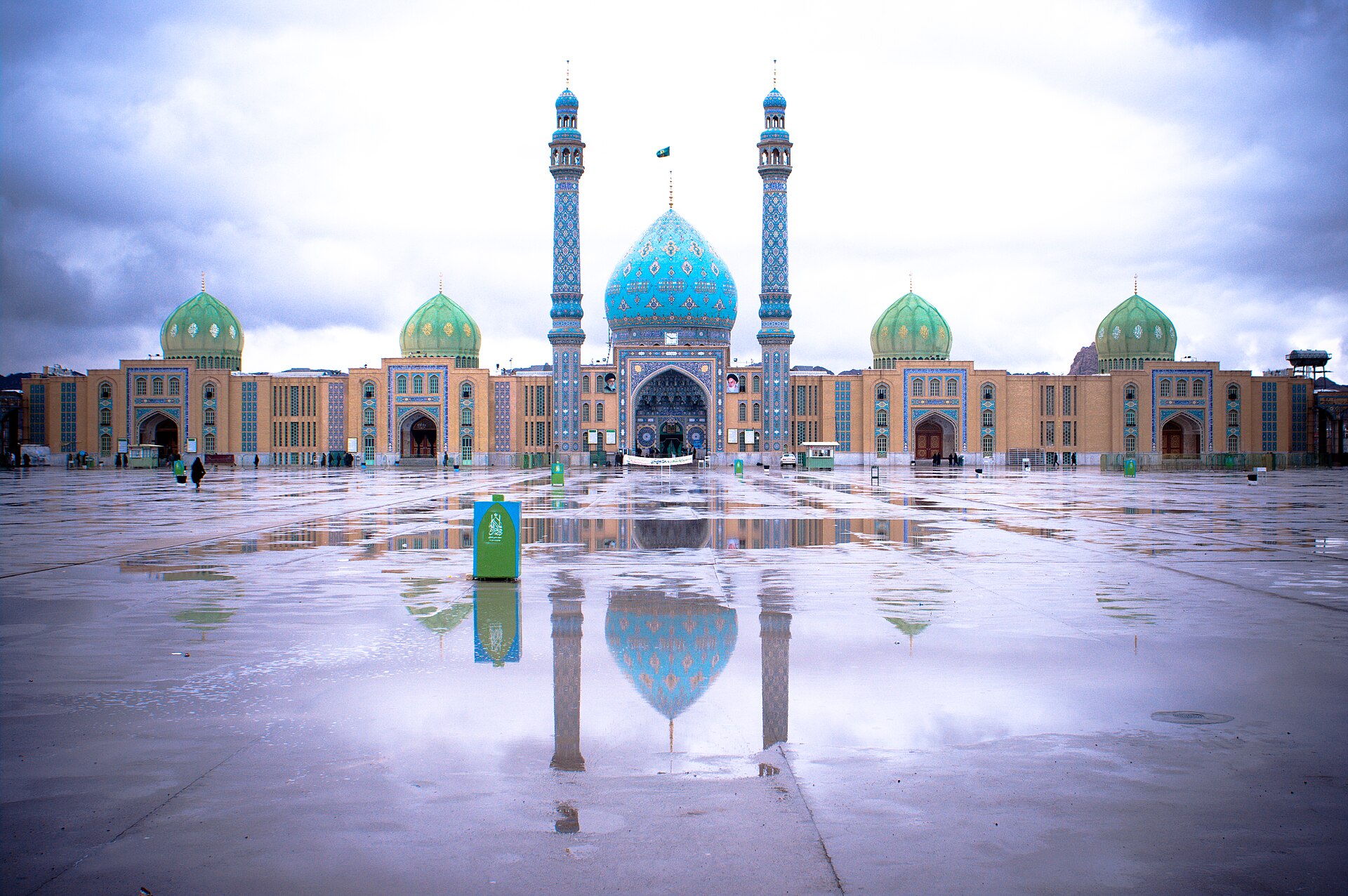
On the outskirts of Qom, the city’s noise gives way to open fields. Here stands Jamkaran Mosque. It doesn’t just sit apart from the city—it feels like another world. The story begins in the late 10th century, when Hasan ibn Muslih Jamkarani said the hidden Imam Mahdi appeared to him in a dream. The Imam told him to build a mosque on this spot. He did.
Jamkaran isn’t like the ancient shrines of Qom. It doesn’t have centuries of layered history. Most of what you see today was built in the last few decades. People don’t come here for architecture. They come for something else—a quiet hope, a sense of waiting. The mosque is simple, built to hold thousands, especially on Tuesdays. That’s when special prayers for Imam Mahdi fill the hall. Inside, the walls are white, the carpets plain. Outside, fountains and pathways let people rest or prepare for prayer.
Jamkaran doesn’t have the ornate tiles or golden domes of other Iranian mosques. That’s not the point. The focus is on what happens inside—prayers, whispered hopes, written requests left in boxes near the entrance. Many believe prayers here carry more weight. On Tuesdays, the mosque hums with life. Hundreds gather, not as tourists, but as people searching for something.
The atmosphere is different from the crowded sites in central Qom. No one is here to take photos. There are no guided tours. Just the sound of prayers, footsteps on carpets, children playing in the courtyard. Even with thousands of visitors, it feels personal.
Jamkaran’s rise in recent decades mirrors Iran’s own struggles—revolution, war, economic hardship. In difficult times, people turn to faith. This mosque has become a symbol of hope. There are no slogans, no grand messages. Just a quiet understanding that belief can be a refuge. Around the mosque, small guesthouses and cafes serve visitors, but they’re not the main draw. The mosque itself is the heart of the place.
Mornings and evenings are especially peaceful. Sunlight spills over the white walls, glints off the fountains. Locals come to pray, to walk, or just to sit. For first-time visitors, Jamkaran can be surprising. Time slows down. You might spend hours watching people, listening to prayers, or sitting in silence. There are no strict rules, just respect for those who are praying.
This isn’t a museum. It’s not a tourist attraction. It’s a living space, shaped by the people who come here. The value isn’t in the architecture or history, but in what it means to those who visit. Here, prayers are believed to reach the heavens. Even if you don’t share that faith, the sincerity of those who come is hard to ignore.
Jamkaran doesn’t try to convince anyone. It offers a space to find what you’re looking for—peace, connection, a moment of stillness. In a world that moves too fast, this place reminds you to pause.