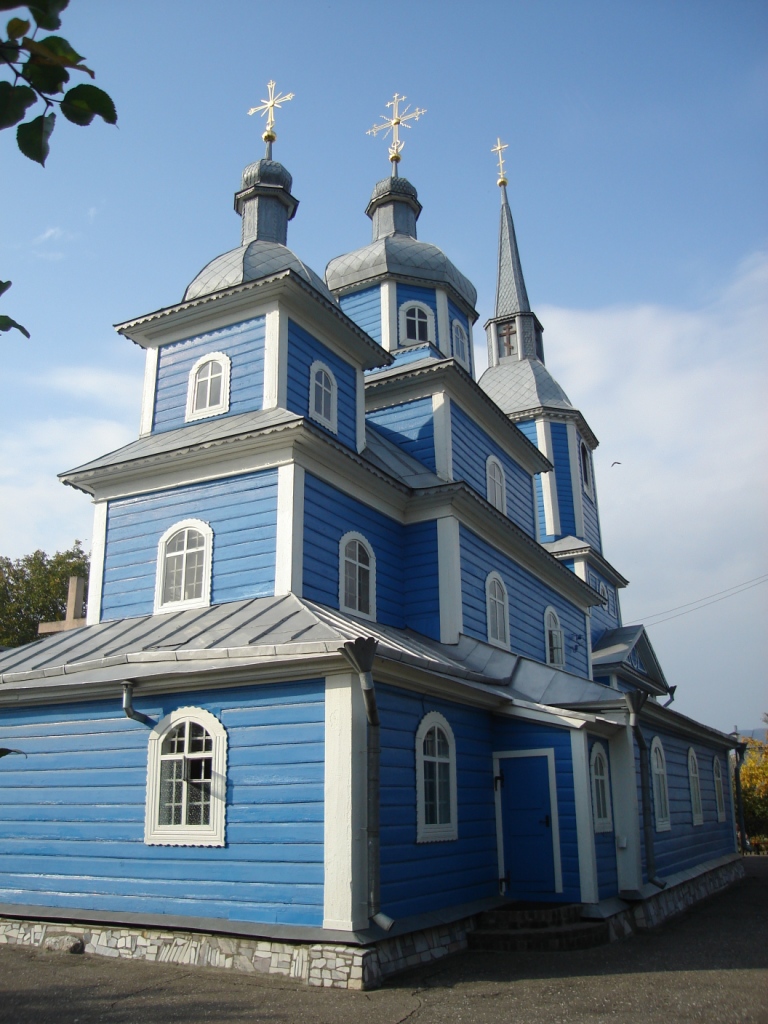
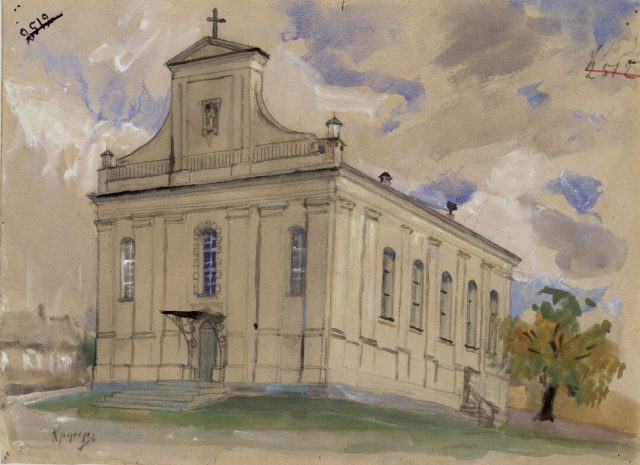
Slutsk is one of those Belarusian towns that quietly holds centuries of history within its streets, and the Holy Michael the Archangel Cathedral stands as one of its most enduring landmarks. Built in the late 18th century, the cathedral is a striking example of Baroque architecture, though its appearance today carries the marks of time and the many hands that have shaped it over the years. The building was originally part of a larger monastic complex, which once included living quarters for monks, a bell tower, and other structures that have since disappeared or been repurposed. What remains is a structure that still commands attention, not just for its size but for the way it anchors the town’s skyline.
The cathedral’s design reflects the Baroque style that was popular in the Grand Duchy of Lithuania during the period of its construction. Its façade is symmetrical, with a central pediment and pilasters that give it a sense of grandeur, though the details are more restrained than what you might find in the flamboyant Baroque churches of Western Europe. The interior, while simpler than the exterior suggests, still carries the weight of its religious significance. The high vaulted ceilings and the play of light through the tall windows create an atmosphere that feels both solemn and uplifting, a place where the past lingers in the quiet corners.
One of the most interesting aspects of the Holy Michael the Archangel Cathedral is its connection to the Radziwiłł family, one of the most powerful noble dynasties in the region. The Radziwiłłs were major patrons of the arts and architecture in what is now Belarus, and their influence can be seen in many of the grand estates and religious buildings they funded. In Slutsk, their legacy is particularly strong, as the town was once a key center of their vast holdings. The cathedral itself was built under their patronage, and while the family’s direct involvement in its construction is not always visible today, their broader impact on the town’s development is undeniable.
Over the centuries, the cathedral has seen its share of upheavals. Like much of Belarus, Slutsk has been caught in the crosscurrents of history, changing hands between different powers and enduring wars, occupations, and political shifts. The cathedral was damaged during World War II, and in the Soviet era, it was closed for religious use, as was the case with many churches across the country. It wasn’t until the late 20th century that the building was returned to the Orthodox Church and began to be restored. The process has been gradual, with some parts of the structure still bearing the scars of neglect, while others have been carefully brought back to life.
Today, the Holy Michael the Archangel Cathedral is once again an active place of worship, serving the local Orthodox community. The services held here are a mix of tradition and continuity, with the liturgy conducted in Church Slavonic, the language that has been used in Eastern Orthodox services for centuries. For visitors, the cathedral offers a glimpse into the religious life of Belarus, which remains an important part of the country’s cultural identity. Even if you’re not religious, the sense of history here is palpable—the way the building has absorbed the prayers, the music, and the quiet footsteps of generations.
Beyond its religious function, the cathedral is also a symbol of Slutsk’s resilience. The town itself is often overlooked in favor of larger Belarusian cities like Minsk or Brest, but places like this remind you that history isn’t just made in the capitals. Slutsk was once a thriving center of trade and culture, and while much of that past has faded, the cathedral stands as a testament to what the town once was. Walking through its doors, you can almost hear the echoes of the market stalls that once filled the square outside, the voices of merchants and townspeople going about their daily lives.
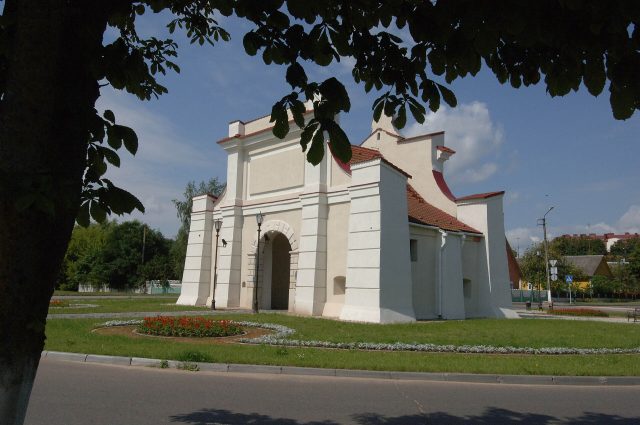
The area around the cathedral is worth exploring as well. Slutsk’s old town is compact but full of character, with low-rise buildings that hint at its medieval origins. The streets are quiet, the kind of place where you can wander without the crowds that fill more tourist-heavy destinations. Nearby, you’ll find the remains of the town’s defensive walls, a reminder of the fortifications that once protected Slutsk from invaders. The cathedral itself is set back from the main road, giving it a sense of separation from the modern world, as if it exists in its own pocket of time.
Visiting the Holy Michael the Archangel Cathedral isn’t about ticking off a famous landmark or snapping the perfect photo. It’s more about stepping into a place where history feels alive in a way that’s hard to describe. The building has seen empires rise and fall, wars come and go, and yet it still stands, a quiet witness to the passage of time. Whether you’re drawn by its architecture, its religious significance, or simply the chance to experience a piece of Belarus that isn’t on the usual tourist trail, the cathedral offers something that’s increasingly rare—a sense of connection to the past that hasn’t been polished away by modernity.